Landscape-Scale Approaches
Conservation Biology
Class Meetings
Dates: 2026-12-07T16:00:00, 2026-12-09T16:00:00
Assigned Background
Conservation in human‐modified landscapes
Chapter: Conservation in human‐modified landscapes
Ch No.: 13 (Approaches to Conservation)
Pages: 236-261 (Landscape-Scale Approaches)
PDF: koh_gardner_2010.pdf
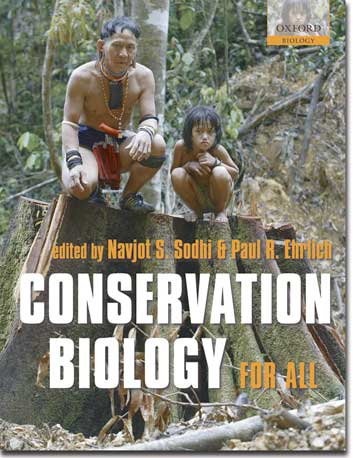
Textbook: Conservation Biology for All (see details below)
Days Covered: BIOL4120_W16D1
Text: Conservation Biology for All by Lian Pin Koh, Toby A. Gardner
Edition: (2010)
ISBN: 978-0-19-955423-2
Optional Material (Dive Deeper)
Readings
Ch 15 Landscape-Scale Conservation
Textbook: Conservation Biology (see details below)
Chapter: 15 (Approaches to Conservation)
Sections Assigned: 15.3, 15.4 (Landscape-Scale Approaches)
Days Covered: BIOL4120_W16D1
Text: Conservation Biology by
Edition: 2nd (2025-01-17)
ISBN: 9780197667033 (textbook)

Conservation in human‐modified landscapes
Chapter: Conservation in human‐modified landscapes
Ch No.: 13 (Approaches to Conservation)
Pages: 236-261 (Landscape-Scale Approaches)
PDF: koh_gardner_2010.pdf
Textbook: Conservation Biology for All (see details below)
Days Covered: BIOL4120_W16D1
Text: Conservation Biology for All by Lian Pin Koh, Toby A. Gardner
Edition: (2010)
ISBN: 978-0-19-955423-2
Video Clips
Camera Trapping at American Prairie Reserve
Smithsonian’s National Zoo, 06 26, 2019
Video (1:42)
Description
Camera traps are motion-sensitive cameras that snap a picture whenever they detect movement, giving researchers extra eyes in the wild. Smithsonian ecologists set up camera traps around the American Prairie Reserve in Montana. The cameras are deployed 24/7, allowing researchers to gather data without disturbing animals and to collect data even when they are not in the field. The photos they collect will help build a clearer picture of the ecosystem — what animals are present and when, how species interact, which habitats they prefer and whether their land use changes with the seasons.
Transcript
0:03 · Bison, yea.
0:05 · Oh, wow! Look at him!
0:07 · That’s nice.
0:09 · I’m Hila Shamoon. I’m a Smithsonian ecologist conducting research at the American Prairie Reserve in Montana.
0:17 · This place is a hotspot for biodiversity.
0:21 · Right now we’re just trying to collect as much data as we can in a unified way across the landscape So we have a good idea of where the animals are, their distributions, and what are their activity patterns in each area.
0:34 · Putting this up, we’re just getting their natural movements across this landscape.
0:39 · This is just a tiny camera and has just a few batteries, it can last a month in the field.
0:44 · and the camera only triggers when something’s walking in front of it, so we know their exact activity times.
0:51 · Are they active at night or day?
0:54 · Where do they prefer to move across?
0:57 · And we’re not disturbing the wildlife. So that’s a huge thing.
1:03 · We’re placing them in hundreds of places across the landscape.
1:07 · We want to know how and when the animals use these corridors.
1:14 · Putting something in the field for weeks that records everything that walks in front of it, it really helps us to see this place in a whole new way So I think we have it pretty good now.
1:25 · The more time I spend out here, I kind of get the feeling of how complex it is and it’s much more exciting that way.
Climate change can money stop deforestation
The Economist, 11 01, 2022
Video (12:50)
Description
Rampant deforestation has driven economic growth, but accelerates climate change. How do you put a price on trees, to make them worth more alive than dead?
Film supported by Bain and Company
00:00 - Can money grow on trees?
00:55 - What Costa Rica can teach us
01:52 - Down with the trees: rapid deforestation around the world
03:15 - Why tree-planting schemes aren’t always the answer
04:24 - Paying for existing trees: carbon credits
06:38 - How to finance the restoration of forests
08:10 - What are Payments for Environmental Services?
09:31 - Swapping to sustainable returns
10:40 - Is focusing on economic growth the problem?
11.50 - Why world leaders need to decarbonise the economy
Sign up to our daily newsletter to keep up to date: https://econ.st/3n3kIjj
Why tree planting alone is not an adequate solution for climate change: https://econ.st/3rC50Oq
How the world’s wealthiest countries cause deforestation in poor ones: https://econ.st/3rBgW3d
The role of forests in climate change - listen to The Economist’s Intelligence podcast about their importance: https://econ.st/3rJ527a
How Jair Bolsonaro has damaged the Amazon rainforest: https://econ.st/3CFQiwa
Sign up to our climate change newsletter: https://econ.st/3b1dtCQ
A balance-sheet could help to save the planet:https://econ.st/3VcAZSS
Why is the Amazon rainforest doing more harm than good? https://econ.st/3T50KCV
Transcript
Can money grow on trees?
0:00 · [Music] money doesn’t grow on trees but chopping them down has helped lots of the world get richer since the beginning of the 20th century humans have been raiding these resources almost as though they were Limitless the problem is the world is now paying a heavy environmental price it certainly looks like a crisis after the worst drought in 80 years so is
0:26 · there a financial solution if we don’t change the movement of money we’ll continue to finance ourselves into Extinction is paying for trees to be protected and restored the answer and how do you put a price on their worth foreign
0:51 · to understand the alarming story of deforestation let’s start with Costa Rica in the 1980s [Music] Maria’s family was typical of many enticed by The Riches of Agriculture her father cleared and converted their Forest to pasture foreign
What Costa Rica can teach us
1:29 · markets with the driving force behind deforestation from 1940 to 1987 the proportion of land in Costa Rica covered by forests plummeted from 75 percent to 21 percent
1:45 · Costa Rica’s experience is far from unique the rest of the world jumped on the bandwagon too humans have been cutting trees for thousands of years but there was a massive acceleration in the last century the U.N estimates around 10 million
Down with the trees: rapid deforestation around the world
2:01 · hectares of forest are being lost each year that’s around 27 football fields every minute fewer trees means less carbon dioxide being absorbed from the atmosphere and their destruction only adds more emissions accelerating climate change
2:24 · The Heart Of This Global crisis sits the world’s largest rainforest and the so-called Trump of the tropics jair bolsonaro um from 2019 to 2022 the rate of
2:41 · deforestation in Brazil Rose by roughly 50 percent attracting critics around the world the problem is it’s a bit Rich for wealthy countries to demand that poorer ones give up the economic benefits of deforestation the majority of deforestation in recent
2:59 · years has really been driven by agriculture expansion in developing countries it can almost seem hypocritical to criticize these developing nations for following a pathway that effectively made rich countries wealthy in previous centuries
Why tree-planting schemes aren’t always the answer
3:15 · so what can be done the simple answer is for rich countries to incentivize poorer ones to protect and restore their forests one thing the wealthy world has tried is stumping up cash for new tree planting schemes but many of these haven’t borne
3:33 · fruit tree planting programs are incredibly popular they can seem almost childishly easy you plant a tree you save the climate the reality of course is nowhere near that simple in terms of the climate it can be far more beneficial to conserve the forest that’s there so another way is to focus rewards for
3:55 · developing countries on conserving existing forests it works like this using historic rates of deforestation a country predicts how much Forest is likely to lose in the future any Forest that it manages to conserve is judged against this Benchmark the
4:12 · donor hands over a financial reward to the developing country for the trees it saved paying a sum for each ton of carbon dioxide that would have otherwise been emitted it’s not just the developing country that stands to gain the donors often
Paying for existing trees: carbon credits
4:28 · rich countries or companies can benefit too in exchange for their money they can claim what’s called a carbon credit which they can use to offset their emissions elsewhere Carmen credits are a way of allowing companies countries people who can’t
4:47 · reduce their own emissions currently to offset those emissions elsewhere they are seen as an important part of transitioning towards a net zero economy I started out hugging orangutans but now I find myself hugging asset managers and bankers a bit more often Andrew Mitchell is a zoologist turned financial advisor he encourages investors to buy carbon credits and believes they’re an important tool for Forest conservation these credits are hugely valuable it’s a
5:18 · transition strategy whilst you’re reducing your carbon emissions you have to buy offsets you should buy offsets it sounds like a win-win but so far the results are mixed Shady players have gained the system and pulled dirty tricks like duplicating credits or
5:36 · claiming to conserve land never under threat or moving the problem to the forest next door built into the Paris agreement is this consensus that there should be a global scheme for exchanging carbon credits across borders in practice the rules and standards that would govern such a global market have been incredibly difficult to establish and so right now
6:01 · what we’ve got is a system which is really unregulated and although standards and the scale of carbon credit schemes are improving there’s still one big sticking point the rewards for conserving trees still lag behind those for deforesting we need carbon markets to grow they
6:22 · won’t really achieve their full potential unless the price of offsetting a ton of carbon is competitive with the profits that can be generated from other activities on that land ultimately conservation has to become profitable
How to finance the restoration of forests
6:38 · re-enter Costa Rica once the poster child of deforestation but now a global leader in conservation and an example of how to make saving nature pay here landowners are paid by the government to restore and conserve forests and this has helped to create new and sustainable economic opportunities [Music]
7:07 · remember Maria whose father made a living out of chopping down trees like many in Costa Rica her family have since branched out and now do the very opposite [Music]
7:24 · Maria and her grandchildren we plant forests so far 350 hectares worth the government pays them and many other families around 80 a year for each hectare of forest that’s restored or kept intact Graces
7:55 · Ramos [Music] it might sound like a government subsidy scheme but here’s the key bit it’s not
What are Payments for Environmental Services?
8:12 · it’s a system known as payments for Environmental Services launched in the late 90s is paid for by citizens who are seen as benefiting from the services provided by healthy forests like carbon storage the protection of vital food chains and clean water the money is not coming from from the national budget the money comes from those who benefit
8:38 · Carlos Manuel Rodriguez is Costa Rica’s former environment Minister and the brains behind the scheme which is paid for by a levy on consumers water bills and attacks on their fuel use Costa Rica was the first developing country that put a tax on on carbon to
8:56 · generate a revenue for the payment of Environmental Services everybody who uses fuel in Costa Rica and pollutes the environment contributing to climate change must pay in the price of purchases that fuel an extra amount that
9:13 · goes to this foreign fund that pays Farmers so far the scheme has invested more than 500 million dollars in the conservation of forests and it’s paid off in the space of a generation Forest covering Costa Rica jumped from 21 to more than 50 percent
Swapping to sustainable returns
9:32 · with the restoration of trees have come new opportunities for profitable and sustainable Industries blowing away the idea that conservation and economic development are always at loggerheads nature-based tourism has become naturally important because of our jobs in rural Costa Rica as opposed to what we had in the past which was this irrational unsustainable agricultural production there is no dichotomy between preservation and economic development
10:05 · since 1987 the peak of deforestation in Costa Rica the country’s GDP has risen by an average of 4.2 percent a year Costa Rica isn’t a magic formula for saving the world’s forests since it began prioritizing conservation it’s increased food imports an option not available to all countries but there is a lot Costa Rica can teach others for one thing it’s improved some
10:32 · of its bad spending habits reversing subsidies that incentivize the clearance of land at all costs a lead more countries should follow we should put more money into the protection of nature from governments but the reality is even if we doubled all that money it wouldn’t come close to beating the subsidies that
Is focusing on economic growth the problem?
10:52 · directly cause harm to Nature each year the world spends around 150 billion dollars on protecting nature but around 12 times that on subsidies that harm it some campaigners argue a more radical fix is needed to save the volume of forests necessary to avert environmental catastrophe they say what’s required is a fundamental shift away from society’s focus on profits and growth the problem
11:20 · with GDP is that it measures everything we build and nothing that we protect it’s all beginning to change now people are waking up to the importance of keeping nature going to keep our economy going not everyone supports such a drastic change to economic thinking but
11:36 · most do agree that change is not happening fast enough with the eyes of many global leaders on other challenges the world is facing multiple crises in the midst of all this there is a risk that nature conservation and the climate crisis are demoted in the pecking order but climate change the global climate does not wait for short-term crises to pass foreign
12:12 · bullet that will reverse climate change the world needs to urgently reduce industrial emissions and prioritize policies to decarbonize economies but unless trees are worth more alive than dead deforestation and its Devastation will continue I’m Tom standage Deputy editor of The Economist and editor of the world ahead to read more of our future gazing coverage click on the link thanks for watching and don’t forget to subscribe
Climate change the trouble with trees
The Economist, 09 18, 2019
Video (9:44)
Description
Tree-planting has been hailed as a solution to climate change. But how much can trees really do to tackle global warming? See our research here: https://econ.st/32HXvXY
Click here to subscribe to The Economist on YouTube: https://econ.st/2xvTKdy
Summer 2019 - More than 38,000 fires raged across the Amazon. Fires that were man-made. Over the past 50 years almost 17% of the world’s largest rainforest has been cleared. And globally deforestation has almost doubled in just five years.
Since the start of human civilisation it’s estimated that the number of trees around the world has fallen by almost half. Clearing forests increases carbon-dioxide levels but planting them could store away some of the carbon already in the atmosphere.
This woman runs safaris in England. Guests are not only here to see wild animals - they’re here to see wild trees.
Almost 20 years ago Isabella Tree—yes that is her real name-handed 1,400 hectares of Sussex farmland back to nature, by doing, well nothing. She thinks this is the best way to use the land to help tackle climate change.
To stabilise the climate global carbon emissions need to drop to net zero by 2050. Simon Lewis is a professor of global change science.
And there’s never been more global ambition to plant trees. In 2014, 51 countries pledged to plant over 3.5m square kilometres of forest by 2030 - an area slightly larger than India. The 2030 target looks likely to be met. But there’s a catch…
Monoculture tree plantations like eucalyptus grow quickly but the trees are harvested every ten or so years releasing much of the carbon stored in the tree back into the atmosphere - which means that, according to some studies they’ll store only around one-fortieth of the carbon natural forests do over the long term.
In fact, those pledges to plant millions of trees actually promise to store 26bn tonnes less carbon than they could. Sometimes the motives for planting forests are less green than they might appear. By 2020 Ireland ought to have cut greenhouse-gas emissions by 20% below 2005 levels. But at current rates it will have reduced them by only 5%. Planting forests might help Ireland avoid massive penalties for missing EU targets because the potential carbon these forests could store in the future can be counted as a carbon credit today. In the 1920s Ireland had the lowest forest cover in Europe at around 1%. That’s now risen to 11% and the government has set a target to cover 18% of the land with forest by 2046.
And now local community groups are protesting against these monoculture tree plantations. They say they’re doing more harm than good.
Tree-planting programmes invariably have an impact on the people living nearby. In east Africa one project is demonstrating what can be achieved
when there’s genuine buy-in from the local communities. Green Ethiopia is a mixed-tree planting charity.
The land is communally owned and co-operatives of local women receive benefits for planting trees which are protected from being harvested. Here conserving is just as important as planting. Green Ethiopia assesses whether the condition of the land is good enough to regenerate by itself. When it is—on about a third of the area the charity runs they leave it alone. Just like Isabella Tree, back in England.
Monoculture plantations are often preferred because they make money. So some experts are looking to a future where carbon payments could create financial incentives for natural forests. Ultimately though, the trouble with trees tackling climate change is space
For more from Economist Films visit: http://films.economist.com/
Check out The Economist’s full video catalogue: http://econ.st/20IehQk
Like The Economist on Facebook: https://www.facebook.com/TheEconomist/
Follow The Economist on Twitter: https://twitter.com/theeconomist
Follow us on Instagram: https://www.instagram.com/theeconomist/
Follow us on Medium: https://medium.com/@the_economist
Transcript
The deforestation crisis
0:00 · Summer 2019 More than 38,000 fires raged across the Amazon…
0:05 · …fires that were man-made Over the past 50 years…
0:10 · …almost 17% of the world’s largest rainforest has been cleared And globally deforestation has almost doubled in just five years Since the start of human civilisation…
0:23 · …it’s estimated that the number of trees around the world…
0:26 · …has fallen by almost half Clearing forests increases carbon-dioxide levels…
0:33 · …but planting them could store away…
0:35 · …some of the carbon already in the atmosphere Everyone is looking for a silver bullet…
0:41 · …to get our way out of this really difficult problem of climate change Some people have latched on to tree planting as a kind of panacea But the reality is tree planting is not always good This woman runs safaris…
The case for wilding
1:05 · …in England Guests are not only here to see wild animals…
1:12 · …they’re here to see wild trees If you could imagine when we were farming…
1:19 · …back in the 1980s, through the 90s…
1:22 · …this would have been a field of one particular crop as far as the eye can see Almost 20 years ago Isabella Tree—yes that is her real name…
1:32 · …handed 1,400 hectares of Sussex farmland back to nature…
1:36 · …by doing, well nothing She thinks this is the best way to use the land to help tackle climate change Wilding is a hands-off approach It’s become a sort of environment that is a nursery…
1:51 · …for open-grown, freely regenerating trees Within 20 years we have doubled our carbon sequestered in the soil We’ve got the scrub, we’ve got the grasses, we’ve got the trees…
2:04 · …all that will be contributing to this carbon sink To stabilise the climate global carbon emissions…
The pitfalls of planting
2:12 · …need to drop to net zero by 2050 Of course not all sectors are going to get down to zero emissions by 2050 Simon Lewis is a professor of global change science We need to take some carbon out of the atmosphere…
2:28 · …and one of the cheapest and easiest ways is to plant trees Around half the dry weight of a tree is carbon As trees grow they take carbon out of the atmosphere…
2:40 · …and store it in their trunks, leaves and roots…
2:42 · …which helps slow the rate of climate change And there’s never been more global ambition to plant trees In 2014, 51 countries pledged to plant…
2:53 · …over 3.5m square kilometres of forest by 2030…
2:58 · …an area slightly larger than India Ethiopia has made its mark in the record books…
3:05 · …by planting over 350m trees in a single day The 2030 target looks likely to be met But there’s a catch… When you dig down into the numbers of these forests…
3:20 · …almost half the area pledged so far by countries…
3:24 · …is actually from monoculture plantations And that means a single species planted over…
3:31 · …thousands and thousands of hectares Monoculture tree plantations like eucalyptus grow quickly…
3:37 · …but the trees are harvested every ten or so years…
3:40 · …releasing much of the carbon stored in the tree…
3:42 · …back into the atmosphere…
3:44 · …which means that, according to some studies…
3:46 · …they’ll store only around one-fortieth of the carbon…
3:49 · …natural forests do over the long term It’s made into short-term products like paper…
3:55 · …and then when that paper is used and then discarded…
3:58 · …it decomposes and that carbon goes back into the atmosphere Simon analysed pledges from 43 countries in the tropics and sub-tropics These big announcements are not going to deliver…
Policy and ecological impacts
4:10 · …on the carbon capture that we’re expecting If they were all natural forests we would sequester…
4:17 · …42bn tonnes of carbon this century In fact, those pledges to plant millions of trees…
4:25 · …actually promise to store 26bn tonnes less carbon than they could Sometimes the motives for planting forests…
4:34 · …are less green than they might appear By 2020 Ireland ought to have cut greenhouse-gas emissions…
4:41 · …by 20% below 2005 levels But at current rates it will have reduced them by only 5% Planting forests might help Ireland avoid massive penalties…
4:53 · …for missing EU targets…
4:55 · …because the potential carbon these forests could store in the future…
4:58 · …can be counted as a carbon credit today In the 1920s Ireland had the lowest forest cover in Europe at around 1% That’s now risen to 11% and the government has set a target…
5:12 · …to cover 18% of the land with forest by 2046 In Ireland, they’re rapidly increasing the amount of forest cover But it’s overwhelmingly going towards monoculture plantations of conifers And now local community groups are protesting against…
5:33 · …these monoculture tree plantations They say they’re doing more harm than good Because these monoculture plantations are about getting…
5:42 · …the maximum yield as fast as possible they often apply fertilisers…
5:47 · …which contribute to greenhouse gas nitrous oxide Conifer plantations are very densely stocked…
5:56 · …so cut out almost all the light…
5:58 · …are very poor for biodiversity and can really affect people living nearby Tree-planting programmes invariably have an impact…
Community-led regeneration
6:09 · …on the people living nearby In east Africa one project is demonstrating what can be achieved…
6:15 · …when there’s genuine buy-in from the local communities Green Ethiopia is a mixed-tree planting charity We plant seedlings in rural areas of Ethiopia…
6:27 · …that is heavily affected by degradation due to deforestation The land is communally owned…
6:34 · …and co-operatives of local women receive benefits for planting trees…
6:38 · …which are protected from being harvested Empowering the local community on tree planting…
6:47 · …contributes a lot for the sustainability of our forestation activities…
6:51 · …because it creates a sense of ownership The local communities strongly participate…
6:58 · …in planting, managing and conserving the sites Here conserving is just as important as planting Green Ethiopia assesses whether the condition of the land…
7:13 · …is good enough to regenerate by itself When it is—on about a third of the area the charity runs…
7:19 · …they leave it alone Just like Isabella Tree, back in England Perhaps the right way to think about tree planting is…
7:30 · …just leave the land and it can do it spontaneously itself There is no need for interventions by humans in most cases But this approach brings its own challenges The problem with this kind of natural regeneration is that…
Limits of the tree solution
7:45 · …it’s very difficult to get funding The funding is all driven by targets…
7:51 · …the numbers game In a regenerated landscape like this…
7:55 · …we can’t have any idea of how many oaks there’ll be…
7:57 · …or how many crab apples will come Monoculture plantations are often preferred because they make money So some experts are looking to a future where…
8:07 · …carbon payments could create financial incentives for natural forests If carbon becomes much more important as a commodity…
8:16 · …then perhaps these natural forests would become…
8:20 · …more profitable than plantations There’s a real opportunity here to shift the incentives…
8:27 · …towards getting benefits for the climate…
8:30 · …and benefits for local people and benefits for local wildlife Ultimately though, the trouble with trees tackling climate change is space There’s just not enough land in the world to plant enough trees…
8:47 · …to offset all the carbon emissions from fossil fuels We could say let’s restore forest on every single piece of land…
8:54 · …that used to have forest on from before agriculture And if we did that it would be about 200bn tonnes of carbon Now that sounds a lot but to put it in context…
9:05 · …that’s about 20 years’ worth of emissions at present rates Tree planting might be looked at as a saviour But it’s not It’s not an excuse not to cut fossil-fuel emissions
Four years ago we flooded a forest - the results are insane
Mossy Earth, 10 02, 2026
Video (16:43)
Description
After 4 years this forest has completely transformed into a proper flooded forest!
🌊 To support our work you can become a member here: https://mossy.earth
MOSSY EARTH MEMBERSHIP
===============================
The rewilding membership that restores nature across a wide range of ecosystems.
🌲 Support a diversity of ecosystems
🐺 Rewild habitats to bring back biodiversity
🦫 Fund neglected species & ecosystems
Learn more and become a member here: https://mossy.earth
🥾 Visit this and other rewilding projects: https://www.mossyearthjourneys.com/
📝 Field notes channel - https://www.youtube.com/@MossyEarth-FieldNotes
🔗 All our links: https://www.mossy.earth/links
💪 OUR PARTNERS IN THIS VIDEO
===============================
BROZ: https://broz.sk/en/
The project was also made possible thanks to the support of the LIFE17 NAT/SK/000621 project.
⏱️TIMESTAMPS⏱️
===============================
0:00 Intro
1:08 Project recap
3:13 Flooded forest
🔎 ABOUT THIS PROJECT
===============================
Over recent decades, large swathes of Slovakia’s wetlands have been lost. They have been drained to make way for agriculture as a result of the construction of dams for hydroelectric power, as well as for timber production. Wetlands are an integral part of the Danube floodplain landscape in Slovakia and draining them to plant trees has detrimental impacts on the environment. Wetlands store large amounts of carbon and are home to a diversity of plant and animal species that are specially adapted to the wet conditions. One of these species is the nationally endangered and endemic Pannonian root vole, which has declined drastically in Slovakia in response to disappearing wetlands. This project will turn forest back into a wetland by digging 650 meters of ditches. This will kickstart a “flood” of change and bring back a healthy functioning, sustainable and wilder ecosystem.
Read more about this project here: https://www.mossy.earth/projects/restoring-wetlands
CREDITS
===============================
This project is managed by BROZ
Filming: Julie Schleiss-Andreassen, Duarte de Zoeten, Adriana Brossmannova and Jakub Sigmund
Writing: Duarte de Zoeten
Editing: Duarte de Zoeten and Lana Piršl
Thumbnail: Duarte de Zoeten, Thomas Hikin and Thomas Berry
Subtitles: Thomas Berry
Transcript
Intro
0:00 · We flooded this forest and the results have been incredible to witness.
0:05 · This project started 4 years ago now and since the return of the water year after year, we have seen the return of this wild ecosystem.
0:13 · A boom of life, a beautiful show of nature’s resilience and its ability to come back if we give it a chance.
0:22 · And this year, we have a lot to show you.
0:25 · From the transformation of the forest and the channels to some sketchy encounters with larger animals and the most impressive display of life I’ve ever seen when diving in this flooded forest.
0:41 · I mean, that is absolutely insane.
0:45 · I think it’s the coolest thing that I filmed in this wetland, in this forest that we have flooded.
0:52 · And we’ve been flooding this for 4 years, so it’s just really incredible to see this.
0:58 · And in this video today, I’m really excited to show you how this place has changed over the years and all the amazing wildlife that now calls this flooded forest its home.
Project recap
1:08 · But first, let’s recap how we got here and why we’re doing this.
1:12 · This project started because of this dam here, which was built in the 90s and rerouted 85% of the Danube’s water away from its floodplain and into a concrete channel.
1:22 · This left all of these forests that used to flood every year completely dry and reduced fish populations by an astonishing 70% among many other issues associated with the loss of these wetlands.
1:35 · And since then, our partners, Broz, have been trying to pick up the pieces and bring back some of these ecosystems.
1:41 · And one of the most important things they achieved was a deal with the relevant authorities to have these simulated floods leave the concrete channel back into the floodplain of the Danube.
1:52 · So in 2022, when we had already worked with them for a couple of years and funded a few different projects, we finally set out to do something bigger and decided to use 40,000 euros of our rewilding budget to fund the creation of the channels to bring water to some really nice forests from where it had disappeared.
2:11 · So I was really nervous that it will work, so we just dig it during the dry season and the water came and suddenly we were here and I was really happy that the maps, as I said in the previous video, that they were not lying, so it was really flooding as we planned, as we wanted.
2:28 · And later on, after a couple of years of successful flooding, money was suddenly required to buy a portion of the land that the government was going to sell, and which Broz wanted to protect, of course.
2:39 · So we quickly put together the required 31,000 euros to do this, and they managed to buy it.
2:45 · And of course, the only reason we had these funds ready to go at such a short notice is because of our Mossy Earth members, who have a monthly subscription with us that funds our rewilding work.
2:55 · So please keep this in mind as you watch this video and the impact that we have made here.
3:01 · This has been done because of our Mossy Earth members, and if you like what you see, then please consider becoming a member at mossy.earth to allow us to do more of this kind of rewilding across a wide variety of ecosystems.
Flooded forest
3:14 · Now, after four years of successful flooding, I was really excited to show you around, but as I was heading into the wetlands, I ran into some trouble.
3:24 · So I’ve just set up camp on top of this log because I was running through these chest-high nettles, and I just kind of kicked down one of them, and literally there was a boar.
3:38 · Just a boar, like straight.
3:40 · And then it just thankfully bolted off, and then three other noises, chaos around me, and they just ran away, and it was so sketchy.
3:52 · That’s the closest I’ve ever been to a boar and getting gored by one.
3:57 · And as I waited, perched on my log for a bit, I did spot a deer making its way out of the wetland after all of that disturbance.
4:04 · And when things quieted down, I went into the wetland.
4:08 · I don’t know if you can hear because of all the wind and so on, but in the background, I can hear the first European fire-bellied toads, which is one of the target species of this project.
4:18 · It’s really, really great to be here.
4:21 · And the wetlands, the flooded area, is as big as I’ve ever seen it.
4:25 · It’s become denser, it’s become really different, and I can’t wait to jump in here and go explore.
4:32 · This wetland is comprised of one channel, which we dug from the nearest existing canal, and the two forests that the water floods.
4:39 · And to properly show you this place, we spent some days here to uncover as many secrets as possible, and we have a lot to show you.
4:46 · So let’s start now with the first forest up here.
4:51 · This place has become quite the jungle here.
4:55 · And it’s just like dead wood everywhere creating these underwater mazes for the fish, for the amphibians, for the insects to grow, and of course all the birds that feed on them.
5:08 · It’s become really this place that’s dense with life, which is really cool to see.
5:14 · On the leaves and amongst the floating debris of the forest, we found snails and other invertebrates, and it has these beautiful mating crane flies, this nettle weevil, or this winter damsel fly.
5:27 · And when we go underwater, we find a whole little world that is quite distinct from other submerged environments, because of how ephemeral it is.
5:36 · The water comes here only a certain number of weeks each year, and that creates some unique characteristics.
5:42 · You see, the rapid advance of the water leaves much of the understory intact and submerged, such as the nettles which dominate here when the ground is dry.
5:50 · And this then forms a protective maze that is ideal for the fish to use.
5:56 · Now, for obvious reasons, they were quite hard to film here, as they have many places to hide, whenever I would put the camera down.
6:03 · So we filmed them in the channels instead, which we will look at in a bit.
6:08 · However, in amongst the trees, we were able to find many fire-bellied toads, and at first I only managed to film one while doing the underwater filming.
6:17 · But later on, Julie was able to capture them more at ease, with some of them even starting their characteristics song, that always fills our ears here and adds a real magical soundtrack to this place.
6:30 · So this here is a tree that I recognized from four years ago, because of the real characteristic little arch down there.
6:37 · It’s one of the ones that has died and is now this wonderful piece of, enormous piece of standing dead work, which is really important for the various insects that can take advantage of it.
6:49 · And where there are insects, there are birds.
6:52 · First, you spot the swallow, always busy, high up above the wetland amongst the trees.
6:57 · But when you look closer, you could also find birds lower down, such as this tree creeper that creeps up and down these trunks in search for food.
7:05 · And then I heard a noise, a very typical one for such a forest, but I only just caught a glimpse of the woodpecker flying towards the lower part of the wetland.
7:14 · And all this deadwood attracts more than just woodpeckers, it also attracts a chicken of the woods.
7:21 · So when they are this soft, it’s really good.
7:24 · Have you ever had the Istragov goulash?
7:26 · Yeah, yeah, yeah. I was not doing goulash, I just mixed them with the ham.
7:29 · It was like, not ham and eggs, but Ham and Istragov mushroom And one of the evenings I was here, I got to try out these chicken of the woods in some tacos at Sigi’s place.
7:41 · So Sigi, how confident are you?
7:43 · I hope so. I hope it’s a good one.
7:46 · 95% chance.
7:47 · 94%.
7:50 · And they were indeed delicious, so I can highly recommend them.
7:53 · But please be very careful whenever you pick mushrooms to eat.
7:57 · This is something else, fallen tree.
7:59 · You know, maybe a beaver. That would be kind of cool.
8:03 · I hope they don’t dam up our channel.
8:06 · And wow, look at this. It’s just such a jungle here.
8:12 · I keep saying that, you know, but it is what it feels like.
8:14 · It feels just overgrown and it’s really nice to see it like this.
8:19 · The transformation here in the channels has been quite impressive.
8:23 · And as usual, please bear in mind that I’m mixing some shots from past springs here.
8:27 · But maybe some of them are from early April, whereas this is late April.
8:31 · So a lot of the greening is just the spring in action.
8:34 · But many new additions here got nothing to do with the spring, such as the nice mix of willows and other water-tolerant species that now border the channel.
8:44 · Some of these were planted by Broz, while others are just natural recruitment.
8:49 · They’re, of course, a species that loves water.
8:51 · I mean, look at the huge willows back there.
8:56 · But it’s still really nice to see that these ones have established themselves well and are now sort of growing here so that this can become more and more like a floodplain forest.
9:05 · Not just the big forest area up there and the big forest area down there, but the channel also.
9:11 · I think the visible roots of the willows are really beautiful and striking with their red color, adding a nice element to the banks of the channel and helping stabilize it further.
9:23 · Then underwater here is where we can easily film the fish.
9:27 · They go about the channel in shoals that sometimes get pretty large, with a few hundred fish in each.
9:32 · Now, I’m unable to tell you the exact species of fish, as they are quite young and hard to distinguish.
9:38 · However, I can tell you how they fit in these forests.
9:41 · Essentially, every year, as the Danube surges after the winter rain and when the snow of the Alps starts melting, the water reaches forests like this one.
9:50 · And for fish, this presents a very timely opportunity to quickly sneak into these forests and reproduce.
9:58 · The young will then grow here in the shelter of the forest where fewer predators can reach them, and then as the water retreats, they will follow it back to the Danube to live out their lives.
10:08 · Places like this are essentially nurseries, and I’m glad we were able to bring this one back, despite all the damage done by the dam.
10:16 · I’m really enjoying my little exploration here.
10:19 · I’ve been seeing all kinds of really cool stuff.
10:23 · I’ve seen a snake swimming along in the water.
10:27 · I think it must have been hunting for tadpoles and maybe fish.
10:32 · I don’t know. It’s really interesting to see it.
10:34 · And also, I’ve saw some really big spiders that are resting on these branches.
10:39 · They’re clearly aquatic. It was dangling with its leg in the water.
10:44 · I’ve, of course, heard loads of birds and seen them fly by.
10:47 · I’ve seen some ducks in the distance that were using the channel before I came and disturbed them.
10:52 · And just a bit ago, right here, that’s why I went to get the camera, I saw what I think is either a shrew or a vole, but a little mouse-like creature.
11:05 · Super, super cute and right along the edge of the channel.
11:10 · It’s so nice and it gives me really the sense of exploration, of discovering this place anew.
11:16 · All this life is here because we brought back the water and that is just so satisfying.
11:22 · There is something really meaningful about restoring a natural process and letting nature play it out from there.
11:29 · That is why I love doing this work and the reason I think so many of you are here also.
11:35 · And if that is the case for you, then maybe you should consider joining us by becoming a Mossy Earth member.
11:41 · Our members fund all our work directly. It is quite simple, actually.
11:45 · Normal people, like you and me, contribute some money every month.
11:49 · In our case, the membership starts at the price of a fancy coffee.
11:52 · And we then put all the contributions together and get on with the rewilding work.
11:57 · There are no ads, no debt, no investors and, of course, no AI storytelling.
12:02 · Just normal people coming together to do some rewilding.
12:06 · And since Matt and I started out in 2017 with 300 bucks of investment between us, we managed to keep our growth organic and balanced, both in how we fund our work and how we grow our teams and impact.
12:19 · So far, we have four teams on the ground doing amazing work restoring coral reefs, bringing back seagrass, meadows, rewilding a whole river basin and turning a degraded piece of land in the Amazon into a living rainforest rewilding lab.
12:34 · And we also work with partners in a dozen more countries, from the rivers of Colorado or the forests we are planting in Iceland, all the way to the anti-dessertification research we are funding in Benin or the flooding we have been doing here with Broz.
12:49 · The common thread is that all our projects are making the landscape wilder and to achieve this, we always try to follow the best available science.
12:56 · Or we test new ideas and then report our findings openly, including our failures, of course, which is really key.
13:03 · So if this is the kind of thinking and the kind of work you would like to support, then please consider becoming a member at mossy.earth The link is in the description. Or you can scan this QR code here.
13:16 · Once I reach the lower forest, I went deeper and deeper and eventually I found more than I had bargained for.
13:26 · I think the camera really does not convey the size of this thing.
13:30 · I’d say it’s at least an 80 kilo creature and it left me in my best caveman mode impression to make sure there were no other boar around.
13:38 · Every time this happens to me, it’s a very primal feeling.
13:41 · So I’m curious to hear if you’ve had any memorable encounters with boar or other large animals.
13:47 · So please leave your stories in the comments for all of us to read.
13:52 · And once I calmed down, I started tuning into the forest here and it was just mesmerizing.
13:59 · The dappled light of the late afternoon reflecting off the water, the droplets falling like rain from the leaves of the willows saturated because of the flood.
14:09 · I really felt I was there in a floodplain forest of old, of the days before the dam ruined so much of the landscape.
14:19 · And as I explored further, I also solved the mystery of the woodpecker I saw earlier which had its nest in a small hole here where it is dutifully raising its young.
14:28 · And it wasn’t the only one as I also found a great tit busy flying back and forth to feed its chicks, safely hidden away in the crack of this willow.
14:38 · And when I reached the place where the forest meets the channel, I changed back into my underwater gear and I quickly ran into a fire-bellied toad that I decided to bother for a few minutes just to try to show you its incredible fire-belly from a different perspective.
14:53 · I mean, what a unique and beautiful animal.
14:57 · And once I let it go back into the flooded forest, it was time for me to dive down.
15:02 · You see, in all these years that I’ve been documenting this place, I’ve got to experience many amazing and wonderful things.
15:09 · I have seen a boom in toads and frogs, a boom in eggs.
15:14 · But somehow I never timed it just right to see what I think is one of the most impressive spectacles on offer here.
15:22 · And bit by bit, as I swam along, it started to unfold in front of me.
15:28 · At first it was just a few stragglers, but soon enough I caught up with a main show.
15:33 · I mean, look at this explosion of life.
15:37 · All of these tadpoles determined to live to become residents of this forest.
15:43 · They’re sticking together to survive snakes and herons, they’re fighting the current and sometimes they’re carefully swimming up to take a breath.
15:51 · And to think that every year now this explosion of life is happening because we brought water to this place.
15:58 · It is just incredible.
16:00 · For me, these fish and these tadpoles are just the perfect representation of what this wetland here has to offer.
16:08 · It’s just such an unusual place to see this bloom of life.
16:12 · And I think it’s really wonderful to see this sheer abundance, especially when it comes to the tadpoles, but also the fish.
16:19 · They’re harder to spot, but they’re everywhere.
16:22 · It’s just really fulfilling and amazing to see this.
16:26 · And if you’re a Mossy Earth member, thank you for empowering us to do this.
16:30 · I hope you are proud of what we have achieved here together.
16:34 · And if you’re yet to join us, please consider doing so at mossy.earth Until next time.
16:42 · Cheers!
How Wolves Change Rivers
How Wolves Change Rivers REMASTERED HD - George Monbiot
Sustainable Human, 02 04, 2022
Video (4:11)
Description
Embark on a journey to Yellowstone, where a few wolves did not just roam, but rewrote the rules of an entire ecosystem. Discover how these majestic predators triggered a cascade of life, transforming not only the park’s wildlife but its very rivers and landscapes. It’s a story of how nature’s architects can reshape our world in ways we never imagined.
This video went viral nearly 10 years ago and has been used in countless classrooms and museums around the world to teach people the value that every species brings to an ecosystem. We decided to update the video using HD footage. Re-experience the magic of wolves!
🌍 Evolve Human Consciousness ⟹ https://www.patreon.com/sustainablehuman
🌍 LIKE + SUBSCRIBE + CLICK BELL TO SIGN UP FOR NOTIFICATIONS
🌍 Learn more ⟹ https://sustainablehuman.org/stories/how-wolves-change-rivers/
Sustainable Human is a 501c3 non-profit whose mission is to evolve human consciousness by examining the underlying stories that give rise to the environmental, social, and economic crises of our time and offer new stories that help humanity to live in harmony with each other and the biosphere.
We Appreciate Your Support!
🌍 Patreon ⟹ https://www.patreon.com/sustainablehuman
🌍 Venmo ⟹ https://account.venmo.com/u/sustainablehuman
🌍 Donate ⟹ https://sustainablehuman.org/donate/
🌍 Email ⟹ http://signup.sustainablehuman.com/newsletter
We also are video storytelling producers who can help authors, researchers, organizations, musicians, product creators, or anyone with a story to tell to bring their story to life. Get in touch with us!
🌍 Hire us to tell your story ⟹ https://sustainablehuman.org/
🌍 Sponsor a story ⟹ https://sustainablehuman.org/sponsor-a-story/
🌍 Help us translate this video ⟹ https://sustainablehuman.org/translate/
🌍 Story by George Monbiot ⟹ https://www.monbiot.com/
0:00 - What is a trophic cascade?
0:45 - Conditions of Yellowstone National Park before reintroduction
1:01 - How wolves changed behavior of animals in the park
1:26 - How the changed behavior helped nature to regenerate
2:43 - How wolves change the course of the rivers
Transcript:
One of the most exciting scientific findings of the past half-century has been the discovery of widespread trophic cascades. Atrophic cascade is an ecological process that starts at the top of the food chain and tumbles all the way down to the bottom.
And the classic example is what happened in the Yellowstone National Park in the United States when wolves were reintroduced in 1995. Now, we – we all know that wolves kill various species of animals, but perhaps we’re slightly less aware that they give life to many others. Before the wolves turned up – they’d been absent for 70 years – the numbers of deer (because there had been nothing to hunt them) had built up and built up in the Yellowstone Park and despite efforts by humans to control them they’d managed to reduce much the vegetation there to almost nothing. They had just grazed it away.
But as soon as the wolves arrived, even though they were few in number they started to have the most remarkable effects.
Keep reading: https://www.sustainablehuman.org/stories/how-wolves-change-rivers/#Transcript
Transcript
What is a trophic cascade?
0:00 · One of the most exciting scientific findings of the past half century has been the discovery of widespread trophic cascades.
0:11 · A trophic cascade is an ecological process which starts at the top of the food chain and tumbles all the way down to the bottom.
0:20 · And the classic example is what happened in the Yellowstone National Park in the United States when wolves were reintroduced in 1995.
0:29 · Now, we all know that wolves kill various species of animals, but perhaps we’re slightly less aware that they give life to many others.
0:42 · Before the wolves turned up – they’d been absent for 70 years – the numbers of deer, because there was nothing to hunt them had built up and built up in the Yellowstone Park and despite efforts by humans to control them they’d managed to reduce much of the vegetation there to almost nothing.
Conditions of Yellowstone National Park before reintroduction
0:59 · They had just grazed it away.
How wolves changed behavior of animals in the park
1:01 · But as soon as the wolves arrived, even though they were few in number, they started to have the most remarkable effects.
1:08 · First, of course, they killed some of thedeer but that wasn’t the major thing.
1:12 · Much more significantly, they radically changed the behavior of the deer.
1:18 · The deer started avoiding certain parts of the park – the places where they could be trapped most easily – particularly the valleys and the gorges and immediately those places started to regenerate.
How the changed behavior helped nature to regenerate
1:29 · In some areas, the height of the trees quintupled in just six years.
1:34 · Bare valley sides quickly became forests of aspen and willow and cottonwood.
1:41 · And as soon as that happened, the birds started moving in.
1:45 · The number of songbirds and migratory birds started to increase greatly.
1:49 · The number of beavers started to increase because beavers like to eat the trees.
1:54 · And beavers, like wolves, are ecosystem engineers.
1:57 · They create niches for other species.
2:00 · And the dams they built in the rivers provided habitats for otters and muskrats and ducks and fish and reptiles and amphibians.
2:10 · The wolves killed coyotes and as a result of that, the number of rabbits and mice began to rise, which meant more hawks, more weasels, more foxes, more badgers.
2:21 · Ravens and bald eagles came down to feed on the carrion that the wolves had left.
2:26 · Bears fed on it, too, and their population began to rise as well partly also because there were more berries growing on the regenerating shrubs.
2:34 · And the bears reinforced the impact of the wolves by killing some of the calves of the deer.
2:42 · But here’s where it gets really interesting.
How wolves change the course of the rivers
2:45 · The wolves changed the behavior of the rivers.
2:51 · They began to meander less.
2:53 · There was less erosion.
2:55 · The channels narrowed.
2:56 · More pools formed. More riffle sections.
2:59 · All of which were great for wildlife habitats.
3:01 · The rivers changed in response to the wolves.
3:05 · And the reason was that the regenerating forests stabilized the banks so that they collapsed less often.
3:12 · So the rivers became more fixed in their course.
3:16 · Similarly, by driving the deer out of some places, and the vegetation recovering on the valley sides, there was less soil erosion becausethe vegetation stabilized that as well.
3:28 · So the wolves, small in number, transformed not just the ecosystem of the Yellowstone National Park, this huge area of land but also, its physical geography.
New Trees Won’t Solve Global Warming
Bloomberg Originals, 04 19, 2023
Video (6:12)
Description
The idea of tree-planting to offset carbon emissions has boomed in recent years. It’s cheap, appealing to consumers and companies, and allows us to feel like we’re “taking action.” But many tree planting programs don’t actually increase forest cover, improve biodiversity or sequester carbon. In this segment from Getting Warmer, climate storyteller Jack Harries explores whether planting trees is actually the best solution to the climate crisis.
Getting Warmer is Bloomberg’s exclusive new show about climate, clean energy and business, anchored by actor and former White House aide Kal Penn.
Accompany him on his journey as he takes an up-close look at bold climate solutions and discovers new facets of the global transition to clean energy.
In a hosted studio segment, Penn sifts through the overwhelming news about our climate and breaks down the facts and trends to understand with a dose of humor and optimism. Why are the recycling symbols on your plastic cups misleading? How does the carbon credit market work and does it actually help? And what is the future of water in a drought-ridden world?
On the road, Penn meets the innovators, researchers, communities and businesses pivoting to new energy sources and spearheading low-carbon technologies. In documentary segments, Penn speaks to the self-declared “crypto cowboys” of Texas who claim Bitcoin mining can help stabilize the state’s troubled electrical grid, and travels to Nevada to visit the company attempting to build America’s first closed-loop supply chain for electric vehicles. In New York, Penn explores the urban designs proposed to save the city from the next Superstorm Sandy and goes inside New York’s Empire State building to investigate the challenges of decarbonizing our cities and landmarks.
The show builds on, and includes contributions from, Bloomberg Green’s award-winning team of climate journalists as well as London-based climate storytellers Jack Harries and Alice Aedy. With a focus on the most pressing questions for young viewers, Jack and Alice unpack one big idea each episode. From recycled wastewater to regenerative agriculture and the challenges of a just transition for workers in the energy sector, they’ll break down how countries across the world are finding intriguing solutions to our climate crisis, and outline the challenges ahead.
Watch Getting Warmer starting February 1st at 8p EST streaming on Bloomberg channels on Connected TV Devices including Samsung TV+, LG Channels, and Fire TV. And on & Bloomberg.com.
You can also watch on Bloomberg TV (BTV) at 10p ET.
Like this video? Subscribe: http://www.youtube.com/Bloomberg?sub_confirmation=1
Become a Quicktake Member for exclusive perks: http://www.youtube.com/bloomberg/join
Bloomberg Originals offers bold takes for curious minds on today’s biggest topics. Hosted by experts covering stories you haven’t seen and viewpoints you haven’t heard, you’ll discover cinematic, data-led shows that investigate the intersection of business and culture. Exploring every angle of climate change, technology, finance, sports and beyond, Bloomberg Originals is business as you’ve never seen it.
Subscribe for business news, but not as you’ve known it: exclusive interviews, fascinating profiles, data-driven analysis, and the latest in tech innovation from around the world.
Visit our partner channel Bloomberg Quicktake for global news and insight in an instant.
Transcript
The tree planting craze
0:00 · People deal with anxiety in different ways.
0:02 · Some people stress clean, some people stress shop.
0:06 · And when it comes to our climate anxiety, well, we’ve been stress planting.
0:10 · Officials in Ethiopia say a new record has been set with more than 200 million trees planted in just one day.
0:16 · Today we will be planting 20 million trees.
0:20 · Who’s against the trees?
0:21 · I mean the tree, everyone’s for the trees.
0:23 · 23 year old Quebecer Antoine Moses broke the world record for the amount of trees planted.
0:29 · Important people around the world agreed and decreed that planting trees is a great path towards climate redemption.
0:36 · We can get real on coal, cars, cash and trees.
0:41 · But as we start to realize how problematic tree planting programs can be, is this path truly as redeeming as we thought?
The appeal of simple solutions
0:55 · The idea of planting trees to solve the climate crisis has taken off in recent years.
0:59 · Everyone and their mother are behind it.
1:01 · Seriously, my mom loves planting trees.
1:04 · It’s funny ’cause my mom is actually known like in the local area we grew up for as a tree planter, like a controversial tree plant planter.
1:11 · Okay.
1:12 · In the 2019 UK general election, parties fought over who can out-plant one another.
1:17 · It makes everyone look good.
1:23 · The logic is clear.
1:24 · Trees absorb a lot of carbon.
1:26 · The bigger the tree gets, the more of it there is and the more carbon is absorbed from the air.
1:31 · Exactly what we need.
1:32 · It’s hard to pinpoint what started this craze.
1:35 · Some say it was the 2011 Bond Challenge.
1:37 · The largest restoration initiative the world has ever known.
1:40 · Others chalk it up to the controversial 2019 paper, which argued that planting trees is our most effective climate solution to date.
1:48 · This was picked up by almost 600 media outlets and inspired all sorts of mass initiatives.
1:54 · And here we are today, in a world where climate solutions are extremely complicated and technical.
1:59 · The simplicity of putting a tree in the ground is refreshing and reassuring.
2:03 · A breakthrough in the fight against pollution and dirt is the inimitable unique irreplaceable tree.
2:10 · But it’s also the reason why we’ve taken this solution a little bit too far.
2:14 · If the idea that you can simply invest a little money and make your carbon footprint disappear sounds too good to be true, that’s because it absolutely is.
Problems with mass planting
2:23 · And in our quest to meet demand from individuals, governments, and corporations, we’re disregarding the complicated nature of our forest ecosystem.
2:31 · And this can be hugely damaging to the environment.
2:35 · We’re planting almost 2 billion trees a year around the world, and we’re doing that through many tree planting programs that simply don’t work.
2:43 · In 2019 in Turkey, 11 million trees were planted in just one day, but many were planted at the wrong time and in the wrong place.
2:51 · And although the government denies it the country’s forestry union claims that 90% of the saplings died within months.
2:59 · Tree planting also requires way too much land and can potentially take away from land that we need to grow food and support existing ecosystems and habitats.
3:08 · And we’re starting to do some frankly stupid things to find room for all the trees we need to plant.
3:13 · Like literally chopping down other trees so that we can plant new ones.
3:17 · Seriously, are we actually doing that?
3:19 · Crazy.
3:20 · Not to mention we are screwing with biodiversity along the way.
3:23 · Most large scale tree planting programs are monoculture plantations, meaning that only one or two types of trees are planted.
3:30 · Species that are often not native to the area and fast growing.
3:34 · These plantations disrupt natural ecosystems and often decreased biodiversity.
3:39 · For example, according to recent research, mass tree planting efforts in China and Brazil are responsible for actually degrading vast areas of land.
3:47 · And the legal loopholes don’t help either.
3:49 · Tree plantations are technically classified as forests by the U.N., so they get blindly pushed as solutions to reverse deforestation.
3:56 · You know what else qualifies as a forest?
3:58 · London?
3:59 · Seriously.
4:00 · It has enough trees to meet the legal U.N. definition.
4:03 · We pat ourselves on the back for replacing one forest with another forest.
4:07 · Problem fixed.
4:08 · This is causing complacency which is another huge problem when it comes to the tree planting craze.
4:13 · All this work on one solution makes us think that we’ve solved the entire climate crisis which is a whole world of wrong.
4:20 · Because this crisis is complicated.
4:22 · And whether we like it or not the solutions are complicated too.
Better paths forward
4:25 · Planting trees can distract from the core issues of the climate crisis like burning fossil fuels and the socioeconomic pressures that led us here in the first place.
4:33 · Let’s make one thing clear.
4:34 · Planting trees is not in itself a bad thing.
4:37 · There’s actually a lot of evidence that when it’s done properly, it works.
4:41 · In Brazil, 2.7 million native trees have been planted in this southern region.
4:45 · This region is home to vulnerable species like this little guy.
4:49 · Isn’t he cute?
4:50 · These trees ended up creating forest corridors that helped tamarin populations recover.
4:55 · But you know why it worked in this case?
4:57 · Because the trees planted were native to the land which means that they were useful to the locals who built their lives around that resource.
5:04 · Consulting indigenous communities was crucial in the success of this project.
5:09 · But ironically, what’s simpler than planting trees is, well, protecting trees.
5:13 · Letting forests grow back is not only cheap and easy but also more effective at our ultimate goal.
5:19 · Sucking carbon out the atmosphere.
5:22 · Natural and biodiverse forest can store up to 40 times more carbon than plantations.
5:28 · Like a fine wine, trees only get better with age.
5:31 · They stand grand and majestic, witness to humanity’s time here on earth.
5:36 · They’re also efficient beings, always working to make this planet a better place for us.
5:41 · So as far as this problem is concerned, maybe the answer isn’t some radical human innovation but maybe the best thing we can do is to simply get out the way and let nature do its thing.
The Everyday Ingredient Destroying the Planet
Bloomberg Originals, 04 05, 2023
Video (11:56)
Description
Kal Penn investigates the damage being done by the palm oil industry in Indonesia. The product is used in everything from cookies to shampoo, but its production has laid waste to forests all over the globe. With only 20% of palm oil deemed sustainable, Penn looks for solutions, including a UK startup with a lab-made version. But can fake palm oil compete with nature in quality and price?
Getting Warmer is Bloomberg’s exclusive new show about climate, clean energy and business, anchored by actor and former White House aide Kal Penn.
Accompany him on his journey as he takes an up-close look at bold climate solutions and discovers new facets of the global transition to clean energy.
In a hosted studio segment, Penn sifts through the overwhelming news about our climate and breaks down the facts and trends to understand with a dose of humor and optimism. Why are the recycling symbols on your plastic cups misleading? How does the carbon credit market work and does it actually help? And what is the future of water in a drought-ridden world?
On the road, Penn meets the innovators, researchers, communities and businesses pivoting to new energy sources and spearheading low-carbon technologies. In documentary segments, Penn speaks to the self-declared “crypto cowboys” of Texas who claim Bitcoin mining can help stabilize the state’s troubled electrical grid, and travels to Nevada to visit the company attempting to build America’s first closed-loop supply chain for electric vehicles. In New York, Penn explores the urban designs proposed to save the city from the next Superstorm Sandy and goes inside New York’s Empire State building to investigate the challenges of decarbonizing our cities and landmarks.
The show builds on, and includes contributions from, Bloomberg Green’s award-winning team of climate journalists as well as London-based climate storytellers Jack Harries and Alice Aedy. With a focus on the most pressing questions for young viewers, Jack and Alice unpack one big idea each episode. From recycled wastewater to regenerative agriculture and the challenges of a just transition for workers in the energy sector, they’ll break down how countries across the world are finding intriguing solutions to our climate crisis, and outline the challenges ahead.
Watch Getting Warmer starting February 1st at 8p EST streaming on Bloomberg channels on Connected TV Devices including Samsung TV+, LG Channels, and Fire TV. And on & Bloomberg.com.
You can also watch on Bloomberg TV (BTV) at 10p ET.
Like this video? Subscribe: http://www.youtube.com/Bloomberg?sub_confirmation=1
Become a Quicktake Member for exclusive perks: http://www.youtube.com/bloomberg/join
Bloomberg Originals offers bold takes for curious minds on today’s biggest topics. Hosted by experts covering stories you haven’t seen and viewpoints you haven’t heard, you’ll discover cinematic, data-led shows that investigate the intersection of business and culture. Exploring every angle of climate change, technology, finance, sports and beyond, Bloomberg Originals is business as you’ve never seen it.
Subscribe for business news, but not as you’ve known it: exclusive interviews, fascinating profiles, data-driven analysis, and the latest in tech innovation from around the world.
Visit our partner channel Bloomberg Quicktake for global news and insight in an instant.
Transcript
The ubiquitous palm oil
0:03 · Palm oil.
0:04 · You’ve probably heard of it, yet don’t know exactly what it is.
0:08 · But unless you’re on an exclusive nut and berry diet you’re probably eating some today.
0:13 · Or at least rubbed some on your body this morning.
0:18 · The miraculous, versatile substance is used in thousands of everyday products, from chips and ice cream to shampoo and fuel.
0:27 · On average, we consume about eight kilograms, or around 18 pounds of palm oil every year.
0:35 · It comes from the red fruits of an oil palm tree.
0:43 · Palm is usually not a whole ingredient in something, with the exception of cooking oil.
0:50 · We’re often using a fraction.
0:52 · It’s a part of the fruit, a part of the oil, so it’s really easy for that to be invisible within a product.
1:01 · Seems like the ultimate natural resource, right?
1:03 · Just pick the fruit off the tree and make stuff with it.
1:06 · But palm oil has become very controversial in recent years for its cost on the environment.
Environmental controversy
1:12 · Vast swaths of forests have been burned by farmers to make way for oil palm plantations, causing the wholesale destruction of natural habitats, and ultimately contributing to climate change.
1:24 · There have also been reports of serious labor rights abuses in the industry.
1:57 · Despite public and private sector efforts to mitigate palm oil’s environmental impact, only 20% of the world’s palm oil is certified as sustainable today.
Seeking sustainable solutions
2:07 · Like most problems related to the climate crisis there doesn’t seem to be one clear solution.
2:13 · The damage being done by the palm oil industry is significant and not going away anytime soon.
2:19 · But farmers, big companies, and scientists are working in their own ways to try to chip away at its negative effects.
2:27 · The way that we produce food now is a modern miracle, but it’s also having an enormous impact on the environment.
2:33 · We have to create changes.
2:34 · We have to work towards creating these novel foodstuffs, which have much lower impact, which are healthy, and delicious, and different to what we had before.
Smallholder farmer challenges
3:26 · Edy is one of 16 million people working in the palm oil industry in Indonesia, the world’s biggest palm oil producer, churning out about 47 million tons in 2020 alone.
4:00 · About 40% of the oil palm plantations in Indonesia are owned by small scale farmers like Edy, who have less than 25 hectares of land.
4:10 · But many small holders didn’t have an understanding of sustainable farming.
4:14 · Slashing and burning the forest was common because it was the cheapest and fastest way to make land to grow oil palm trees.
4:22 · Between 2005 and 2013, almost half of the deforestation in Indonesia was linked to oil palm cultivation.
4:30 · 2015 was the worst year.
4:32 · Between June and October, fires burned an area roughly the size of Rwanda, or the US state of Maryland.
4:40 · Researchers linked the toxic haze, which lingered for weeks, to more than 100,000 premature deaths in Indonesia, and in neighboring countries like Malaysia and Singapore.
5:07 · In 2016, Indonesian president Joko Widodo imposed a moratorium on new permits for clearing forest and peatland for oil palm cultivation.
5:18 · Deforestation linked to palm oil is still happening, but educational campaigns and stricter law enforcement have reduced it significantly.
5:28 · More farmers like Edy have joined small holders associations like this one.
5:32 · With financial support from NGOs and big companies, they’ve got certification from institutes like the Roundtable on Sustainable Palm Oil, or RSPO.
5:42 · Sustainable palm oil has to meet strict standards, such as using best farming practices, conserving the environment, and considering employees benefits and rights.
5:52 · But Edy’s only one of a tiny number of certified small holders because many farmers don’t have the resources or access to get certified.
6:00 · And challenges still remain after being certified.
Big oil industry impact
6:28 · The other piece of the puzzle is big palm oil companies.
6:35 · Here at Golden Agri-Resources, we have more than 500,000 hectares of palm oil plantations across Indonesia, but we also buy fresh fruit bunches from other producers of palm.
6:48 · And so we actually trade and process closer to around six to eight million tons of what’s called crude palm oil, or palm related products.
7:00 · Harvested fruit bunches are sent to mills and then refineries for processing.
7:06 · The outer orange part of the fruit creates crude palm oil, which can be turned into many different products, like cooking oil and biofuel.
7:14 · The white creamy substance inside the kernel creates palm kernel oil, which is used in cosmetics, soaps, and hand sanitizers.
7:24 · In the past, criticism of the industry in terms of its impact on forests, wildlife, and even on local communities, sadly, was justified.
7:41 · We wanna be able to produce the equivalent of a million hectares of land on that half a million hectares of land.
7:48 · So focusing on using biotechnology techniques, but also really good farming practices.
7:56 · But full traceability of the supply chain still remains a challenge.
8:00 · Third party plantations are usually in remote locations spanning millions of hectares.
8:06 · Another challenge is consumer commitment.
8:08 · About 20% of the world’s palm oil was certified as sustainable, but buyers only bought half of it.
8:15 · So the greatest demand still comes from buyers in Europe and the US, to a certain extent Australia.
8:22 · However, the largest volumes are sold in countries like Indonesia, Malaysia, India, and China, where demand for a sustainable product is still very low.
Developing lab alternatives
8:40 · Making palm oil production sustainable is crucial, but some scientists are hoping we could stop using it completely.
8:46 · But the researchers working on an alternative to palm oil will need to ensure their products are competitive in quality and price.
8:54 · Ultimately, there’s no mystery to palm oil.
8:56 · It’s a relatively simple group of compounds of which other organisms can make as well.
9:01 · And that’s what we’ve been able to mimic with the yeast.
9:04 · So this process is very similar to brewing beer, technology we’ve known about for thousands of years.
9:10 · Where, when you brew beer, you take sugars and grow a brewing yeast on them, which produces ethanol, which we can drink.
9:18 · In our process, we’re using natural yeast, which naturally make edible oils.
9:24 · Finding the right yeast is key.
9:26 · After a few years of researching and experimenting, the team found metschnikowia pulcherrima, a yeast that grows on the surface of grapes all over the world.
9:35 · And then they spent another eight years developing the yeast and the process to grow it.
9:40 · Here, we have to use large drums of eight kilograms of the sugar.
9:44 · It’s dragged into the reactor here and then fed to the yeast.
9:47 · Now here we have 50 liters of culture, and this is enough to make kilograms of yeast in a week.
9:54 · This is also a really good mimic to demonstrate what an industrial process will truly look like on the large scale.
10:02 · So the yeast we selected at first didn’t make much oil, but it had a number of other attributes which allow us to produce it on the large scale.
10:10 · So it could be produced under a wide temperature range.
10:14 · It could be produced under a wide range of pHs.
10:17 · It also can use a whole range of sugars, saccharides, and proteins to grow, which allows us to use waste resources very efficiently.
10:25 · The team has completed research and development, successfully fed the yeast with waste food like coffee grounds, and agricultural leftovers like wheat straw and sawdust.
10:35 · Now, they’re running a pilot, producing kilograms of palm oil substitute per week.
10:40 · And aim to increase that to tons per week within a year.
10:44 · So here we have the yeast.
10:45 · And you have these giant cells, which are then full of oil, which we can extract.
10:51 · A startup has been spun out from the project, raising over $2.5 million, with the goal to bring the product to grocery store shelves.
10:59 · In the last few decades, we’ve seen people really starting to choose alternative products, alternative analogs to meat, for example.
11:06 · Products like yeast protein from corn.
11:09 · We see ourselves as continuing that journey and being the next generation of novel foods.
Future of the industry
11:15 · Regardless of what the future holds, the palm oil industry needs to make serious changes today.
The story of Knepp A rewilding success Field Studies
Natural History Museum, 01 11, 2023
Video (8:32)
Description
The UK is one of the most nature depleted countries in the world, but the Knepp Estate in southern England is trying to change that. Over the past 20 years they have set about rewilding the estate, turning it from a degraded farm to a thriving wildlife habitat.
Find out how they are doing this, and why it is helping in the fight against the biodiversity crisis.
See more on exciting projects at the Knepp Estate here: https://www.youtube.com/playlist?list=PL6w4ihPqk5_IYa4WU1n1fNxkRL-d4sKiC
Subscribe to our channel for the latest natural history content http://www.youtube.com/naturalhistorymuseum?sub_confirmation=1
The Natural History Museum in London is home to more than 80 million objects, including meteorites, dinosaur bones and a giant squid. Our channel brings the Museum to you, from what goes on behind the scenes to surprising science and stories from our scientists.
Browse our shop: https://www.nhmshop.co.uk/
Website: http://www.nhm.ac.uk
Instagram: http://instagram.com/natural_history_museum
TikTok: https://www.tiktok.com/@its_nhm
Bluesky: https://bsky.app/profile/nhm-london.bsky.social
X: https://x.com/nhm_london
Facebook: http://fb.com/naturalhistorymuseum
00:00 Intro
1:50 What is the Knepp rewilding project?
3:03 Is rewilding successful at Knepp?
4:18 Reintroducing white storks and beavers to the UK countryside
5:36 Why is rewilding important?
7:02 What is the future of rewilding?
Transcript
Intro
0:00 · أهلا بالجميع نحن في مجموعتنا من الرخويات اليوم مع الباحثة سوزان ويليامز، وقد اكتشفنا كل شيء عن نوع معين من الرخويات، نوع من الرخويات البحرية يسمى أرنب البحر.
0:12 · الآن، إذا لم تشاهد هذا الفيديو، تحقق منه، الرابط موجود على الشاشة وفي أسفل الوصف.
0:17 · لكن لدينا بعض العينات الأخرى الخاصة جدًا والتي سننظر إليها اليوم أيضًا.
0:22 · ولكن دعونا نبدأ مع تلك الأرانب البحرية سوزان ما الذي نتحدث عنه هنا؟ الرخويات البحرية؟ نوديبرانش، وهي من الرخويات البحرية وهم من الحلزونات البحرية الجميلة جدًا والملونة جدًا.
0:34 · إنهم لا يشبهون البزاقات الموجودة في الحديقة على الإطلاق.
0:36 · إنهم جميلون للغاية وهم متنوعون جدًا أيضًا أرنب البحر هو لقب واحد لنوع واحد من الرخويات العارية، ولكن هناك المزيد، أليس كذلك؟ نعم، لدينا في المملكة المتحدة، لدينا الليمون البحري، وهو لطيف للغاية.
0:54 · ولدينا أيضًا تنانين البحر، التي تعيش في المحيط المفتوح.
0:59 · إنهم يعيشون في أعلى سطح المحيط المفتوح وهم حيوانات مفترسة، سيأكلون الخلايا اللاذعة من قنديل البحر الرجل الحربي.
1:08 · لدينا أيضًا نوديبرانش بيكاتشو، ونوديبرانش شون ذا شيب.
1:14 · أنصحك بالاطلاع على Shaun the Sheep nuidbranchs. ابحث عنه على جوجل، إنه رائع للغاية.
1:19 · إنه، إنه لطيف جدًا.
1:21 · فكم عدد الأنواع المختلفة الموجودة؟ هناك حوالي 3000 نوع مختلف.
1:26 · هذا أمر لا يصدق.
1:27 · وأين نجدها؟ لدينا بعضها في المملكة المتحدة، في المحيط المفتوح. هل هي موجودة في كل مكان تقريبًا؟ إنهم موجودون في كل محيط، من الضحل إلى العميق.
1:35 · إنهم يعيشون على الحيوانات الطحلبية، والشعاب المرجانية الناعمة، والطحالب، والإسفنج.
1:40 · واو، هذا أمر لا يصدق.
1:41 · وهم، كما ذكرتم، جميلون جدًا جدًا.
1:44 · أعتقد أن بعضًا من أكثر الحيوانات الملونة في المحيط، أليس كذلك؟ فلماذا كل هذا اللون؟ حسنًا، إنه سؤال جيد.
What is the Knepp rewilding project?
1:52 · اللون مهم جدًا لبقاء العديد من الحيوانات ومع نطاطات البحر فهي واحدة من أفضل الأمثلة على التلوين التحذيري.
2:00 · تمتص العديد من الرخويات البحرية السموم من الطعام الذي تتناوله، من الإسفنج والشعاب المرجانية الناعمة، ويقومون بحجز تلك السموم داخل لحومهم ثم يقومون بعد ذلك بصنع ألوان زاهية للغاية لتحذير الحيوانات المفترسة المحتملة أنها غير مستساغة وربما سامة.
2:18 · بالتأكيد، من الصعب رؤية بعض الأمثلة لدينا اليوم، لكنها جميلة جدًا، وملونة جدًا.
2:25 · هل هو للدفاع فقط، أم أن هناك استخدامات أخرى لهذا اللون؟ حسنًا، اللون في الأنواع الأخرى مفيد للعثور على رفيق.
2:35 · ربما لا يكون هذا مناسبًا بالنسبة إلى الرخويات العارية لأن عيونها ضعيفة جدًا.
2:39 · يستخدمون حوامل الأنف والدرنات الصغيرة الموجودة على ظهورهم لاستشعار المواد الكيميائية في الماء للعثور على الشركاء والطعام والحيوانات المفترسة.
2:49 · ولكن الشيء الآخر الذي يستخدم اللون في كثير من الأحيان من أجله، اللون والنمط، هو التمويه.
2:54 · وتستخدم بعض الرخويات البحرية الألوان للتمويه.
2:58 · ولدينا مثال مثير للاهتمام بشكل خاص هنا، أليس كذلك؟ هل يمكنك أن تخبرنا قليلاً عن هاتين العينتين اللتين حصلت عليهما؟ نعم، هذه جميلة حقًا.
Is rewilding successful at Knepp?
3:07 · This is a sea cucumber, this is not a nudibranch.
3:11 · This is a nudibranch, this is Phyllidia varicosa.
3:16 · This is a very brightly coloured nudibranch in life, not in our Museum collection.
3:20 · Many colours fade in museum collections, so most of our collection is brown.
3:24 · But in life they’re very colourful.
3:27 · This sea cucumber, when it’s a juvenile and very small and the same size as the nudibranch it has the same colours and pattern, so it mimics these nudibranchs.
3:39 · these nudibranchs sequester poisons from the sponges that they eat so they’re toxic and unpalatable to predators and the sea cucumber just hitchhikes on this benefit by producing this same sort of colour and pattern.
3:51 · Of course, once they get bigger, it’s no longer able to pretend to be a nudibranch and it changes colour and actually sequesters its own toxins as well.
4:00 · It’s incredible, taking advantage of another poisonous mollusc.
4:08 · It’s brilliant.
4:09 · Are there any colours that are particularly rare in in sea creatures.
4:15 · Yes, it’s really interesting.
4:17 · Not all colours are equal.
Reintroducing white storks and beavers to the UK countryside
4:18 · You find that some colours and particularly blue and green are rare colours.
4:23 · So we have some green shells here for you to look at.
4:26 · And you would think that green is a fabulous colour for camouflage.
4:29 · Many snails particularly live in plants and this would be a great colour for hiding, but you don’t find very many green shells.
4:37 · And we think this is partly because green pigments may be hard to make and hard to incorporate into shells.
4:44 · Are there any green nudibranchs?
4:45 · There are. It’s really cool.
4:47 · There are a group of nudibranchs known as sacoglossans and they actually eat algae and they will take up chloroplasts from the algae that is still actively photosynthesising and they’ll incorporate them into their mantle tissues and then they use them to photosynthesise.
5:03 · So they will get energy from these chloroplasts that are photosynthesising just as a plant does.
5:10 · And if they’re in an area at a time when there’s not very much food or it’s a bit dark and it’s not working for photosynthesis, they can then just eat the chloroplasts so there’s benefit both ways.
5:25 · And also from camouflage because the animal is green.
5:27 · So it’s hiding in the plants.
5:29 · They are amazing animals.
5:30 · I had no idea that they were they were so complex and interesting.
5:34 · This has been absolutely fascinating.
Why is rewilding important?
5:37 · Thank you so much, Suzanne.
5:38 · Thank you. Yeah, brilliant.
5:41 · Thank you so much for watching.
5:43 · If you enjoyed that video, let us know in the comments and remember like and subscribe to keep up with our latest videos.
The Surprising Species That Everything Else Depends On IN OUR NATURE
Be Smart, 07 08, 2021
Video (25:55)
Description
“In Our Nature” is a NEW special limited series on It’s Okay To Be Smart!
SUBSCRIBE so you don’t miss the next episode! ►► http://bit.ly/iotbs_sub
↓↓↓ More info and sources below ↓↓↓
Seemingly distant ecosystems, even half a world apart, are connected in surprising ways. In this special limited series, Emily Graslie and Trace Dominguez join me as we explore the universal rules of life that tie together Earth’s living systems. In episode 1, we travel from Africa’s Serengeti plains to the nearly extinct prairies of the western United States to discover the unexpected species that determine the very existence of these places. Can an ecosystem survive without its keystone species? And can we restore endangered human cultures by bringing back a nearly-extinct ecosystem?
Co-hosted by:
Trace Dominguez @TraceDominguez
Emily Graslie @EmilyGraslie
References: https://sites.google.com/view/inournature-ep1-references/home
In Our Nature is a special miniseries produced by It’s Okay To Be Smart for PBS. Stay tuned for more episodes coming this summer, here on our YouTube channel!
Original Production Funding provided by: Anne Ray Foundation, a Margaret A. Cargill Philanthropy
We’re on PATREON! Join the community ►► https://www.patreon.com/itsokaytobesmart
Special thanks to our Brain Trust Patrons:
DeliciousKashmiri
Mario Orso
Brian Chang
Roy Lasris
Javier Soto
dani bowman
David Johnston
Zenimal
Salih Arslan
Baerbel Winkler
Robert Young
Amy Sowada
Benjamin Teinby
Eric Meer
Peter Ehrnstrom
Dustin
Marcus Tuepker
Karen Haskell
AlecZero
Join us on Patreon!
https://patreon.com/itsokaytobesmart
http://www.twitter.com/DrJoeHanson
http://www.twitter.com/okaytobesmart
http://www.instagram.com/DrJoeHanson
http://www.instagram.com/okaytobesmart
Merch
https://store.dftba.com/collections/its-okay-to-be-smart
https://www.facebook.com/itsokaytobesmartpbs/
Transcript
Introduction to ecosystems
0:00 · This is a story about lions, and giraffes, and a microscopic little virus. It’s also a story about grass, and fire, and a bunch of these funny looking guys and what all of that has to do with bombs, extermination and restoring ancient traditions and extinct ecosystems.
0:22 · There’s one big idea that ties all of these together, that even in a place overflowing with life, there’s one species that keeps the whole thing from crumbling down. And what happens if we take an ecosystem that’s fallen apart and we add that one key species back.
0:39 · Can we fix it? Trace, and Emily and myself, we’re going to be bringing you a series of stories, featuring some incredible storytellers, some really passionate scientists and a bunch of people who just really care about wild places. We’re exploring the rules of life that connect ecosystems, even half a world apart like Africa’s Serengeti and a Native American Tribal Community in South Dakota. And while we’re at it, we’re going to find out a little more about our place in all of this. Hey, hi, Trace Dominguez Emily Grasley.
1:24 · It is so good to see your faces. I am really excited to tell people about this thing, this thing we’ve been working on, I don’t know what to call it. Well, I guess it all started with an idea that there’s a different way to tell stories about nature that maybe we’ve been doing it all wrong. A way to look at the, Yeah, I feel like when I’m looking at a science story, I tend to get like hyper focused and you get sort of a narrow lens on what you’re looking at, and you have a tendency to miss the other stuff that’s around you, Because really everything in nature is connected to so many other bits in nature. And often in ways that you don’t even expect if you’re not looking, That’s what this is all about.
The Serengeti wildebeest
2:00 · And what we’re going to do is show you how these big ideas, The rules of life Are all connected and how we fit into that. I figured we’d start in the Serengeti. It’s an amazing place, but to tell all the stories that happen in that place, I feel like you need to understand why it even exists in the first place. Wow. Wow. Yeah. That is Jahawi Bertolli. He is this photographer and filmmaker from Kenya.
2:30 · I met up with him out in the Serengeti because he’s been going out there his whole life.
2:38 · I mean, just look at the scope of this. Absolutely incredible. When you think of big drama in a place like the African Serengeti, what’s the first thing that pops into your head. Dung beetles, cheetahs.
2:51 · Those are not the answers I’m looking for. The answer is these guys. No, seriously, you are looking at the most important event on the entire Serengeti ecosystem.
3:05 · It’s eating grass, Joe. I don’t, I don’t. Okay. Okay.
3:07 · I get it will, they are kind of goofy. They got that whole goatee thing going on. They have that funny rear end kind of looks like somebody forgot to finish them, but they might be the reason that the African Serengeti even exists.
3:21 · Um, excuse me. I learned from the documentary Lion King that that is not the case.
3:26 · I don’t know how to tell you this, but, um, your childhood might’ve been a lie. Hey, have you guys ever seen this pyramid thing? It’s kind of a zoomed out way of looking at how ecosystems are organized. So down at the bottom, you’ve got all the stuff that does photosynthesis, the plants and everything like that. And here in the middle, you’ve got the stuff that the plants and at the top, you’ve got the stuff that eats the stuff that eats the plants, Everything at the top that kind of regulates everything underneath it. Right?
Population dynamics
3:55 · That is what I thought, but that is not how the Serengeti works. One thing you got to understand about wildebeests, okay, is just how many of them there are, I mean wildebeests everywhere.
4:07 · Joe, you went to Africa like one time. Okay. Yeah.
4:11 · Jahawi helped. So not far from us, it’s a big herd of wildebeest.
4:15 · Is this all of them? Like all of them, Can you imagine? Not even a tiny bit.
4:22 · Every direction that we look is wildebeests, as far as we can see.
4:27 · Just in this little area, how many do you think there are.
4:32 · Easily at thousands without turning my head. And then in the distance, we see this massive group of zebra, several thousand zebra, which migrate with them. It looks like the horizon is made of tiny black and white shapes, thousands and thousands. I mean, it’s one of those things.
4:48 · It’s just, you can just keep counting. You took all of the zebras and the giraffes and the antelope and the gazelle. If you took the next 12, most abundant herbivores on the Serengeti, wildebeests would outweigh all of them.
5:02 · How is that possible? That’s the big question. That’s what scientists wanted to know. How can this place support so many of those funny looking wildebeests. Yeah. I don’t understand.
5:13 · Well, I’m going to tell you, but to do that, we have to go back in time to when the Serengeti was not like this to the 1950s. So back then nobody really studied the Serengeti and scientists were like, you know, maybe the first thing we should do is just count everything. So they started with the wildebeests and the first year they counted like 250,000 wildebeests.
5:34 · Then a few years go by and all of a sudden there’s 400,000 wildebeests. I would say that’s a lot of new gnus. Emily, I love it. Gnu news, cause with the G love it. Right. And then just a few years after that there’s 700,000. Fast forward a few more years, there’s 1.4 million wildebeests. This is totally weird because based on everything scientists knew up to this point, like large animal populations just don’t do this. I mean sure.
Impact of rinderpest
6:04 · Like fish, rabbits, plankton, they have these huge rapid population explosions, but giant mammalian herbivores, that just doesn’t happen. And actually people started to get worried, like maybe this is too many wildebeests. Sure. The Serengeti is pretty great, but maybe it can’t support all of them, but then they realized something. You weren’t looking at a population explosion they’re were looking at a rebound.
6:27 · Okay. But rebounding from what? Like over-hunting or like an ice-age extinction? How many viruses have humans completely eradicated from the earth? Like in the history of ever? The answer is just two, smallpox and a virus called rinderpest. Rinderpest was this cattle virus. That’s like thousands of years caused civilization level plagues and famines that infecting and killing cattle and other ruminants. Thanks to massive vaccination efforts, the last reported case was in 2001, but if you go back a hundred years before that, rinderpest was accidentally introduced to Africa in the 1890s.
7:02 · And by the 1900s it killed like 90% of the wild wildebeest and Buffalo in east Africa, early to passed the vaccine came the 1950s. And by the 1960s, this virus was basically under control. This virus had been keeping wildebeest populations down for like 70 years. And it wasn’t just wildebeests. When they came back, scientists started seeing a whole bunch of other changes in the ecosystem, changes that were pretty surprising. Are there lions in this part? you know I’m going to want to see some lions.
Regulating the Serengeti
7:37 · Okay. Yes, there are lions in this park, but we’re not done with grass yet. Okay. So one wildebeest doesn’t eat that much, but a million and a half wildebeest eat more than 9 million pounds of grass every single day.
7:50 · And that’s enough to shape a whole ecosystem. You know, wildebeests are quite picky eaters and they basically like short grass, you know? So like now here on the short grass plains, this is perfect for them, but they also like new shoots. That’s like, it’s like a child, like children are aren’t even that picky. Zebra, they’re not so picky. So they tend to actually come through first and clear, clear the way. And then, then the wildebeests can get what they want. Wow, exactly. Cooperative eating.
8:20 · So if you eliminate this virus, you get more wildebeests, more hungry wildebeests means less grass. And because more grass is being eaten, that means less fuel for fires and less wildfire means that more young trees get to grow and more trees growing means more food for giraffes and elephants and birds too. And of course more wildebeests means more food for predators. Hey, now we’re at the lion part, right?
8:47 · Yes. Lion numbers went up and so did hyenas and other predators too. They are the Keystone species of this ecosystem. Ding, ding, ding. He said the name of the episode in the episode! It’s a $6 million word. It’s incredible to think of enormous groups like this, just moving across this land, eating and pooping.
9:12 · I mean, you can imagine the effect on the ecosystem. I’ve seen the migration and then I’ve been lucky enough to see it quite a few times, but I can’t help, but be blown away every time by the sheer size, the number there’s very few places left that can support these kinds of herds. People had always just assumed that a Keystone species had to be a predator, but here you’ve got these funny plant eaters, keeping an entire ecosystem from collapsing. And, in fact, they’re making it better. And today this million and a half wildebeests are the largest herd of plant eating mammals on earth.
Migration and survival
9:47 · The population it’s not still growing. I mean that wouldn’t be sustainable, right?
9:51 · No. I mean, you can’t have wildebeests growing and like slowly taking over the universe, they remain remarkably stable. That’s the next mystery the scientist had to solve. I mean, why? Oh, Trace. There are definitely lots of lions in this part. I was going to say, we’re at the top of the pyramid. We’re getting to the lions. We’re getting predators, its going to be great. Oh and hyenas too. Okay. So a lot of stuff gets eaten in the Serengeti by those guys at the top of the pyramid, the predators.
10:18 · But some animals get eaten more than others. Let’s say you’re something small, like an Impala. Well, chances are, you’re going to die at the hands of something with fang, claws.
10:29 · The pokey parts.
10:31 · They have what scientists call a high prediction rate. But if you’re something big, like an elephant or a giraffe, not a lot is going to mess with you.
10:40 · All right. All that makes sense. But where exactly are wildebeests then cause they’re big, but they’re not elephant. Okay. The answer that Scientists looked at, something that Emily knows a thing or two about bones, dead bones.
10:52 · Oh yeah. Well actually bone marrow to be more specific sick. So here’s the other thing you got to know about wildebeests. They move a lot in the rainy season. The wildebeest are down in these grassy Plains where there’s plenty to eat. But as the dry season begins, the, see a wildebeest moves north this thousand kilometer cycle repeats itself every year. It’s one of the greatest animal migrations on Earth. So, you know, when, when a lot of people think about the migration, they, they think wildebeests cause they call it the Great Wildebeest Migration. But in reality, there’s a lot of other animals that actually go along parts of the migration.
11:32 · I mean, you’ve got Thompson gazelle, you’ve got a lot of zebra. What’s the, what’s the, the advantage of, of them traveling with the migration. If we were zebra and things, it is a part getting to the best grazing. And then you’ve got safety and numbers and lots and lots of eyes. The wildebeests migrate, but their predators don’t. So that helps them get eaten less and moving gives wildebeests access to more food than if they stayed in one place. Migration is why this population is so big, but even a place as vast as the Serengeti, it’s not infinite. Okay.
Bottom-up regulation
12:04 · So when there’s plenty to eat, you know, when the rainy season is happening, well, the bone marrow of those wildebeests is nice and fatty, but in the dry season, when there isn’t as much to eat, bone marrow gets kind of gross. And when scientists looked at the bones of most dead wildebeests, it was pretty nasty inside. So they think that most wildebeests starved to death. Okay.
12:31 · But some of them do get eaten by lions, hyenas predators.
12:35 · Yes. Some lions are definitely having lunch, but predators are not what keeps this population from growing. It’s how much food there is to eat during the dry season. They aren’t regulated from the top down. They’re regulated from the bottom up, scientists call this kind of population limit the carrying capacity. It’s basically how much life and ecosystem.
12:56 · So The grass is regulating the wildebeests and the wildebeests are regulating everything else.
13:01 · Yeah. Yeah. And if there’s too many wildebeests one year, then more of them die, and if the numbers get too low, next year, there’s extra food to go around the numbers come back up.
13:10 · It’s like a boom and bust economy. Yeah, exactly. And what is so amazing to me is that this ecosystem is regulating itself. We’re going to be telling a lot more stories from this place. I don’t think you can really appreciate the Serengeti without understanding why it exists. And if the species at the middle of everything disappears, if their migration is disrupted by climate change or other human development, would this whole place collapse with them? I mean, Serengeti has rebounded once before, but without the wildebeests, could it do it again?
13:42 · You know, there are so many aspects of this story that remind me of the history of bison in north America, bison, bison, are like the national mammal. Right? Right. Yeah. So bison are these Pleistocene giants that have been in North America for over a hundred thousand years. But as settlers arrived between the 1700s in the 1900s, the US Army sanctioned these huge eradication programs targeting the bison, but also in an effort to eradicate the people here, millions of these bison were slaughtered many for just their coats or their skulls.
North American bison
14:16 · And the population went from an estimated 30 to 60 million individuals to just a few hundred in the course of a couple of centuries.
14:28 · That must’ve had some impact on the ecosystem. Yeah. It’s hard to find a comparison and cows graze too, but bison graze differently. They love grasses and they pass on most of the other shrubs. So that increases biodiversity by providing food and shelter for all the other animals. They create these huge wallows in these pits, compact soil.
14:50 · So they’re, microhabitats for resilient plants, bison even impact other soil and plant processes through the ingestion and expulsion of their waste. Love a good poop story. Yeah. Good old species feces note for you. Anyway, I can totally see where 30 million bison pooping would leave a distinct ecological mark, a skid mark. Right. So anyway, there’s a lot of different groups that are trying to reintroduce bison to their historic ranges.
15:16 · But here’s the bigger question that I have, are these restoration efforts more about healing, a landscape and ecosystem or about healing people? I thought we were talking about the biology and like, you know, animals. Right. I mean, but we don’t live in a vacuum, Joe. It’s about both. Okay. You’re right. You’re right. So prairie’s used to be the biggest ecosystems in north America. They covered 170 million acres, 20 times bigger than the Serengeti. That is wow. Right. But by now prairie’s have been so heavily cultivated and developed.
15:52 · They’re one of the most endangered ecosystems in the world, but there happens to be one not far from where I am, outside of Chicago.
Prairie restoration
16:03 · So we are standing in this green field, which is the site of a prairie restoration project between the 1930s and 70s. This area looked nothing like this. We went to Midewin National Tall Grass Prairie. Today, it’s the only federally protected tall grass prairie in the United States. But before it was a prairie, it was something else entirely. We are going to see a war ammunition storage bunker. What is this doing out here? Well, before Midewin was taken over by the US forest service, it was an army property. And it was used during the middle part of the 1900s to manufacture and store military ordinance.
16:38 · They produced them onsite and then they stored them in buildings like this.
16:48 · Whoa. Wow. It is just like a giant cement tube. Yeah.
16:57 · Sounds like a shotgun in there. That’s so cool. And there used to be like 400 of these bunkers. They stored over a billion pounds of TNT. It was a huge operation.
17:07 · So what happened, once they took the bombs and the explosives out of the bunkers? What did they do? So that is when the real work began. They transferred the land from the Army to the US Forest Service in the 90s, but it was pretty polluted and overgrown. So they had to start pulling the invasive species and reintroducing native plants, but they were still missing one key element. We’re talking about bison, right? I mean, the bison are the real environmental engineers here. They are the prairie’s Keystone species, Ding, ding, ding, ding, ding, ding, ding.
17:38 · Many of the plants and grasses, the birds and the insects that once called this area home can’t return until the bison do too. But it’s all part of a big experiment at Midewin, trying to understand these plant animal interactions and the model organism was not easy to find. So we got word earlier today that the herd of bison is somewhere in the area. Emily, I was told there would be bison in this episode.
Bison as engineers
18:10 · We just got a call that someone has spotted them over this Ridge. There are bison out there.
18:16 · Yep. You can see them there. They’re kind of just below the horizon there with those trees. Oh yeah. I can see them. They’re pretty far out there. They are far out. Can you ask them to come a little closer? Uh, I could ask him, uh, they, they do what they want though. That’s fair.
18:31 · Okay. So you take this incredibly polluted place and you get rid of the invasive species, bring back the bison and you get prairie. I mean, that’s part of it, but you have to remember that bison didn’t live here in isolation. They lived here alongside people for tens of thousands of years. People that relied on the bison for every part of their livelihood, for food and shelter, ceremonial objects, weapons. The removal of bison was a direct assault on the people. The people who played a major role in the ecosystem to today, there’s a huge effort on part of indigenous nations to reintroduce bison to tribal land.
19:02 · And one of those groups is the Intertribal Buffalo Council. The Intertribal Buffalo Council actually was originated in 1992, a group of people out of native American fish and wildlife services decided why are we not doing something to return Buffalo to our tribes?
Healing land and people
19:24 · That’s Arnell Abold. She’s the executive director of the ITBC. And talking to her, you really get a sense of how passionately she feels about this project.
19:33 · We look at all of our tribes as individuals, but together we’re force, you know, to be reckoned with. There’s so much heartbeat to it. And there’s so much soul to it, you know, and there’s just that real connection to the Buffalo. But you know, our core has always been returning the Buffalo to tribal lands. And in some ways they’re helping with the literal health of their kids. Diabetes is such a big disease on all of our reservations and Buffalo meat, bison meat is one of the most healthy alternatives you can eat. And that kind of puts it back, you know, back into our hands a little bit.
20:03 · If we can do that What have been some of your proudest achievements. When we bring new herds onto tribal land, if you can heal the Buffalo, the land and the people and make that circular connection, imagine the changes that can happen. Maybe they can’t happen today, but we’re seeing positive changes across Indian country, no matter what, maybe it’s just adding three Buffalo onto their lands.
20:33 · That’s a change that’s positive that gives that community something to find a little hope in. It was actually super touching. Not only it restoring the bison is helping the ecosystem. It’s actually helping so many other things as well. Yeah. And you know, it was cool. We were invited to go see the bison on the Pine Ridge reservation in South Dakota. But unlike our visit to Midewin, this, this was really different.
A circular connection
21:00 · The Oglala Sioux that manage the herd in pine Ridge hold a Buffalo dance ceremony once a year, where they sing, they do dances and they honor their spiritual connection to the bison. But when they heard that we were coming, they offered to hold a special Buffalo ceremony just for us as a way of welcoming our visit to the herd. And it was one of the coolest, most touching things that I’ve ever been in.
21:37 · It’s really meaningful because these are first relatives come out. They’re nervous. Look at the ground. They’re going to come in afraid. They don’t know what kind of energy that we carry. Including us in the ceremony. It was a way of demonstrating that we’re bringing good vibes. And then Robert Goodman, the biologist for Oglala Sioux Parks and Recreation took us out to see the herd. There they are.
22:08 · Yeah. I think I even see like a little baby bison out there. How many bison did you say you had here? Today? Probably around a thousand.
22:17 · So when you imagine sort of the historic numbers of like, you know, estimates of 30 million Buffalo on the landscape, do you have some kind of idea for like the impact those numbers would have had? I don’t know. It’s hard to wrap your mind around herds that are majored in square miles. Instead of numbers, Buffalo are kind of known as a Keystone species. They really do impact a lot of other animals like the prairie dogs.
22:41 · They graze down the grass and that takes away cover for the predators of the prairie dog.
22:46 · So they like it. And then the prairie dogs actually, where they’ve cropped it off, they’ve produced different types of plants that the Buffalo liked to graze, so it kind of works back and forth. Antelope are known to rely on Buffalo too. In the winter time when it’s snow is really deep, they can’t push the snow out in forage as well as the Buffalo. So they’ll follow right in Buffalo tracks and grays behind them. And you know, just about all of the species that you think of when you think of prairie species are related to the Buffalo or rely on the Buffalo. Robert told me that the Buffalo will distribute seeds of native plants that get caught in their shaggy coats.
23:17 · And even the hoof prints that they leave behind holds water for prairie birds. So it’s easy to see that with the removal of bison, everything gets out of whack. I mean, that’s amazing to think about, but these are, these are relationships, ecological relationships that have existed for hundreds of thousands of years. I mean, these things have evolved together. They’ve really, um, become to rely on one another in that landscape.
23:41 · You know, at the center of these landscapes, you’ve got such surprising species and in a way, the entire ecosystem is resting on their shoulders. So if we remove them or if they die, then these entire ecosystems can come crashing down with them. And what’s more if we try to rebuild that if we try to put it back together, but we can’t do that without this key piece. But I think this teaches us a super important lesson about how we fit into this.
24:19 · So, you know, we talk about this whole Serengeti ecosystem as this wild place, but we have to remember that humans also played a part in creating this ecosystem. So when you kind of look at this system, it’s not to look at it as a wildlife and two and two opposing sides. They are together, you know, and it’s, and it’s understanding that balance.
24:42 · All of these relationships, all these complex webs that these ecosystems rely on from the largest animal to the smallest blade of grass. We’re not watching that from the outside.
24:55 · We are part of it too. Our species touches this on every level and we can make a real difference for better, or for worse. So yeah, everything is connected by these big ideas. And this isn’t the only idea we have to share with you guys.
25:22 · I’m super pumped to get to the other species that we’re going to cover and all the different stories we’re going to put together. This is going to be so great.
25:28 · The next one is going to blow your mind, put down the tick talks for a minute and join us in the next episode of, In Our Nature.
Thornforest Restoring the Wildlands of South Texas
Cornell Lab of Ornithology, 01 30, 2026
Video (14:42)
Description
The thornforest of Texas’s Lower Rio Grande Valley is one of the most biodiverse ecosystems in North America, attracting birdwatchers and wildlife enthusiasts from around the globe. It supports over 500 species of migratory and resident birds, 300 species of butterflies, 1,200 species of plants, and approximately 50 species of mammals, including the last remaining population of ocelots in the United States. This rugged, spiny habitat is emblematic of the region and closely linked to the cultures and communities that live there. But despite its importance to people and wildlife, the thornforest that historically covered most of the Lower Rio Grande Valley has been reduced to a mere 5-10% of its original extent, and many of the species that call it home are threatened or endangered. “Thornforest: Restoring the Wildlands of South Texas” weaves stunning wildlife footage with expert voices to share the story of this unique ecosystem and the organizations and communities that are coming together to save it.
Transcript
The unique thorn forest
0:02 · [SLOW, TWANGY, GUITAR MUSIC] RADIO VOICE: Hello, good morning.
0:09 · We are here broadcasting from Radio Poder de Dios at 100.7 FM.
0:16 · Looks like it’s going to be another beautiful day in the Valley.
0:21 · Don’t forget this weekend to go out and visit some of the green areas around us.
0:31 · BRAD PENICK: It’s beautiful, but it’s a harsh beauty.
0:35 · I mean, everything will stab you, prick you, cut you.
0:39 · Tamaulipas thornscrub, you fall down in it, you’re going to bleed.
0:44 · But it sure is beautiful.
0:47 · [SLOW, TWANGY, GUITAR MUSIC] [BIRDS CHIRPING] ALEJANDRO FIERRO: Thornforest, as the name implies, is a forest that is thorny.
1:01 · [UPBEAT, TWANGY, GUITAR MUSIC] SONIA NÁJERA: It is thorny.
1:05 · It’s not something you’re going to want to walk in barefoot, let’s say.
1:08 · [BIRDS CHIRPING] BRAD CHRISTOFFERSEN: So if you imagine walking through a forest, among trees, a thornforest is very different.
1:19 · Instead of growing up, trees and shrubs grow out.
1:22 · [UPBEAT, TWANGY, GUITAR MUSIC] SONIA NÁJERA: It’s a really unique plant community.
1:32 · Once you see it and you really get to know it, it just comes alive.
1:38 · [BIRDS CHIRPING] [CRUNCHING FOOTSTEPS] BEN MASTERS: Many people, when they think of amazing wildlife places, they think of Yellowstone, where you’re looking at a grizzly bear 1,000 yards away.
Biodiversity of the valley
1:50 · And in the thornscrub, you have to learn to appreciate the smaller details.
1:56 · And once you learn how to appreciate the Lower Rio Grande Valley and the thornforest, you realize it’s this magical place that is just teeming with wildlife.
2:07 · [SLOW DRUM MUSIC] MITCH STERNBERG: In the Rio Grande Valley, the level of biodiversity is great.
2:14 · It’s fair to say, in the continental United States, one of the most biodiverse areas that we have.
2:20 · [UPBEAT, TWANGY, GUITAR MUSIC] The Rio Grande Valley can be looked upon as being a bridge to the tropics because of where it’s located, just right here on the southern tip of Texas.
2:31 · We’re on the edge of the tropics.
2:34 · It’s created this very unique opportunity for a lot of species that are found only in South Texas.
2:39 · [BIRD WHISTLING] Over 500 species of birds that live in or migrate through the area.
2:44 · About 400 species of documented butterflies, dragonflies, and damselflies.
2:50 · There’s some good 48 species of mammals.
2:54 · One of the unique characteristics of thornforest is its density and diversity of plants, anywhere from 3,000 to 8,000 individual woody plants per acre.
3:06 · JON DALE: You’ve got about 30, 40, 50 different species growing in close proximity to each other, overlapping.
3:12 · Basically, their branches coming together to form this incredible thicket that all of these wildlife species utilize for cover, for habitat.
3:21 · Without that, all these species would not be able to be here.
3:25 · [BIRD WHISTLING] Thornforest once covered most of the Rio Grande Valley.
Historical habitat loss
3:31 · And then we get into the early 1900s.
3:33 · The story begins to change.
3:34 · [UPBEAT GUITAR MUSIC] FRANCISCO GUAJARDO: This region was marketed as a tropical paradise.
3:42 · And so ads were developed that were sent to St. Louis, Missouri; to Chicago, Illinois; to Milwaukee, Wisconsin; to New York State, selling this Magic Valley, this tropical paradise.
3:55 · JON DALE: The landscape is basically carved up for irrigated agriculture.
4:00 · From that point on, just this process of very intensive farming, which put us on the map.
4:07 · NARRATOR: Texas is a vast and wonderful state now additionally famous for its fine quality grapefruit grown in a relatively small area known as the Lower Rio Grande Valley.
4:18 · This now veritable garden spot was a vast wilderness of mesquite brush and cactus.
4:23 · Wild, desolate and uninviting.
4:26 · Then came the railroad, and in its wake, as has ever been the rule, progress and development.
4:36 · JON DALE: And then, come about 40, 50 years ago, then we start to see a transition into urbanization.
4:41 · [PENSIVE POP MUSIC] [VEHICLES WHIRRING BY] [RATTLING] We’ve lost approximately 90% of our original thornforest habitat.
4:54 · We’ve got essentially 5% to 10% of that left.
4:57 · What remains is very much a fragmented landscape.
5:01 · Patches here and there, sometimes separated by distances of 20, 30, 40 miles.
5:08 · ALEJANDRO FIERRO: We’re talking about 5% remaining, but it’s not 5% in a single fragment.
Conservation challenges
5:13 · It’s 5% in many little fragments.
5:16 · So that’s not a good 5%.
5:18 · [PENSIVE POP MUSIC] BRAD CHRISTOFFERSEN: There is very good reason to be concerned about the status of thornforest today.
5:27 · We already know that there are over 40 federally threatened and endangered species that call the Lower Rio Grande Valley their home.
5:38 · And if we don’t act, that list will only continue to grow.
5:43 · SONIA NÁJERA: To me, South Texas is home.
5:45 · And this is habitat that I grew up with, and I want to see it conserved.
5:53 · JON DALE: If we don’t embrace restoration, if we don’t embrace conservation of the ecosystem and we let this ecosystem continue to disappear, we lose the right, we lose the ability to introduce future generations of our families to these species, to this incredibly rich landscape that is so special.
6:15 · [SCHOOL BELL] [CHATTER] TEACHER: OK, boys and girls, we are going to create our very own thornforest.
Connectivity strategy
6:28 · And you are going to select three.
6:31 · How many?
6:32 · STUDENTS: Three.
6:33 · TEACHER: Three pictures.
6:35 · It could be of a bird, a tree, something that we learned that lives in the– STUDENTS: Thornforest!
6:42 · TEACHER: That lives in a thornforest.
6:45 · [UPBEAT TWANGY GUITAR MUSIC] STUDENT: Please, can I cut them out now?
6:48 · [CHATTER] JON DALE: The objective of the Thornforest Conservation Plan is to build in regional connectivity for this ecosystem, restoring this ecosystem strategically.
7:06 · We’ve got this massive network of irrigation easements that were set in place 100 years ago for agriculture.
7:12 · So we have over 1,600 miles of it within the Rio Grande Valley.
7:16 · It’s not that much of a stretch to say, well, why can’t we work to actually introduce some habitat into those linear spaces and create connectivity?
7:27 · This is one of our main canals from one of our irrigation districts, and it actually comes through the heart of this refuge tract.
7:34 · The beauty of it is that we do have thornforest growing along the banks of this larger main canal.
7:39 · And so wildlife that are originating or having breeding territories inside of this refuge parcel, they will actually get into this corridor that the canal provides with that thornforest, and they’ll ride that north for dozens of miles.
7:50 · Eventually, they’ll run into those other fragments of thornforest that are further afield.
7:53 · And so it’s that concept.
7:54 · If you multiply that over this larger landscape, then you’ve got that concept of connectivity coming together.
8:00 · And that’s what we’re trying to restore over time.
8:03 · MITCH STERNBERG: Corridors are really important when you think of animals that really don’t have the ability to just get up and fly to the next patch.
8:10 · So for anything that’s really tied to the ground, such as bobcats, coyotes, Texas tortoises, indigo snakes, and even some of the birds that just don’t have that as part of their ecology, to fly large distances to another patch, are going to be challenged if there aren’t corridors that connect these habitat patches of thornforest.
8:29 · [UPBEAT TWANGY GUITAR MUSIC] JON DALE: You’re looking at areas that have been farmed, that were cleared of that thornforest originally, maybe 70, 80, 100 years ago.
Restoration efforts
8:41 · So now it’s the idea of us going back in and restoring habitat on those parcels.
8:46 · [BIRDS CHIRPING] BRAD PENICK: We’re going to the first plant site where we planted the 10 acres with the 10,000 trees.
8:55 · Part one.
8:57 · Part two would be right around here.
9:01 · JON DALE: It’s one thing to espouse the ability to conserve something, but it’s a whole other world to actually roll your sleeves up and to understand that you’ve got to do pretty much everything in your power to find a way to create more of that habitat, to restore it or conserve it.
9:15 · BRAD PENICK: Growing up with it, I never really thought of it as something that you’d want to restore.
9:20 · And I didn’t realize it was something that was being lost, until I was an adult.
9:24 · I jumped on the bandwagon as soon as I heard there was a movement to do this.
9:28 · I’ve known big-time guys that have bought land to turn it back into its natural state.
9:33 · And I thought, wow, what a great idea.
9:35 · I wish I could do that one day and maybe on a smaller scale.
9:38 · But if enough people like me do it, it matters.
9:42 · [BIRDS CHIRPING] [UPBEAT TWANGY GUITAR MUSIC] [WATER SPRAYING] JON DALE: From the time we restore an area to the time when we basically will have maximum usage for a lot of the species that we’re purposely trying to recover, it will be somewhere between about 15 and 25 years.
10:07 · We’re not talking about a process that takes hundreds of years.
10:10 · We don’t have hundreds of years.
10:13 · We grow approximately 200,000 seedlings here at the Marinoff Nursery annually.
10:18 · We actually go out into the different patches of thornforest out there on the landscape, and we do what we call our wild seed collection.
10:26 · WILD SEED COLLECTIVE VOICE: This right here, these are the seeds that we’re looking for.
10:33 · JON DALE: Those seeds in the bank, a certain portion of them, come out every year, and they turn into seedlings.
10:42 · And then those seedlings make it out onto the landscape.
Community impact
10:46 · That’s what we plant to create this habitat.
10:50 · [UPBEAT, TWANGY,GUITAR MUSIC] RADIO VOICE: Friends, if you’re looking for something exciting to do this weekend, join us this Saturday morning to help plant native trees at the “Rio Reforestation” event at Rio Grande Valley National Wildlife Refuge.
11:18 · Come join us!
11:24 · JON DALE: Rio Reforestation is our preeminent public planting event, and we invite essentially the entire community from the Valley to come out and do this planting with us.
11:32 · Whether it’s school districts, community groups, everyone’s invited, and it’s a sight to behold.
11:39 · [UPBEAT TWANGY GUITAR MUSIC] It is emblematic of the larger effort that we’re all putting in to restore this ecosystem.
11:48 · [INSPIRING MUSIC] MITCH STERNBERG: Seeing more and more people are learning to understand the value of this effort really gives me great hope.
12:00 · BRAD CHRISTOFFERSEN: If we build on the momentum over the past few decades of restoration work that has begun, we really have an incredible opportunity to preserve the biodiversity that’s here, or even increasing that biodiversity over time.
12:19 · BEN MASTERS: We’ve got landowners, state agencies, U.S. Fish and Wildlife Service, NGOs, the general public that have come together around rehabilitating a lot of that country.
12:31 · There were agricultural fields in the 1980s that you go out there today are amazing brush.
12:38 · So there’s a lot of proof that it can happen, that it can happen fairly quickly.
12:44 · FRANCISCO GUAJARDO: When we restore native habitats, we have a shot at reconnecting with the land, which is really what gave us the spirit to survive this part of the world.
12:54 · STUDENT 1: I drew a green jay, a Texas tortoise, and the prickly pear cactus.
13:01 · STUDENT 2: A Texas ebony.
13:03 · STUDENT 3: This is an ocelot.
13:05 · STUDENT 4: We have the Texas tortoise.
13:09 · STUDENT 2: This is my thornforest.
13:10 · STUDENT 5: This is my thornforest.
13:12 · STUDENT 3: This is my thornforest.
13:14 · STUDENT 6: This is my thornforest.
13:16 · STUDENT 1: This is my thornforest.
13:19 · PASTOR ARMANDO VERA: It gives me hope that this ecosystem can recover, can be saved, if we can motivate our community to see that this is something that belongs to them.
13:35 · BEN MASTERS: I look at the amount of conserved land that my parents’ generation, my grandparents’ generation, they set aside that for us.
Legacy and future
13:45 · And I am so thankful of that.
13:47 · And I feel like it’s really our responsibility and our duty to pass it on and give that to our kids.
13:57 · Give them a place that still has wild places.
14:00 · Give them a country that still has hope for endangered species to recover.
14:04 · Give them a thornforest that’s 20 years getting developed so that they don’t have to start from scratch.
14:10 · [MUSIC PLAYING]
We Built a Wildlife Corridor Through a City
Planet Wild, 09 15, 2026
Video (11:33)
Description
We’re building floating city wetlands to bring nature back to Bristol.
🌱 Join us to rewild the planet: https://planetwild.com/join/m43
Many cities, like Bristol, were built on wetlands. But to make space for us to live, huge drainage systems were created and the water was removed. This has led to some massive problems: less space for nature, more polluted water, and a greater risk of flooding.
That’s why, in our 43rd mission, we went to Bristol and partnered with WWT to bring wetlands back to the city. For this mission, we’re also joined by sustainability creator @itsSamBentley.
Together, we’re building floating wetlands in Bristol Hardor. We’re also helping develop a miniature “wetland-in-a-box” that enables anyone with a drainpipe to rewild their city.
Special thanks to FLYNN for providing a render of the upcoming “wetland-in-a-box”.
Copyright 2026 FLYNN Product Design - All rights reserved.
Check FLYNN out at https://flynn-product-design.com/
People in the video:
Cameron Nicoll is a documentary filmmaker and the Creative Director at Planet Wild.
Dr. Julia Newth is WWT’s Ecosystem Health & Social Dimensions Manager. She has been part of the organization for over 20 years.
Sam Bentley is a sustainability content creator and climate activist.
Make sure to follow WWT:
IG: https://www.instagram.com/wwtworldwide
Website: http://www.wwt.org.uk/wetland-cities
Chapters
0:00 Bringing nature back to the city
1:06 Why cities lost their wetlands
2:03 Meet our partner WWT
3:25 A special guest: Sam Bentley
3:45 Building floating wetlands in Bristol harbor
5:00 Our support
5:31 Building a “wetland in a box”
7:19 Good nature news from cities around the world
8:59 The impact of this mission
What is Planet Wild?
We’re a global community of people who care deeply about nature and want to help our planet bounce back – one mission at a time.
EVERY MONTH, we work with wildlife pioneers worldwide to
🦁 bring back endangered species
🌊 support oceans and aquatic life
🌳 revive forests and rewild landscapes
EVERY MEMBER can decide how their money is spent, connect with us on our Discord, and collect unique badges for each mission they support.
EVERY MISSION is documented in videos like this. 100% transparency.
EVERYONE can join. The bigger the community grows, the bigger these missions will get!
👉 Become a Planet Wild member: https://planetwild.com/join/m43
👉 Follow us on Instagram: https://www.instagram.com/planetwild.official/
👉 Follow on LinkedIn: https://www.linkedin.com/company/planetwild-official/
Find all sources here:
https://planetwild.notion.site/Mission-43-Floating-Wetlands-Sources-3d769e032b19807dbe46d290c03e8201?source=copy_link
Transcript
Bringing nature back to the city
0:00 · What if there was a way to transform your city from this to this, replacing concrete with flowers and drains with rain gardens?
0:09 · What if we can make our towns resilient against floods, heat waves, and droughts, whilst boosting biodiversity and mental health?
0:17 · Right now, all around the world, people are finding incredible ways to bring nature back into our cities. And we’re here in Bristol to do exactly that.
0:26 · We’re literally kind of surfing on a wetland right now, and I never thought I would say that sentence. (laughs) Pockets of lush green wetlands have been popping up all over the city, and now there’s a plan to create a green corridor along the river’s embankment, and we’re gonna help make this dream a reality.
0:44 · Together with our friend Sam Bentley, we’ll explore just how easily we can upgrade our cities, and what that means for the future of urban environments all over the world. In this video, we’re gonna be checking out loads of genius innovations that are bringing nature back to the city piece by piece. We’re Planet Wild. Welcome to Mission 43.
1:05 · (upbeat music) More than half of the global population live in cities, and many of these places have one thing in common. They were built on water. Basically, where you see a city, there used to be a swamp or a wetland. Then we built huge drainage networks to remove the water and paved over the land so we could live there.
Why cities lost their wetlands
1:28 · Sometimes even burying entire rivers underground, like the Bievre in Paris, the Fleet in London, or the Frome here in Bristol. And predictably, removing all this water has led to some massive problems.
1:41 · Flash flooding. - Flash flooding.
1:43 · Flash flooding in parts of London.
1:44 · Urban heat island effect.
1:46 · Dangerous conditions to be outdoors.
1:48 · [Cameron] Turns out wetlands aren’t just incredibly important for wildlife, but they also keep temperature and water levels stable. You know, the kind of thing we humans really need to survive. And this is why all over the world, people are bringing wetlands back into our cities.
Meet our partner WWT
2:03 · When you start to instal wetlands across the city, whether that’s a small rain garden, a drain pipe wetland, right the way to a lake in your local park, it’s really sort of magical, and everyone in the city benefits from wetlands.
2:16 · This is Julia from WWT, the wetland charity. They’re kicking off a huge effort to turn Bristol into the UK’s first wetland city. By replacing old drainage systems with lush rain gardens, installing micro wetlands in backyards, and anchoring huge wetlands on the river, they’re creating little pockets of biodiversity everywhere. In fact, over the next few years, there’ll be 200 new projects here in Bristol to bring nature back. Just imagine the impact that this would have.
2:46 · It would completely transform public space across the city, creating habitat, absorbing flood waters, filtering toxic runoff, and cooling the city down. And the transformation has already begun. WWT and their partners are creating a wildlife corridor through the city centre, and this is the next piece of the puzzle. We are currently building and planting a futuristic structure called a floating wetland.
3:13 · We’ve got one platform which is 100 square metres and another smaller 16 square metre platform, specifically designed with these miniature staircases to save baby seagulls that are getting stuck in a corner of the harbour. But we are not doing this alone.
A special guest: Sam Bentley
3:28 · Hey, Cam. - All right, Sam?
3:29 · How’s it going? - How’s it going?
3:31 · This is Sam Bentley, founder and host of one of our favourite YouTube channels. If you’ve never heard of him, he reports good news stories from around the world, and is also making a video about the transformation of Bristol. So we asked him if he could help us with our new floating wetlands. This is that, and then this becomes there, and…
Building floating wetlands in Bristol harbor
3:50 · Huh?
3:52 · Okay, okay. This is how it works.
3:55 · Step one is putting all the pieces together and locking them in place. It’s a completely modular structure that can be built to any size, and every element is recycled, recyclable, or biodegradable. The frame and floats are old drinking water pipes that are wrapped in coconut husk, and instead of soil or mud that would just drift away, we’re using buoyant clay pellets as the plant bed.
4:17 · And step two is planting it with more than 20 species of native wetland plants.
4:24 · Mm. - What have you got?
4:26 · Ah, nice. Glorious.
4:31 · So above water, we have this layered planting system that creates an oasis for pollinators and a safe haven for nesting birds. But the real magic happens underneath. As these plants grow, their roots go super deep into the water, creating a refuge for marine life, cleaning the water, taking all those pollutants out, and also regulating water temperature too.
4:50 · There’s potential to instal up to 5,000 square metres of these floating wetlands here in Bristol, transforming the concrete embankment into a thriving nature corridor. So the Planet Wild community is completely funding the construction and installation of these two modules, as well as even more platforms in the future, to make this dream a reality.
Our support
5:12 · You know, with Planet Wild, we do projects all over the world, bringing nature back in different, like, remote, far flung places, but it’s just amazing to see that it can come back in the middle of our cities. So in addition to the floating wetlands, we’re also helping WWT to develop a miniature wetland in a box that can be attached to any ordinary drain pipe.
Building a “wetland in a box”
5:32 · To show you how it works, we’re gonna take a break from the harbour and visit a small garden nearby to build a prototype. We should probably get on with it though.
5:44 · Yeah.
5:44 · - Yeah. (laughs) (whimsical music) So this is a very ordinary drain pipe coming from the roof, and so when it rains, the water goes from the gutter, all the way down here, straight into the drain. But we are gonna catch this water and use it to create a wetland in a box. Well, it’s actually two boxes. The top box acts as a pond where aquatic plants can thrive as it fills up with rainwater.
6:07 · This eventually overflows into the bottom box, a miniature bog that insects and amphibians can call home. So, to make it yourself, you just need to follow these steps. First thing we need to do is make a hole in the bottom. This hole should be covered with a filter, and we use this permeable plant pot. Then add a layer of gravel, a fabric membrane, and a layer of soil.
6:31 · The membrane is there to stop the soil running down the drain. Step two, drill a hole into the side of the top box, allowing the water to flow into the bottom box. Step three, take a deep breath and cut the drain pipe so that the entire structure will be in the perfect position to catch the water. Step four, fill everything with native wetland plants and add a wall of loose bricks. And that’s it. We’re done.
6:56 · And within hours, you’ll start to get insects like dragonflies and damselflies coming back here. Spiders can make their homes in here. Frogs and newts can come and live in here. And it’s just incredible the amount of biodiversity that can come back just with this. The UK actually has 4,000 square kilometres of garden space just like this, and now we can actually start to use some of that and give it back to nature.
Good nature news from cities around the world
7:20 · (dramatic music) We have to interrupt this Planet Wild video to bring you some breaking good news from cities around the world. First up, we’re heading to Seoul, South Korea. For decades, the Cheonggyecheon stream was completely buried underneath a massive elevated highway, but in the early 2000s, the city actually tore that highway down and restored the natural river.
7:42 · Since then, biodiversity has exploded by over 600%, and the corridor is now home to hundreds of species of fish, birds, and insects. Now we’re heading over to the Netherlands where one company has found a way to turn lifeless concrete buildings into green space. Respire use a moisture retaining concrete layer to grow moss directly onto walls. Within 12 weeks, it forms a green surface that survives on rainwater alone, filtering air pollution while naturally cooling the building.
8:13 · Next up, we’re looking to China, where they’re creating huge sponge cities. Instead of using grey infrastructure like concrete pipes to drain storm water, they’re building sprawling urban wetland parks and permeable pavements that naturally soak up extreme floods like a giant sponge. But the ultimate nature city has to be Singapore.
8:33 · By making greenery a core part of their urban design, they’ve turned a dense metropolis into a city in nature, and their waterways are now so healthy that families of wild otters are happily swimming right through the middle of the central business district. You can see from these projects there’s not just one solution.
8:51 · In a city, you have to find little pockets and corners to bring nature back around human infrastructure, and that’s exactly what we’re doing in Bristol. (upbeat music) We’re literally kind of surfing on a wetland right now, and I never thought I would say that sentence. (laughs) This will be the permanent home of our new wetland. For centuries, it’s been a grey wall, but thanks to the Planet Wild community, it will soon look like this.
The impact of this mission
9:26 · This piece was installed just two years ago, and you can see the difference. It’s just, like, full of life. There’s families of birds in there. It’s full of insects. I’ve seen loads of fish swimming underneath. Just incredible what can happen in such a short space of time.
9:43 · And of course, this is just the beginning. You know, these plants will start to establish, they’ll start to grow, and it really will start attracting nature in.
9:51 · We haven’t even finished installing the wetland yet, and there’s this family of swans rocking up and checking it out. It can potentially be their new home. Like, that is just so perfect, so beautiful. (gentle music) Finally, we installed the second platform, and again, the effect was instant. So we literally just installed the floating wetland, and we’ve seen a baby seagull who is stuck in the water use the ramp and climb up onto the platform.
10:19 · And that’s just saved his life. It’s just unbelievable to witness. And that is the beauty of this project. Nature is just waiting beneath the concrete and the asphalt. And once you give it a chance, it’s immediately making our cities more biodiverse, safer, and simply nicer places to live. And because it’s such a simple solution, it can easily be copied around the world.
10:45 · So our funding here is not only transforming Bristol, but it’s also creating a blueprint for future wetland cities everywhere. Thank you so much for making it all the way to the end of the video. I hope you can tell that we put a lot of hard work into the missions and the mission videos, but we really couldn’t do any of it without our community. Right now, we’re more than 27,000 members.
11:07 · We’re actually growing really quickly, which is so exciting. Every single month, we go on a mission to bring back endangered species, to clean up our oceans, and to restore entire landscapes. So if that sounds good to you, you can join Planet Wild as a backup by following the QR code here or the link in the description. Thanks so much for watching, and catch you next time.
We’re Building a Continent-Wide Wildlife Corridor - Differently
Planet Wild, 08 15, 2026
Video (15:55)
Description
We’re flying a Jaguar across Argentina to help protect the species.
🌱 Join us to rewild the planet: https://planetwild.com/join/m42
Every year, tens of thousands of wild animals get moved across the world for conservation.
Argentina has only 200 to 250 jaguars left, split into small, isolated groups. This shrinks their gene pool, and over generations, raises the risk of disease and can eventually wipe out a population entirely.
That’s why in our 42nd mission, we partnered with Rewilding Argentina to move Mimbi, a young female jaguar, across Argentina, to a region where introducing new genes is critical to saving the local jaguar population from inbreeding and extinction.
This translocation is part of a bigger plan: connecting isolated jaguar populations by creating a safe, continuous corridor in the South American region, so jaguars can move and mix on their own again.
People in the video:
Trishala Naidu is a South African biologist with 10 years of experience. She’s been hosting Planet Wild missions since 2024.
Guadalupe Molinaro is Rewilding Argentina’s Community Program Coordinator at El Impenetrable National Park.
Pablo is Rewilding Argentina’s Reintroduction Center Coordinator at Iberá Park and a wildlife conservation field technician.
Make sure to follow Rewilding Argentina:
Website: https://rewildingargentina.org/
IG: https://www.instagram.com/rewilding_argentina/
Thanks to Wild Earth, Ami Vitale and Mike Parkei for providing additional footage.
Chapters
Watch a high-stakes jaguar rescue mission to relocate Mimbi across Argentina. See the intense 15-hour race against the clock.
This video documents the complex logistics required for wildlife transport as conservationists attempt to reintroduce a jaguar into its new habitat. We follow the operation from the initial crate transfer to the final release, highlighting the strict timing and planning necessary for such a delicate animal relocation.
Transporting a predator like Mimbi is a massive conservation project that involves navigating multiple transit stages, including trucks and aircraft. When the mission hits unexpected complications, the team must adapt quickly to ensure the safety of this majestic endangered species. This footage provides an unfiltered look at the reality of wildlife logistics when a plan goes wrong.
Subscribe for weekly wildlife conservation breakdowns, and comment below what you think is the biggest challenge in animal relocation.
0:00 Saving the Jaguars of Argentina
2:18 Meet Mimbi, a wild jaguar
2:31 Why Argentina’s jaguars need our help
3:41 The plan to move Mimbi
5:15 Meet our partner
6:30 Our support: Making Mimbi’s move possible
7:22 The 15-hour countdown begins
9:54 Why animal translocations matter
11:46 Five hours left
13:10 Our support: Protecting jaguars long-term
13:55 Mimbi’s release
What is Planet Wild?
We’re a global community of people who care deeply about nature and want to help our planet bounce back – one mission at a time.
EVERY MONTH, we work with wildlife pioneers worldwide to
🦁 bring back endangered species
🌊 support oceans and aquatic life
🌳 revive forests and rewild landscapes
EVERY MEMBER can decide how their money is spent, connect with us on our Discord, and collect unique badges for each mission they support.
EVERY MISSION is documented in videos like this. 100% transparency.
EVERYONE can join. The bigger the community grows, the bigger these missions will get!
👉 Become a Planet Wild member: https://planetwild.com/join/m42
👉 Follow us on Instagram: https://www.instagram.com/planetwild.official/
👉 Follow on LinkedIn: https://www.linkedin.com/company/planetwild-official/
Find all sources here:
https://planetwild.notion.site/Mission-42-Re-wilding-Argentina-3ba69e032b1980a4a507cf2ee5e7f430?source=copy_link
Transcript
Saving the Jaguars of Argentina
0:00 · We’re using this plane and this box (Mimbi growling) to transport this Jaguar called Mimbi from here to here as a part of a race against the clock to restore this majestic species across Argentina. So, we need to move her from the box to the truck, from the truck to the airstrip, into the plane, out of the plane onto another truck, and then into a new home in less than 15 hours.
0:24 · But it’s not going according to plan.
0:25 · (Mimbi growling) (pen clangs) (Mimbi growls) What the (beep)?
0:30 · (pen scraping) Hold on a second.
0:33 · Did you know that every single year, tens of thousands of animals are moved across the world in the name of conservation?
0:41 · If you search for wildlife transport on YouTube, you’ll find some truly bizarre videos. Some of them are almost hard to believe. But how did we get here? (text clicking) Well, in this video, we’re gonna do a deep dive into the bizarre world of animal translocations, from the first wildlife train rides in 1907 to the cutting-edge genetic science driving the mission today.
1:01 · (air whooshes) We’re partnering with a crew of conservation heroes who are orchestrating this entire journey from the lush heart of Argentina deep into the impenetrable forest. Like, literally, this place is called- [Narrator] El Impenetrable.
1:18 · If this plan works, we’ll connect isolated patches of nature into an enormous continent-wide jaguar corridor. We’re Planet Wild, welcome to Mission 42. (subtle ethereal music) This is Ibera National Park. It’s one of the world’s largest wetland areas, and it’s very, very special. Just on our first day, we encountered so many different animals.
1:45 · It felt unreal.
1:47 · Oh, what a sweet face. I do love me a capybara. Is that a fox? (laughs) Ibera is a beautiful mosaic of grassland, forest, and wetland, and this is Mimbi’s home. (vehicle humming) (Trishala gasps) I just saw it. I just saw a jaguar. (subtle playful music) Oh my God. (Trishala laughs) (jaguar growling) This is Mimbi. Mimbi is a 20-month-old female jaguar. She was born here in the wild wetlands and is super identifiable by her kinky tail.
Meet Mimbi, a wild jaguar
2:26 · But the fact that there are any jaguars here at all is a massive rewilding success story. (pensive ambient music) Up until recently, jaguars were locally extinct here in Ibera. The last free-roaming wild jaguar was killed in 1950. Currently, there’s only 200 to 250 jaguars in all of Argentina, and their range has decreased by 95%. These isolated jaguar populations can’t mix, so the gene pool in each gets smaller and smaller.
Why Argentina’s jaguars need our help
2:57 · A lack of genetic diversity is dangerous because animals, including us humans, carry harmless single copies of disease-causing genes. In a shrinking population, mating jaguars are much more likely to pass down matching copies of these bad genes, leading to sickness and eventually population collapse. But by bringing new genes into a population, we don’t only help the jaguar survive. We help those jaguars thrive. That is where Mimbi comes in, and I know what you’re thinking.
3:28 · It seems cruel to move her from her home into a completely unknown territory, but the sad truth is, because of hunting and habitat destruction, this is currently the only way to ensure the jaguar’s survival. And we are going to make sure that Mimbi’s translocation is as smooth as possible. So, here’s the plan.
The plan to move Mimbi
3:48 · We need to translocate Mimbi from Ibera to El Impenetrable, a wilderness area about 450 kilometres away, which mostly has solitary males and desperately needs a female to anchor those males to the area and increase the local population. Mimbi has already been lured into this large enclosure, where she has settled and gotten comfortable. Now, the trick is going to be getting her from this large pen into this small pen, and then into that box.
4:18 · (groovy percussive music) So, it’s just past 4:00 AM in the morning, and we are getting ready to bait Mimbi and capture her for her big travel over to El Impenetrable. Over the past week, we have gotten her used to collecting food from inside the box, but this time, it’s different. Now, the food is attached to a mechanism that triggers the door to close when she grabs it.
4:42 · Once we set the trap, it could be hours of waiting before Mimbi takes the bait. But when that happens, we will receive an alert that sounds like this. (Trishala mimicking device beeping) Yeah.
4:54 · But here’s the thing.
4:55 · It will be a race against the clock because Mimbi will not be sedated for the trip. Anaesthesia can be dangerous and unpredictable for an animal her size, so to minimise the stress, we want the whole translocation to happen in less than 15 hours. And the clock starts the moment that door closes. (door rattles and thuds) But we’re not doing this alone.
Meet our partner
5:17 · For this project, we’ve partnered with our friends at Rewilding Argentina, who are at the forefront of jaguar conservation.
5:24 · Rewilding Argentina make me feel that I’m on the right side of this fight against extinction, and we do it honestly with all our hearts.
5:35 · This is Pablo.
5:36 · He’s the manager at Rewilding Argentina’s Jaguar Reintroduction Centre here in Ibera. It’s an incredible base of operations where scientists like Pablo have orchestrated an incredible jaguar comeback. In 2021, Rewilding Argentina released their first female, Mariua, and her cubs into the park, making history as the first jaguars to roam freely in Corrientes in over 70 years. Since the first release, they’ve recorded over 50 wild jaguars here. Remember, at first, there were none.
6:10 · But what was done here is just the beginning. The bigger plan is to link these isolated populations of jaguars and other important species by establishing safe, continuous corridors along the waterways of the South American region. This would mean that jaguars would be able to freely move between Bolivia, Paraguay, Brazil, and Argentina, making animal translocations less and less necessary.
Our support: Making Mimbi’s move possible
6:34 · So, we’ve got a plan, but who’s making it all possible?
6:38 · You, the Planet Wild community, is funding the whole operation. Every single month, we go on a mission to restore nature, funded by our community, which now has over 26,000 members. And you can join to support our next mission by following this QR code. But now, back to Mimbi. (low tense music) With everything in place, it’s time for the hardest part, waiting.
7:04 · [Pablo] She is very confident during the night, so now she’s going in maybe to see what we did.
7:13 · Yeah. - Mm.
7:14 · Clearly, Mimbi is interested in the bait. She circles and watches.
7:19 · And then…
The 15-hour countdown begins
7:22 · (door rattles and thuds) (device beeping) Or now it is active. That’s meaning you’re getting down. - The door closed.
7:31 · Closed. - Closed.
7:32 · (device continues beeping) Maybe she’s inside.
7:38 · (chuckles) Now what?
7:40 · She’s gone in almost, like, within two minutes of us setting the trap. We could hardly believe it. Mimbi had been watching us from nearby. And once we stepped away, she made her move faster than we anticipated. Now, the clock is ticking, (timer beeping) and we need to head back into the enclosure. (Mimbi growling) The next step (Mimbi roars) is to quietly cover the box and give Mimbi a chance (Mimbi growls) to settle down.
8:04 · (Mimbi growling and snarling) It’s the safest, least stressful thing we can do for her immediately after being caught, even though it eats into our already tight 15-hour window. (timer beeping) (subtle intense music) (pen scraping) So, as you can tell and probably hear, she’s not super relaxed. The worst part of it is when she’s being moved. Once she’s in the box and there’s no light, it’s all good.
8:42 · She can be relaxed, so that’s why they’re putting the blanket over her now because we’re gonna drive her from here to the airstrip, because remember, that clock is ticking. (Mimbi roars) I feel okay, but I will be completely relaxed and chill when she’s going to El Impenetrable and stay stable there. (people speaking in foreign language) (pen scraping) (timer beeping) Mimbi is going to be travelling in style. (aeroplane humming) El Impenetrable, here we come.
9:12 · This is it.
9:13 · Here we go. (laughs) (aeroplane roaring) It was such an eye-opening experience to see what it takes to get something like this done. Remember how much time, (device beeping) and I think I’m gonna switch over to voiceover. (gentle music) That’s much better. Sitting in this plane with Mimbi and having a bit of time to reflect on what we’re doing, I have to admit, it feels wrong. This jaguar doesn’t belong in a box or in a plane.
9:43 · Mimbi is a wild animal that should be left alone. I can’t imagine how she must feel right now and how scary this must be for her. But animal translocations like this are necessary and actually way more common than you think. (subtle enigmatic music) In South Africa alone, hundreds of thousands of wild animals are translocated every single year.
Why animal translocations matter
10:04 · This is largely driven by a commercial model of ecotourism and wildlife ranching, where private reserves control over 17 million hectares of land and animals are exchanged to manage the ecosystem balance. But it also goes back a long time. The very first translocation happened in 1907 when 15 North American bison were transported by rail from the Bronx Zoo to the Wichita Mountains, where the species had been completely wiped out.
10:31 · Across the US, bison have now bounced back from just 500 individuals to half a million. (tinkling tune) More recently, we had to start moving animals away from poaching zones into highly protected reserves, making sure species like the black rhino still exist today.
10:48 · And wild animals are also moved in emergencies, like in this case in Kenya, where torrential rains were sinking an island that was home to eight critically endangered Rothschild giraffes, so conservationists built a custom raft to transport them safely to the mainland. I think this makes our translocation kind of look easy. But we are only halfway there. (aeroplane roaring) (upbeat music) We have just landed now in Castelli. It is freezing cold.
11:19 · So, so cold.
11:20 · And we’re just getting the truck ready because Mimbi is going to move into the truck now, and we’re gonna start driving. But that means we have to say goodbye to Pablo, but we get to meet Guadalupe, and Guadalupe is part of Mimbi’s team at El Impenetrable.
11:34 · When I came across this organisation, yeah, it was like, “They are crazy.
11:40 · What are they doing?”
11:41 · Yeah.
11:42 · [Trishala] And now you’re part of it.
11:43 · And now I’m part of it, yeah. (laughs) (timer beeping) (lively music) We still do have, like, a three to four-hour drive ahead of us, so we’re gonna push, push, push, but also, the ground is super muddy, the roads are pretty bad, so we’ve got to be careful. We’ve got a literal, live, endangered species in the back of the vehicle. (lively music continues) We’ve got about 30 (timer beeping) to 40 minutes before the sun sets.
Five hours left
12:12 · But the most important thing is that Mimbi is doing well. She seems to have been falling asleep for a little bit, which is amazing. Once we arrive, Mimbi will be released into another large enclosure before then being released fully into the wild. But we can’t protect jaguars if the local communities don’t want them here, so Guadalupe and her team are working on the ground to transform the locals’ fear of jaguars into pride.
12:37 · (calm music) They are not frightened anymore with jaguars. Actually, yesterday, for example, I was telling a local cooker that we were going to bring Mimbi, and she was actually happy. If we tell her probably five years ago that we were bringing a female to get cubs over here in El Impenetrable, she’s going to be afraid of it, of their cows and their cattle and either of themself.
13:04 · They are feeling proud of jaguar and all the wildlife of the El Impenetrable. (relaxing music) To ensure the success of this whole vision, the Planet Wild community is supporting this mission into the future. That includes supporting the salaries of the staff at Ibera and El Impenetrable, as well as specialised GPS collars so we can monitor the jaguar population as it begins to grow. The light is slipping away at a rapid, rapid pace.
Our support: Protecting jaguars long-term
13:35 · (calm music) (truck rumbling) (timer beeping) (calm music continues) (door scrapes) (calm music continues) (calm music continues) (calm music escalating) (singer vocalising) (uplifting music)
Mimbi’s release
14:38 · (group vocalising) (uplifting music continues) We did it! (Trishala cheering) Mimbi is at her new home here in El Impenetrable. (Guadalupe chuckles) (Trishala laughs) The moment that you open the door and the animal go out is the moment where all that energy go out every moment, every second that you see them inside the pen disappear. And it’s freedom for them, for me, for all the people that we work in this.
15:09 · (group vocalising) (uplifting music continues) Thanks for making it to the end. We really try our hardest with our small team to not only bring you facts and practical solutions, but hope, too. And of course, we couldn’t do that alone. Thanks to the support of our over 26,000 members, we keep going.
15:27 · And every single month, we go on a mission to clean up our oceans and waterways, rewild entire landscapes, and like here in Argentina, give endangered species a fighting chance. So, if creating a positive impact and restoring nature sounds good to you, follow the QR code here and the link in the description so you can be part of the solution with us. Thanks for watching, and we’ll see you again next time. (calm music) (badge chimes)
We’re creating the world’s biggest wildlife corridor
Planet Wild, 02 15, 2026
Video (12:18)
Description
We’re contributing to one of the biggest wildlife corridors in the world, a huge network of wildlife crossings, tunnels and fencing systems in North America.
🌱 Join us to rewild the planet: https://planetwild.com/join/m36
For centuries, wildlife moved freely across the Rocky Mountains. Now, roads cut through animal habitat across North America, turning simple movement into something dangerous. There are millions of wildlife collisions every year, claiming countless lives and costing billions of dollars in damages.
We went to the Rocky Mountains and partnered with Yellowstone to Yukon (Y2Y) to contribute to a massive wildlife corridor that’s reconnecting these areas and making sure wildlife can move freely again.
But big infrastructure projects like this take extensive bureaucracy, government permits and a huge amount of public funding. And none of that happens without evidence.
That’s why, in our 36th mission, we helped Y2Y gather the data and information needed to plan future crossings and shape a landscape where humans and wildlife can coexist.
Thanks to Sean Konkolics, Government of Alberta, Miistakis and Nature Conservancy of Canada, Darryn Epp, Biodiversity Pathways, Dan Rafla and Parks Canada for providing additional pictures, and to Siobhan Williams/Wildsight for additional drone cinematography.
Chapters
0:00 Reconnecting Yellowstone to Yukon
1:07 Welcome to the Rocky Mountains
2:12 How habitats were fragmented
3:45 Meet our partner
5:06 The solution: Wildlife crossings
8:02 The challenge of Highway 3
8:51 Our support
10:18 Wildlife camera footage
What is Planet Wild?
We’re a global community of people who care deeply about nature and want to help our planet bounce back – one mission at a time.
EVERY MONTH, we work with wildlife pioneers worldwide to
🦁 bring back endangered species
🌊 support oceans and aquatic life
🌳 revive forests and rewild landscapes
EVERY MEMBER can vote on how we spend the money, connect with us on our Discord, and collect unique badges for each mission they support.
EVERY MISSION is documented in videos like this. 100% transparency.
EVERYONE can join. The bigger the community grows, the bigger these missions will get!
👉 Become a Planet Wild member: https://planetwild.com/join/m36
👉 Follow us on Instagram: https://www.instagram.com/planetwild.official/
👉 Follow on LinkedIn: https://www.linkedin.com/company/planetwild-official/
Find all sources here:
https://planetwild.notion.site/Mission-36-Wildlife-Crossings-Sources-30269e032b1980559c97e4e717f0b682?source=copy_link
Transcript
Reconnecting Yellowstone to Yukon
0:00 · This is not a normal highway bridge.
0:03 · Oh, my God.
0:04 · It’s actually part of a massive effort to build one of the biggest wildlife corridors in the world: the Yellowstone to Yukon region, spanning five U.S. states, two Canadian provinces, and more than 75 indigenous territories. It’s the size of a large country. Now, a hidden network of bridges, tunnels, fences, and whatever these are, has started to connect 11 huge national parks within this region, allowing wildlife to roam freely for the first time in generations.
0:35 · This is not only saving animal and human lives, but it will save billions of dollars of taxpayer money in the process. And it’s only possible ’cause of a small team of scientists and nature lovers. So I’m here in the Rocky Mountains to find out how research and engineering emerging into one of the biggest rewilding projects in the world. And we’re going to use this to capture the insane collection of creatures that are already using these passageways.
1:02 · We are Planet Wild. Welcome to Mission 36. (tense inspirational music) The Rocky Mountains, the largest mountain range in North America, a vast, largely untouched expanse. I just have to take a second to fully appreciate where I am, because I’m surrounded by forest and by mountain peaks like I’ve never seen before in my entire life.
Welcome to the Rocky Mountains
1:28 · And it’s incredible.
1:31 · (tense music continues) (graphic chimes) But I’m also a little bit worried about grizzly bears (quirky music) ’cause this is grizzly bear territory. And last week I was talking to a bear expert for some research and he said I wouldn’t have a problem.
1:48 · You won’t have a problem.
1:50 · But he also said some stuff that made me a little bit more worried.
1:53 · I thought I was going to die.
1:54 · (Clayton laughs) Thanks, Clayton. We’ll come back to you later. Grizzlies used to be found all the way from the Arctic Circle in the north to down in Mexico. And just 200 years ago, (projector whirring) this landscape was completely uninterrupted, which is the blink of an eye in evolutionary terms. But now the range of the grizzlies has shrunk to just this corner of North America. And this is why.
How habitats were fragmented
2:18 · (train horn blaring) (track rattling) (truck horn blaring) This is the Canada Pacific Railway built in 1881, and during the colonisation of North America, this connected the east and the west coast of Canada. But it cut straight through this valley. And now imagine if you are a grizzly bear and you have to travel from this side of the valley to this side.
2:42 · And if a train goes past once an hour, imagine trying to cross a highway where a car goes past on average once every three seconds. (melancholic music) It makes the world smaller for grizzly bears, and they have to increasingly navigate around those barriers. What it means is these bears basically never get old and die, like, there’s essentially no natural mortality.
3:06 · If a bear’s going to die in the Elk Valley, it’s unfortunately gonna be at the hand of people. And half of the grizzly bears that died in our study were due to collisions with vehicles or with the train.
3:19 · [Cameron] Recently there was a report of a young bear named Lingenpolter, who spent months trying to get across a highway. In fact, he tried and failed 45 times, only managing on the 46th attempt.
3:34 · It’s a real challenge to navigate this landscape.
3:37 · We’ve got power lines, canals, railways, highways, and housing developments, right?
3:42 · So it’s a very complex landscape.
Meet our partner
3:45 · [Cameron] This is Bill Hunt from the Yellowstone to Yukon initiative, or Y2Y. Bill has spent his life working in Canada’s wilderness, first as a park warden and then a conservation manager, always with the goal of protecting wildlife. Today with Y2Y, he’s trying to create the biggest corridor for wildlife in North America and possibly the world.
4:06 · The scale of Y2Y is huge.
4:09 · It’s a big vision. It’s a big, it’s very ambitious, but it’s completely achievable.
4:13 · Y2Y has been working for more than 30 years to create a massive interconnected area starting from Yellowstone Park in the south, tracing the range of the Rocky Mountains around over 100 existing protected areas, including 11 national parks all the way up to the Yukon Territory in northern Canada. So the Y2Y vision is a massive interconnected area of 1.3 million square kilometres.
4:39 · And I was just looking up, trying to get an idea of how big that actually is. And apparently, if it was a country, it would be in the top 20 biggest countries in the world, right in between Peru and Mongolia. I mean, just look at it compared to the size of Europe, the scale of that, it’s just huge. But in order to make this dream a reality, we need to get rid of all these roads.
5:04 · Okay, we obviously can’t do that, but we can build new infrastructure for wildlife. So this behind me is a wildlife crossing, and it’s specially designed to get animals over the highway safely. This bridge is basically built to carry a small forest. Thousands of tonnes of soil are piled on top, and then native bushes and trees are planted, so it blends perfectly into the landscape. And you might be thinking, that looks really expensive.
The solution: Wildlife crossings
5:30 · Who’s gonna pay for it?
5:32 · Well, it’s actually more expensive without it. Every year in the U.S., there’s around 2 million collisions with animals, and as well as the countless lives that are lost in these collisions, it also costs people $8 billion a year. But a wildlife crossing like this can reduce collisions by over 90%. (graphic clicking) How it works is that there’s miles of fencing along here that funnelled the animals over the crossing.
6:00 · And honestly, I never thought I would get into fence design. But this is not just any old fence. (soft music) One of the key elements is that there’s a buried apron of chain-link fencing actually dug into the earth, and this keeps bears and wolves from digging tunnels underneath the fence, which would defeat the whole purpose. And then going up, this is the page wire, and you’ll see that it’s what we call graduated page wire.
6:23 · And so the spacing at the bottom is smaller to prevent small animals from getting through. And then when you get higher on the fence, we’ve widened that out so that you’re saving on weight and cost. So it makes it as affordable as possible. And then right on the very top of this, you’ll see that there’s a high tensile cable supported on the top of the posts.
6:44 · And that’s so that if a tree falls onto the fence, it doesn’t damage the page wire. In the old days, we didn’t have that. If a tree blew on, this would all get crumpled and mushed up. And it was really hard to get it back together. And now the tree just sits on the cable, you come with a saw, you can cut that off and everything’s still working.
7:00 · Yeah. - It seems subtle, but each of these things saves tonnes of maintenance over the long run.
7:04 · Yeah.
7:04 · - Yeah.
7:06 · (bell chimes) But to make our lives a bit harder, not every animal likes to go over the highway. And this is like an old highway bridge that is retrofitted with fences along the side to guide the animals down here. It’s actually kind of peaceful almost, the noise of the highway is reduced significantly. And you can tell why some species like cougars and black bears actually prefer to cross underneath the highway.
7:34 · And you can tell that loads of animals are coming through here. There’s deer tracks everywhere, and you can tell that these crossings really just work. And there are many more types of crossings, like there’s tunnels for toads, canopy bridges for squirrels, and even this amazing little crossing built especially for salamanders. Throughout the Y2Y region, more than 200 crossings have been built so far, but there’s still one stretch of road that’s causing serious problems.
8:01 · (contemplative music) This is Highway 3. Its location makes it really strategically important. It’s currently blocking the movement of wildlife, both from north to south and east to west. In fact, this highway is separating two populations of grizzly bears, which is bad news because with a smaller gene pool, these populations become way more vulnerable to environmental changes and disease.
The challenge of Highway 3
8:27 · In a case like this, Y2Y brings all the necessary people together to identify where the crossings are needed and to build them. (soft electronic music) So the vision is to instal 27 new crossings, including three new overpass bridges that would connect these two grizzly populations and allow all kinds of wildlife to roam freely through here. Creating big infrastructure projects like this takes a huge amount of bureaucracy and massive amounts of government funding.
Our support
8:59 · So Y2Y needs lots of hard data to get the ball rolling. And that is where these come in. Camera traps lay the groundwork. They allow us to show how effective certain crossings are for different species, and they show us where animals are already trying to cross the roads.
9:15 · So the Planet Wild community is funding six extremely durable professional trail cameras to support the Highway 3 project, along with 15 of these new GPS wildlife collars for four different species. That’s elk, mule deer, bighorn sheep, and, of course, grizzly bears. With the GPS data from these collars, researchers can pinpoint the critical places where new crossings should be built to ensure separated populations can find each other better.
9:43 · And whilst we’re installing the cameras, I’m gonna tell you how we made this possible. Planet Wild is a global community of nature protectors. And every month we go on a mission to clean up our oceans, to bring back endangered species, and to rewild entire landscapes. And everything is community-funded. So if you wanna support projects like this, join Planet Wild as a backer. There’s a QR code here and a link in the description.
10:09 · There we go.
10:11 · Done. - Perfect.
10:12 · Amazing.
10:13 · (wind blowing) (feet thudding) Future Cam here. So Y2Y just sent me over some of the footage from the wildlife cameras, and I’m sitting here watching it, and I’m just thinking like, it’s just… Okay, you know what, we’re just gonna have to roll it. (bright enthralling music) Research has proven more than 150,000 animal crossings through these new structures, and it really hits you when you just take a second to watch the footage from these cameras.
Wildlife camera footage
10:50 · (bright enthralling music continues) If they can find a safe spot, like an underpass or an overpass, they memorise that, they learn that, and they’ll come back to that spot time and time again. (bright enthralling music continues) (bright enthralling music continues) This footage is gonna push forward at the Highway 3 project. But it’s not just about one highway, this is about reimagining how entire landscapes can work.
11:31 · And this vision is gonna take a lot of work, a lot of collaboration, and probably many decades to complete. For every single data point, every crossing and every animal that makes it across the highway safely is one step closer to making that vision a reality.
11:47 · So what can you do next?
11:48 · Well, join Planet Wild as a backer at the QR code here, or subscribe to catch our next mission. Thanks, and see you next time. (bright enthralling music continues) (bright enthralling music continues) (music fades)
What happens when you set a river free BBC News
BBC News, 10 20, 2024
Video (3:37)
Description
Virtually all the UK’s rivers have been physically altered in one way or another – straightened, dammed, dredged or restrained by barriers in some way along their course.
Which is why the National Trust decided to do a radical experiment, to see if it is possible to the ecological equivalent of a complete reboot.
They filled a river in west Somerset in and let it take its own course through the landscape.
Our climate editor, Justin Rowlatt, has been finding out how the project worked out.
Producer: Harriet Bradshaw
Shoot/Edit: Gwyndaf Hughes
Subscribe here: http://bit.ly/1rbfUog
For more news, analysis and features visit: www.bbc.com/news
Transcript
The radical river project
0:00 · like most of the UK’s Rivers the all had been interfered with it had been artificially straightened to keep the land dry but it left little room for nature so here’s the question is it possible to do the ecological equivalent of a complete reboot to reset the river and let it find its own course through the landscape other projects in the UK have re wiggled Rivers using diggers to
0:27 · reconstruct the curves they used to have but here in Somerset The National Trust decided to do something much more radical they completely filled the river in with Earth and rubble and then waited to see what would happen next we went to see the project just after the heavy work had finished a year on and things have
First year transformation
0:52 · changed it really is foggy now it’s absolutely brilliant it is absolutely phenomenal it is just transformed it is green it’s messy it’s noisy you walk through and the insects go up and then you stop and listen and the bird song is just amazing cuz what’s so interesting about this is you didn’t actually know what
Project uncertainty
1:17 · was going to happen did you no it’s like yeah it’s one of the kind of yeah the first projects that really has been done like this on this scale in in England there’s a lot of uncertainty and kind of you know what’s going to happen what’s going to look like is is it going to do what we think it’s going to do um which is both a little bit scary but also you know brilliantly exciting scientists have been using drones to help monitor the
Wetland ecosystem
1:46 · changes the images from the air prompt a fundamental question freed from the constraints of its banks is this really still a river at all you no longer have that single Channel what we think of as a river what you have inste is a complex messy Wetland environment you can’t even see when the original channel was you have multiple flads multiple ponds multiple Wetland areas it is that complex network of different environments which brings the explosion
2:15 · of Life the scientists say they’ve recorded here not just Birds but mammals too including endangered water vs they’d better be careful though because there are predators here too what happens down river The Villages regularly flood so there was a lot of concern about the impact that changes would have and a lot of anxiety in the National Trust team especially when last winter turned out to be one of the wetest on record post restoration we had
Flood prevention results
2:47 · some really significant rainfall events you know unprecedented really the site responded really well we didn’t get any Downstream flooding other villages in and around Somerset you know really badly flooded you know and here in in Alford and Bingington you know no flooding and the data’s back that up now we’ve got from sort of extra and Nottingham universities you know we’ve we’ve we’ve significantly reduced the flood Peak and helped protect Downstream communities from that extreme weather restoring Wetlands is a priority for the National Trust it estimates the UK has lost 90% of its wetlands in the last 100
Future implications
3:18 · years alone River resets like this won’t work everywhere but the results here in Somerset have been so good the trust is already considering sites where it could be repeated Justin roll at BBC News West subet
What Is Rewilding
Bloomberg Originals, 03 29, 2023
Video (1:44)
Description
The environment is in crisis, but a revolutionary new conservation concept offers hope for the future. In this episode of The Future With Hannah Fry, Hannah explores whether rewilding can help heal the environmental wounds we have inflicted on our planet.
Do you want to know what your future holds? A life beyond 150 years old? A world where computers can read our emotions? A planet transformed by unlimited clean energy? Mathematician Hannah Fry will explore these questions and more in the new series The Future With Hannah Fry, debuting on Bloomberg Originals on Feb. 22.
Watch The Future With Hannah Fry on Wednesdays at 8:30 p.m. ET on Bloomberg.com, the Bloomberg app on your connected TV, Apple TV, Roku, Samsung TV.
Like this video? Subscribe: http://www.youtube.com/Bloomberg?sub_confirmation=1
Become a Quicktake Member for exclusive perks: http://www.youtube.com/bloomberg/join
Bloomberg Originals offers bold takes for curious minds on today’s biggest topics. Hosted by experts covering stories you haven’t seen and viewpoints you haven’t heard, you’ll discover cinematic, data-led shows that investigate the intersection of business and culture. Exploring every angle of climate change, technology, finance, sports and beyond, Bloomberg Originals is business as you’ve never seen it.
Subscribe for business news, but not as you’ve known it: exclusive interviews, fascinating profiles, data-driven analysis, and the latest in tech innovation from around the world.
Visit our partner channel Bloomberg Quicktake for global news and insight in an instant.
Transcript
0:00 · there’s a reason why they call it an ecosystem because when it comes to Nature species are performing this incredibly intricate delicate dance with one another and it is so finely balanced that if you take out just one species it can end up having a catastrophic effect that Cascades all the way down through the food chain a trophic Cascade as it’s known and that is what happened in Utah in the first half of the 20th century a
0:27 · State national Park had a flood of new visitors which had a detrimental impact on the population of cougars that lived there cougars eat dinner and so the deer were quite happy about this town of events their population flourished but deer have a habit of grazing on pretty much everything they see so the knock-on effect was a reduction in the diversity of the greenery around that then had an impact on butterflies and birds and reptiles and so on
0:58 · this incredible delicacy of the complex network of species from one perspective can make it look like it’s quite fragile but actually from another perspective it can really be a strength of an ecosystem because sometimes there are certain species certain keystone species as they’re known which when reintroduced in the right time at the right place time have a positive impact that
1:27 · Cascades both upwards and downwards just by reintroducing one single keystone species
Why This Unusual Pattern May Save the Rainforests
PBS Terra, 09 12, 2024
Video (9:34)
Description
Check out In the Margins on @pbsorigins : https://youtu.be/Y1cJCowMz9M?feature=shared
Check out Roots of Resistance on @pbsorigins : https://youtu.be/rUCrmh58GrU?si=b6HPENjsnEKYPrzK
The Choco region in northwest Ecuador is hosting a groundbreaking experiment to try and help it’s rainforests recover from rampant deforestation. A multinational team is planting small “tree islands” to attract natural seed dispersers. It’s an innovative approach that we’ll take a close look at, from above and within.
Hosted by Joe Hanson from Be Smart, Overview uses stunning 4k drone footage to reveal the natural and human made marvels shaping our planet–from a 10,000-foot view–literally.
PBS Member Stations rely on viewers like you. To support your local station, go to: http://to.pbs.org/DonateTerra *****
Subscribe to PBS Terra so you never miss an episode! https://bit.ly/3mOfd77
And keep up with PBS Terra on:
Facebook: https://facebook.com/pbsdigitalstudios
Tiktok: https://www.tiktok.com/@pbsterra
Instagram: https://instagram.com/pbsterra
Transcript
0:05 · (light music) Hidden along the equator lies a rainforest like no other.
0:13 · The Choco is a kaleidoscope of life.
0:17 · An enchanting home to an astonishing array of species many found nowhere else on Earth.
0:24 · But like most of Earth’s tropical rainforests, The Choco is under threat.
0:29 · Widespread deforestation for agriculture, logging, and human settlements has pushed this incredible ecosystem to the brink of disappearing.
0:37 · But, there is hope, thanks to these.
0:41 · These are tree islands, small patches of trees replanted within larger deforested areas.
0:47 · Scientists think this groundbreaking idea could change the world’s forest recovery efforts by allowing the forest to regrow itself thanks to one surprising ingredient, animal poop.
1:06 · (gentle music) Here in Ecuador, the Choco Rainforest covers approximately 7,000 square kilometers, nearly one and a half times the size of Grand Canyon National Park.
1:18 · Separated from the Amazon by the towering Andes, The Choco is a world unto itself.
1:25 · It’s also one of the wettest places on Earth.
1:29 · Some spots receiving upwards of 400 inches of rain per year.
1:35 · It’s also one of the world’s most biologically diverse places.
1:39 · A home for over 800 species of birds, 140 species of mammals, and 9,000 species of plants.
1:50 · Here, inside a 100-meter square, you can find nearly as many tree species as in all of Europe.
1:58 · Rainforests like The Choco are critical for preserving Earth’s biodiversity.
2:10 · These are some of the determined researchers on a mission to save this remarkable ecosystem.
2:20 · (Leighton speaking in foreign language) - They contain more than half of all of the species in the world, even though they occupy a relatively small proportion of the Earth’s land surface.
2:29 · There’s new species being discovered in tropical rainforests every year, including here in Northwestern Ecuador.
2:35 · Every year, an area of tropical forest gets cut down that’s about the size of Lake Michigan.
2:43 · (orchestral music) - The Choco is considered one of the most threatened ecoregions in the world.
2:48 · In Ecuador, only about 2% of the original forest cover remains.
2:54 · As more and more of it is converted to palm oil plantations, countless species of plants and animals are at risk of extinction.
3:09 · (Fernando speaking in foreign language) Fernando is now fighting to restore his native lands.
3:29 · (Fernando speaking in foreign language) But saving a rainforest is not an easy task.
3:34 · Although scientists know what a healthy tropical forest looks like, they still know very little about how to regrow them.
3:54 · (Fernando speaking in foreign language) (light music) At this point, maybe you’re thinking, why not just plant trees?
3:58 · One new tree to replace every old one?
4:01 · Well, the cost, for starters.
4:03 · Additionally, many traditional replanting efforts have focused on replanting only a small number of tree species.
4:10 · But this allows only a few fast growing species to dominate the regrown forest, and it really fails to recreate the complex diversity of species in natural rainforests, which can contain upwards of 400 tree species in an area the size of a Manhattan city block.
4:29 · Regrowing a forest by only replanting a few species is like trying to paint a Picasso with only primary colors.
4:39 · But here, scientists are trying something new, an idea that harnesses the power of nature itself.
4:47 · Instead of planting rows of seedlings in a large scale plantation, the researchers are creating small, strategic patches filled with a diverse mix of native trees.
4:58 · They hope that over time these empty spaces will be filled by the same natural processes that keep healthy rainforests lush and diverse.
5:08 · [Leighton] The idea is that these small patches of trees will kickstart a natural regeneration process.
5:13 · [Joe] And here’s where things get interesting, because the team’s secret weapon is poop. (bright music) The trees planted in these islands produce fruit. In a healthy rainforest, animals act as nature’s gardeners. As creatures like howler monkeys and toucans feast on that fruit, their droppings disperse seeds far and wide, planting new forest with every trip to the bathroom. Up to 80% of tree species rely on birds and mammals to spread their seeds in this way.
5:46 · When a patch of rainforest falls, it’s these animal gardeners that hold the key to bringing it back to life. Eating fruits, carrying the seeds far and wide, and ultimately, planting the forest of tomorrow.
6:00 · One of the big questions is, what are the best kinds of trees to plant?
6:05 · How many of them do you need to plant and what kinds of spatial configurations?
6:09 · [Joe] The scientists are betting that by planting trees with mouthwatering fruits, they’ll attract a bunch of hungry critters like monkeys, birds, and bats to help this forest regrow itself. Who knew that the key to saving the rainforest could be as simple as a well-stocked fruit buffet. To test the idea, researchers pack half of their plots with trees that produce a bounty of animal attracting fruit, while the other half offer fewer delicious treats.
6:42 · At the same time, we’re also monitoring animal populations to identify what bird species are coming and visiting plots. (Fernando speaking in foreign language) [Leighton] We’d like to be able to connect the dots between what animals are present and what seeds they’re bringing into the restoration plots.
7:12 · [Joe] The project has captured the imagination of the local community.
7:17 · [Leighton] A lot of the success that FCAT has enjoyed is due to the tight bonds that they have with the local communities that are here. (Fernando speaking in foreign language) [Joe] The experiment is still young, but the team is already seeing promising signs. (Fernando speaking in foreign language) (light music) If it works, this approach could revolutionize reforestation efforts not just in The Choco, but in threatened rainforests worldwide.
8:08 · Ecological restoration is not a silver bullet.
8:12 · It’s not the solution to all of our environmental problems. In order to prevent mass extinction, we have to stop destroying intact habitats. And restoration can’t do that. But restoration is part of the solution as well. Ecological restoration allows us to build back some of the habitat that’s been lost.
8:29 · [Joe] Only time will tell if their tree islands will take root. But in the battle to save our rainforests, every seed of hope matters, and in The Choco, those seeds are starting to sprout. Hey guys, we’re out here working on the next episode of Overview. But before you go, if you’re a fan of history, we want to tell you about two new series over on PBS Origins.
8:55 · Roots of Resistance is a series which shows how history is often made through defiance. And In the Margins explores the kind of lesser-known stories that they maybe don’t teach you in school. We’re gonna put a link to their latest episodes down below. We hope you consider subscribing too. It helps all of us over at PBS.
Why This Unusual Pattern May Save the Rainforests
PBS Terra, 09 12, 2024
Video (9:34)
Description
Check out In the Margins on @pbsorigins : https://youtu.be/Y1cJCowMz9M?feature=shared
Check out Roots of Resistance on @pbsorigins : https://youtu.be/rUCrmh58GrU?si=b6HPENjsnEKYPrzK
The Choco region in northwest Ecuador is hosting a groundbreaking experiment to try and help it’s rainforests recover from rampant deforestation. A multinational team is planting small “tree islands” to attract natural seed dispersers. It’s an innovative approach that we’ll take a close look at, from above and within.
Hosted by Joe Hanson from Be Smart, Overview uses stunning 4k drone footage to reveal the natural and human made marvels shaping our planet–from a 10,000-foot view–literally.
PBS Member Stations rely on viewers like you. To support your local station, go to: http://to.pbs.org/DonateTerra *****
Subscribe to PBS Terra so you never miss an episode! https://bit.ly/3mOfd77
And keep up with PBS Terra on:
Facebook: https://facebook.com/pbsdigitalstudios
Tiktok: https://www.tiktok.com/@pbsterra
Instagram: https://instagram.com/pbsterra
Transcript
The Choco rainforest
0:05 · (light music) Hidden along the equator lies a rainforest like no other.
0:13 · The Choco is a kaleidoscope of life.
0:17 · An enchanting home to an astonishing array of species many found nowhere else on Earth.
0:24 · But like most of Earth’s tropical rainforests, The Choco is under threat.
0:29 · Widespread deforestation for agriculture, logging, and human settlements has pushed this incredible ecosystem to the brink of disappearing.
0:37 · But, there is hope, thanks to these.
Introducing tree islands
0:41 · These are tree islands, small patches of trees replanted within larger deforested areas.
0:47 · Scientists think this groundbreaking idea could change the world’s forest recovery efforts by allowing the forest to regrow itself thanks to one surprising ingredient, animal poop.
1:06 · (gentle music) Here in Ecuador, the Choco Rainforest covers approximately 7,000 square kilometers, nearly one and a half times the size of Grand Canyon National Park.
1:18 · Separated from the Amazon by the towering Andes, The Choco is a world unto itself.
Biodiversity and risks
1:25 · It’s also one of the wettest places on Earth.
1:29 · Some spots receiving upwards of 400 inches of rain per year.
1:35 · It’s also one of the world’s most biologically diverse places.
1:39 · A home for over 800 species of birds, 140 species of mammals, and 9,000 species of plants.
1:50 · Here, inside a 100-meter square, you can find nearly as many tree species as in all of Europe.
1:58 · Rainforests like The Choco are critical for preserving Earth’s biodiversity.
The challenge of restoration
2:10 · These are some of the determined researchers on a mission to save this remarkable ecosystem.
2:20 · (Leighton speaking in foreign language) - They contain more than half of all of the species in the world, even though they occupy a relatively small proportion of the Earth’s land surface.
2:29 · There’s new species being discovered in tropical rainforests every year, including here in Northwestern Ecuador.
2:35 · Every year, an area of tropical forest gets cut down that’s about the size of Lake Michigan.
2:43 · (orchestral music) - The Choco is considered one of the most threatened ecoregions in the world.
2:48 · In Ecuador, only about 2% of the original forest cover remains.
2:54 · As more and more of it is converted to palm oil plantations, countless species of plants and animals are at risk of extinction.
3:09 · (Fernando speaking in foreign language) Fernando is now fighting to restore his native lands.
The power of natural recovery
3:29 · (Fernando speaking in foreign language) But saving a rainforest is not an easy task.
3:34 · Although scientists know what a healthy tropical forest looks like, they still know very little about how to regrow them.
3:54 · (Fernando speaking in foreign language) (light music) At this point, maybe you’re thinking, why not just plant trees?
3:58 · One new tree to replace every old one?
4:01 · Well, the cost, for starters.
4:03 · Additionally, many traditional replanting efforts have focused on replanting only a small number of tree species.
4:10 · But this allows only a few fast growing species to dominate the regrown forest, and it really fails to recreate the complex diversity of species in natural rainforests, which can contain upwards of 400 tree species in an area the size of a Manhattan city block.
4:29 · Regrowing a forest by only replanting a few species is like trying to paint a Picasso with only primary colors.
4:39 · But here, scientists are trying something new, an idea that harnesses the power of nature itself.
4:47 · Instead of planting rows of seedlings in a large scale plantation, the researchers are creating small, strategic patches filled with a diverse mix of native trees.
4:58 · They hope that over time these empty spaces will be filled by the same natural processes that keep healthy rainforests lush and diverse.
5:08 · [Leighton] The idea is that these small patches of trees will kickstart a natural regeneration process.
5:13 · [Joe] And here’s where things get interesting, because the team’s secret weapon is poop. (bright music) The trees planted in these islands produce fruit. In a healthy rainforest, animals act as nature’s gardeners. As creatures like howler monkeys and toucans feast on that fruit, their droppings disperse seeds far and wide, planting new forest with every trip to the bathroom. Up to 80% of tree species rely on birds and mammals to spread their seeds in this way.
Nature’s gardeners
5:46 · When a patch of rainforest falls, it’s these animal gardeners that hold the key to bringing it back to life. Eating fruits, carrying the seeds far and wide, and ultimately, planting the forest of tomorrow.
6:00 · One of the big questions is, what are the best kinds of trees to plant?
6:05 · How many of them do you need to plant and what kinds of spatial configurations?
6:09 · [Joe] The scientists are betting that by planting trees with mouthwatering fruits, they’ll attract a bunch of hungry critters like monkeys, birds, and bats to help this forest regrow itself. Who knew that the key to saving the rainforest could be as simple as a well-stocked fruit buffet. To test the idea, researchers pack half of their plots with trees that produce a bounty of animal attracting fruit, while the other half offer fewer delicious treats.
Measuring success
6:42 · At the same time, we’re also monitoring animal populations to identify what bird species are coming and visiting plots. (Fernando speaking in foreign language) [Leighton] We’d like to be able to connect the dots between what animals are present and what seeds they’re bringing into the restoration plots.
7:12 · [Joe] The project has captured the imagination of the local community.
7:17 · [Leighton] A lot of the success that FCAT has enjoyed is due to the tight bonds that they have with the local communities that are here. (Fernando speaking in foreign language) [Joe] The experiment is still young, but the team is already seeing promising signs. (Fernando speaking in foreign language) (light music) If it works, this approach could revolutionize reforestation efforts not just in The Choco, but in threatened rainforests worldwide.
Future of reforestation
8:08 · Ecological restoration is not a silver bullet.
8:12 · It’s not the solution to all of our environmental problems. In order to prevent mass extinction, we have to stop destroying intact habitats. And restoration can’t do that. But restoration is part of the solution as well. Ecological restoration allows us to build back some of the habitat that’s been lost.
8:29 · [Joe] Only time will tell if their tree islands will take root. But in the battle to save our rainforests, every seed of hope matters, and in The Choco, those seeds are starting to sprout. Hey guys, we’re out here working on the next episode of Overview. But before you go, if you’re a fan of history, we want to tell you about two new series over on PBS Origins.
Conclusion and credits
8:55 · Roots of Resistance is a series which shows how history is often made through defiance. And In the Margins explores the kind of lesser-known stories that they maybe don’t teach you in school. We’re gonna put a link to their latest episodes down below. We hope you consider subscribing too. It helps all of us over at PBS.
Why we should be destroying more dams
DW Planet A, 09 18, 2026
Video (11:51)
Description
Thousands of dams are being destroyed, bringing life back to its rivers. Migratory fish are returning to waterways, habitats are reconnecting, and entire ecosystems are being restored. While many dams remain vital for drinking water, irrigation, and flood management, Europe is
rethinking its relationship with its rivers, one dam at a time.
CREDITS
Reporter: Janek Speight
Camera: Mikel Bereziartua
Video Editor: Markus Mörtz
Supervising Editor: Adam Baheej Adada, Kiyo Dörrer, Michael Trobridge
Fact Check: Jeannette Cwienk
Thumbnail: Em Chabridon
READ MORE
Consequences of Large Dam Decommissioning Project in Europe: The Case of Enobieta
https://addi.ehu.es/bitstream/handle/10810/62662/TESIS_ATRISTAIN_VEGA_MIREN.pdf
Stream macroinvertebrate communities improve quickly after large dam decommissioning
https://besjournals.onlinelibrary.wiley.com/doi/epdf/10.1111/1365-2664.14656
Dam Removal Europe Progress Report 2025
https://damremoval.eu/wp-content/uploads/2026/08/DRE-Progress-Report-2025.pdf
IEA Global Electricity Demand Report 2025
https://www.iea.org/reports/electricity-2025
EMBER Global Electricity Review 20206
https://ember-energy.org/app/uploads/2026/04/Global-Electricity-Review-2026.pdf
CHAPTERS
0:00 Intro
0:32 Enobieta Dam
2:41: Global Dam Problem
5:07: Rivers Returning
8:55: Global Balance
10:33: Conclusion
We’re destroying our environment at an alarming rate. But it doesn’t need to be this way. Planet A explores the shift towards an eco-friendly world — and challenges our ideas about what dealing with climate change means. We look at the big and the small: What we can do and how the system needs to change. We’ll take a truly global look at how to get us out of this mess.
Follow Planet A on TikTok: https://www.tiktok.com/@dw_planeta
Transcript
Intro
0:00 · “I’ve been told they’re going to tear this down.
0:02 · So I’m here to find out why.”
0:05 · This is the Enobieta dam.
0:07 · Huge dams just like it can be found around the world and more are being built every year.
0:13 · They provide clean drinking water, irrigation for farming and flood protection.
0:17 · And they’re one of the most important sources of renewable electricity on the planet.
0:22 · But in Europe, something is changing.
0:24 · Environmental groups want to remove thousands of dams just like this.
0:28 · So why do they want them gone?
Enobieta Dam
0:32 · “By the time you see this video, this big chunk of the dam will be gone.”
0:36 · The Enobieta Dam is named after the river it crosses.
0:40 · This wall of concrete was built in the late 1940s to secure drinking water for San Sebastian, in northern Spain.
0:46 · But the dam already looks different to what I expected.
0:51 · “To me and my untrained eye, this just looks like it’s a forest.
0:55 · But what are we looking at here here?”
0:57 · “It’s indeed a forest, but all this was covered with water.
1:02 · Here we had a reservoir which was 30-32 meters deep.”
1:07 · After San Sebastian city council decided to dismantle the dam, the reservoir was emptied in 2019.
1:13 · Arturo Elosegi led the research into how its removal would affect the river, and the Artikutza forest that surrounds it.
1:21 · The dam had operated for around 30 years, but it quickly became clear that there were geotechnical issues with the location.
1:28 · Its storage capacity had to be reduced and there were also issues with iron and manganese contamination in the water.
1:34 · And in 1976, it was abandoned altogether when a new, larger dam replaced it nearby.
1:41 · “So they basically built this massive structure…” “In the worst place.”
1:44 · “It was obsolete almost immediately.”
1:46 · “Yeah, that’s it.”
1:51 · “So we’re now in the former reservoir and it seems mad that only a few years ago, this would’ve been just a tonne of water.”
2:01 · “Here we would be like five meters under water.
2:05 · You can see there these big trees are the ancient ones, and the new ones, which are growing in what was the former reservoir.”
2:15 · Five years was all it took to transform the former reservoir from this… into this.
2:20 · And then something else happened.
2:22 · “The stream started to carve again a channel.
2:26 · And in most of the places, it carved exactly the same channel as it had before.”
2:31 · “So the rivers returned to the exact same place… it knew where to go?”
2:37 · “Yeah. It has memory if you want.”
2:42 · Humans have harnessed the power of water for centuries.
2:45 · Dams have transformed modern life.
2:47 · And hydropower remains the world’s largest source of renewable energy, supplying around 14% of global electricity.
2:56 · In Norway, hydro accounts for 95% of its electricity.
3:00 · Its ability to reliably generate huge amounts of power means demand is still growing, even as wind and solar expand rapidly.
3:10 · But that comes at a cost.
3:13 · Dams interrupt the movement of fish.
3:15 · They trap sediment, alter water temperatures and transform entire aquatic ecosystems.
3:21 · And it’s not just giant hydroelectric dams that can do this.
3:25 · Weirs, culverts, watermills — are all barriers that can disrupt or block a river system.
3:31 · “In Europe there are 1.2 million, at least, barriers.”
3:36 · That’s Kerry Brink, who works with Dam Removal Europe, a coalition of environmental organizations working to restore free-flowing rivers across the continent.
3:45 · “These barriers — and a large part of them are small — are really basically cutting up our river systems.
3:52 · The water quality reduces, water is not flowing in a natural way.
3:58 · So you really get changes in the water chemistry.
4:01 · We have declining fish populations, our freshwater biodiversity and freshwater species are the highest impacted species globally.”
4:14 · Dam Removal Europe estimates that around 200,000 barriers are already considered obsolete.
4:19 · Although the true number is likely much higher.
4:23 · It’s these structures, which no longer have a societal or financial benefit anymore, that they want to tear down.
4:31 · “We are really not wanting to remove the functional barriers.
4:37 · We are truly wanting to remove the barriers that actually have a flood risk, which actually have no purpose.”
4:47 · Across Europe, the push to remove obsolete barriers is gathering pace.
4:51 · In 2025 alone, at least 600 came down across the continent.
4:56 · And the European Union wants to restore at least 25,000 kilometers of free-flowing rivers by 2030.
5:02 · But why does removing them make such a difference?
5:08 · Part of the reason can be seen at Enobieta.
5:11 · Because when the reservoir here was drained, an entire ecosystem returned.
5:20 · “A small stream, in a place like this one, lives from the forest.
5:24 · In the first year, when there was still no forest, the water was quite hot because the sunlight reached it directly.
5:33 · But then the forest was closing and the water gets cooler.”
5:39 · As the forest returned, the food chain started to rebuild.
5:43 · “Especially what you have is leaves.
5:46 · And you see, this leaf is eaten by insects.
5:48 · There are some fungi, microscopic fungi which grow on top of the leaves.
5:55 · The insects start to eat these leaves, they grow, the fish eat the insects.
6:02 · And so everything is fueled by these leaves.
6:06 · The recovery has been astonishing.”
6:09 · But that recovery can only be complete when the dam itself is out of the way.
6:21 · Instead of demolishing the whole dam, engineers and the San Sebastian City Council decided it would be enough to cut out a seven-meter section.
6:29 · The partial removal has limited the amount of concrete taken out, minimizing heavy traffic and construction and overall disruption to the surrounding Artikutza forest.
6:38 · It also helped protect a bat population that had colonised the dam’s internal chambers.
6:43 · And, it was significantly cheaper — costing around €1.6 million.
6:50 · When the removal is finished and the river is reconnected, another big change will occur.
6:56 · The river itself will start to behave naturally again, including how it moves sediment downstream.
7:02 · Upstream there’s a diverse mix of sediment, including cobbles, sand and gravel, which is distributed by the river.
7:08 · But the dam continues to block that natural flow downstream.
7:13 · “What you see here, these are not boulders or cobbles, these are blocks of concrete.
7:20 · Which were thrown here when they lowered the spillway.
7:26 · So this is totally artificial.
7:29 · The new channel will go through there and then new sediments, natural sediments will come.
7:33 · We can see also downstream from the dam, the river habitat was very very poor because all these sediments were retained by the reservoir.”
7:43 · When the river is allowed to pass through again, it will carry a more diverse range of sediments downstream — helping to rebuild banks, the riverbed and the habitats around it.
7:54 · “Everything will change and we’ll have again forest, the sediments will be much more natural.
8:00 · The habitat is something that is created by the river itself when it moves the sediments.
8:05 · And they will be created again.”
8:08 · At Enobieta, removing the dam is helping to restore this forest’s unique ancient ecosystem.
8:13 · But reconnecting rivers have other benefits too, particularly for migratory fish.
8:21 · Which is what happened at Hiitolanjoki in Finland.
8:24 · Three small hydropower dams had blocked movement access for the endangered landlocked Ladoga salmon.
8:30 · Authorities decided it made sense to remove the plants and restore the rivers.
8:35 · “What we’ve seen is straight after the removals, in actual fact, a week or two weeks after the removals, there was footage of these landlocked salmon spawning in the region just upstream of the barrier.
8:50 · So it really is something that you can actually visibly see.”
8:55 · “At this point, it all sounds and looks pretty convincing.
8:58 · Remove the barriers, the rivers reconnect, and nature returns.
9:02 · But it’s not always that simple.”
9:05 · Because while Europe is removing dams that have outlived their purpose, parts of the world are still building them.
9:11 · Much of the Global south still needs to meet growing demands.
9:14 · In the Democratic Republic of Congo only 1 in 5 people have access to electricity.
9:19 · The proposed Grand Inga hydropower project could eventually generate about 42 gigawatts of power — that’s about 15 times the DRC’s current capacity.
9:32 · “In many cases, there are barriers that need to be developed.
9:39 · We do need barriers, but we just want to make sure that the barriers that are there are well functioning.”
9:46 · Meanwhile in India, the issue is more than just electricity.
9:49 · The country of more than 1.4 billion is investing heavily in its dam network.
9:54 · The government says they’re being built to secure water supplies, support agriculture and to help control flooding.
10:00 · But many communities, particularly in the Himalayas, have fought these new developments.
10:05 · They claim that these dams are a threat to fragile ecosystems and disrupt the lives of local residents.
10:10 · And as drought and flood risk increases, questions are being raised about how long some of these new dams and reservoirs can even remain effective.
10:20 · “We need them. We have to survive.
10:23 · So the question is to try to have as few dams as possible and to keep them working for as long as possible.”
10:33 · Some dams will remain essential for decades to come.
10:36 · And new dams will still have to be built.
10:38 · But Enobieta shows us that our relationship with dams needs a major rethink.
10:43 · “Wherever you build something, you have to take into account the whole life cycle.
10:47 · You have to take into account that someday this will be considered obsolete, it will be a danger, a hazard or whatever, and will be removed.
10:58 · When we first started out removing this reservoir, we didn’t believe we would see it.
11:02 · I work in the environment and mostly we give bad news.
11:06 · We look at the environment and we see problems: climate change, pollution, extinction, whatever.
11:14 · And to see something that was barely imaginable some years ago and that’s happened.
11:22 · That’s really a nice thing.”
11:31 · “Are there obsolete dams or barriers close to where you live?
11:33 · And how do they affect your river systems?
11:36 · Let us know in the comments, and if you wanna see more videos like this, you know what to do — hit subscribe.”
Films
Knowledge Keepers
Episode 10 of NOVA (Season 53) - Released: 2026-09-23 - Duration: 00:53:41
<iframe width=“560” height=“315” title=NOVA Knowledge Keepers Season 53 allow=“autoplay; encrypted-media; fullscreen” allowfullscreen=“” src=https://player.pbs.org/portalplayer/knowledge-keepers-fcpnsc/?uid=2486c076-d951-436d-bf82-bac59b0b60f5&userPassportStatus=yes&callsign=KUON&station_id=b107784d-680c-48d5-8d48-ccb870cbb9dc&unsafeDisableUpsellHref=true&autoplay=true&unsafeDisableContinuousPlay=true>
Description
Witness how Native North Americans have generated scientific knowledge over thousands of years.
Transcript
♪ ♪ NARRATOR: From the frozen lakes of Canada’s Barrenlands… FRED SANGRIS: My ancestors learned how to live in one of the most extreme places on Earth.
NARRATOR: …to the parched extremes of Arizona.
ROBERTO NUTLOUIS: Here, we’re working with the earth.
It’s going to be its own natural AC.
NARRATOR: From the rugged coasts of the Pacific Northwest… OCTAVIO CRUZ (chuckling): Rain or shine, we’ll do this!
NARRATOR: ..to the forgotten bamboo forests of Oklahoma.
RYAN SPRING: Really what it is, is an ecosystem.
NARRATOR: Native Americans and First Nations have developed their own approach to science.
KEN THOMAS: It’s just unreal, like, when I think about it, how everything works.
NARRATOR: This knowledge has been forged over thousands of years, built on relationships with the environment, and passed down generation to generation.
SANGRIS: My grandfather was like the history book.
MEGAN BAKER: Indigenous knowledge is accrued over thousands of generations of people who have lived on a landscape and intimately understood that.
♪ ♪ NARRATOR: Today, knowledge keepers fight to preserve this ancient expertise.
CHILD: It looks like lava.
OCTAVIO CRUZ: The youth have to learn, otherwise there won’t be a future– they are the future.
BRYANT DeROY: When you combine Western science with Indigenous knowledge, it can enrich our vision.
NARRATOR: Who holds this knowledge?
Where does it come from?
And how could it transform our future?
SANGRIS: My father was right.
He said, “Everything’s written in the skies.”
NARRATOR: “Knowledge Keepers.”
Right now, on “NOVA.”
♪ ♪ ♪ ♪ (wind blowing) ♪ ♪ NARRATOR: Canada’s subarctic.
Millions of square miles of glacial lakes, vast tundra and extreme weather.
The traditional lands of the Northern Dene people.
SANGRIS: There’s no trees, it’s just… rolling hills and flat.
So everything looks the same.
NARRATOR: Yellowknives Dene Chief, Fred Sangris, is crossing this unforgiving terrain to reach his tribe’s traditional hunting grounds in the Barrenlands.
SANGRIS: We depend on the caribou.
Caribou migration comes from the Barrenlands.
They migrate to this part of the country during the winter and then during spring, they will migrate back.
The migration is about 500 miles.
It’s not an easy trip, it’s a long trip.
(drumming) (drumming and singing in Wiìliìdeh Yati) NARRATOR: The Yellowknives Dene are part of the wider Northern Dene people and have lived in what is now known as the Northwest Territories of Canada for thousands of years.
In temperatures as low as -40 Fahrenheit, they continue their traditional livelihood– fishing, trapping, hunting and gathering.
SANGRIS: My ancestors learned how to live in one of the most extreme places on Earth: the cold North.
And if you want to live in this kind of condition here, you have to learn about the environment.
You have to learn it.
Otherwise, you won’t survive.
NARRATOR: Fred is joined by anthropologist Chris Cannon, who wants to understand how the Dene are able to navigate this featureless landscape without GPS.
CANNON: Most people in the world find their way off landmarks, recognizable features.
But when Fred gets to the Barrenlands, that’s a landscape type that’s really monotonous, and it’s difficult to read.
You really don’t have any reference mark.
It looks very similar, one perspective from the next, especially when the lakes are frozen, they’re covered in snow, the hills are covered in snow.
SANGRIS: Just recently, I traveled with my cousins.
My cousin has a GPS.
He has it on his Ski-Doo.
And so we’re traveling across the Barrenlands the same way.
And I told my cousin, “You pay attention to your GPS, I’m going to use traditional knowledge.”
NARRATOR: This far north, relying on GPS is risky.
Ionospheric disturbances, like the Northern Lights, can interfere with satellite radio signals, reducing precision in location data.
(beeping) And in the intense cold, there’s the danger a GPS unit will break or lose power, a serious problem if you’re out on the Barrenlands, hundreds of miles from home.
What happens if they run out of batteries?
That’s why you got to have traditional knowledge.
CANNON: You can feel that temperature dropping.
SANGRIS: Yeah, it’s going down.
The wolves will come around pretty soon.
NARRATOR: With the temperature plummeting, Fred and Chris set up their tent and wait for the sun to set in the West.
Not a bad tent.
NARRATOR: By placing two sticks in line with the sunset, Fred can record this bearing.
SANGRIS: So when I’m crossing the Barrenlands, this will be my first stick.
This is what my dad and my grandfather taught me.
The second stick, it could be 50 feet, it could be a hundred feet.
Right there, where the sun went down, is the marker.
So now we got to wait for the stars to come out.
CANNON: When the sun’s setting, he’ll put a stick in the ground and then he’ll put that other stick in line with the sun and his first stick.
And so he’s marking that axis.
And he’ll wait for a star to be approximately aligned with those sticks, and then he’ll set off following that star.
NARRATOR: The Dene are able to cross the bleak Barrenlands the same way people have crossed featureless oceans: by looking to the stars.
♪ ♪ It’s a skill developed thousands of years ago, passed on to Fred through stories from his grandfather.
SANGRIS: My grandfather was born in 1869.
He passed away in 1976.
He was well over a hundred.
According to my tribe, he’s one of the oldest living men.
So he was like the history book, the storyteller.
So he was my teacher and I grew up with him.
CANNON: In Western school, we’re just told stuff.
Memorize this– that’s knowledge.
You need to know that, memorize it.
Something like wayfinding with the stars is, you know, you can read about it all day, but if you’re not immersed in it you’re going to make mistakes.
SANGRIS: When I was 18 years old, I wanted to hunt.
So I went north.
My father, he noticed I had a big military watch that I used to show off to my friends, you know?
He said, “Take your watch off,” he said.
I took my watch off and I gave it to him.
He chucked it way out in the snowbank.
(chuckles) I said, “Dad, that’s my watch.
Why’d you throw my watch away?”
“You don’t need it,” he said.
“You got to learn the Dene cultural time.”
So, my watch is way up in a deep snowbank.
I don’t miss it at all.
(chuckles) My father was right.
He said, “Everything’s written in the skies.”
♪ ♪ CANNON: Indigenous people here have had a long relationship in this place.
And they don’t have a compass.
They have the stars.
NARRATOR: This far north, magnetic compasses are unreliable.
And the Dene also have an unusual view of the night sky, which makes navigating a challenge.
CANNON: The perspective of the sky closer to the equator is different.
The stars that you follow are rising straight up off the horizon and going up.
NARRATOR: At the equator, the spin of the Earth makes stars appear to rise and set perpendicular to the horizon.
But at the North Pole, you’re standing on top of the world.
So the stars rotate above you, never crossing below the horizon.
CANNON: If you’re standing right at the North Pole, no stars rise or set, they’re all spinning in a circle.
And so that’s a really unique challenge for navigation.
It’s really difficult to follow stars that are moving sideways.
(indistinct chatter) NARRATOR: So how did the Dene solve this problem?
SANGRIS: We got to go straight that way.
Keep an eye on the star, we just keep going straight.
NARRATOR: The answer lies in Fred’s knowledge of the stars, which is rooted in stories from his elders.
One of the best known constellations in the night sky– the Big Dipper– is part of a larger Dene constellation called Yamoozha.
SANGRIS: Yamoozha was a spiritual person that came to our lives a thousand of years ago.
He was a shaman.
He was being hunted down by the evil one.
So Yamoozha went up there.
He went up there and then, the evil one took his arrow.
Bow and arrow.
He shot him right in the back.
And that’s the one you see in that area where it’s bent.
CANNON: Yeah.
SANGRIS: That’s where the arrow is.
You know, you listen to your elder’s story, you’re always going to remember it.
CANNON: One of the really elegant things of this method is you don’t really have to know star names to use it because it’s any star in line with those sticks that you’re picking up and following.
NARRATOR: Earlier, Fred placed two sticks in line with the sunset to mark the East-West axis.
Now, he waits until a star lines up with the sticks, pointing the way he wants to travel.
But the star itself is moving sideways.
Simply following it would lead Fred off course.
So throughout the night, Fred switches to a second, and then a third star.
CANNON: In a time lapse, you can see the star in motion but in real life, it’s a very slow thing.
The stars move about 15 degrees an hour.
And so if you follow that star too long, you’re going to go sideways.
And so the art of it is knowing when to begin kind of tracking a little bit to the left of that star.
And at what point do you pick up a new star?
(indistinct chatter) CANNON (voiceover): You can’t really read about this and just go do it once every few years.
You have to be using it.
It really has to be a lived thing that you have to be immersed in to, to really be able to pull it off.
And it’s still there for all of us to see.
Until the end of time.
NARRATOR: From the moment his father threw his watch into the snowbank, Fred has lived and learned this land.
He intuitively knows when to begin following a new star and avoid veering off course.
CANNON: Is there a point some time we’ll start to kind of shoot a little left of it?
Yeah.
I will stop and look at it again.
Then I’ll pick that one there.
(engine revving) NARRATOR: Fred is one of only a few elders who can travel these lands without relying on GPS.
But will his knowledge survive?
CANNON: How does this keep continuing on in an age of technology where it’s a lot easier to use a weather forecast or GPS and how do you keep this going?
If you don’t share it, or even talk about it through stories, it will be gone.
Mm-hmm.
Gone, so, I’m sharing the story.
But this, this isn’t the only one.
There’s a lot of other histories, you know?
Hundreds of years from now, kids are going to look at it, are going to say, “I want to do it, I want to live it.”
CANNON: Fred has incredible knowledge that’s been passed onto him very deliberately through elders, through his grandfather, having that immersive time on the Barrenlands.
And in many Indigenous cultures, that’s really kind of a true form of knowledge, is something that’s acquired through direct experience.
NARRATOR: For the Northern Dene of the Canadian subarctic, stories like those told to Fred by his grandfather have guided travelers across barren landscapes for millennia.
It is a form of knowledge intricately connected to ancestral land.
But what happens when a tribe is removed from their homeland?
For the Choctaw in Oklahoma, traditional knowledge has helped them survive in a new home.
Ryan Spring is a cultural research associate for the Choctaw Nation.
He has been working to revitalize rivercane in Oklahoma.
SPRING: When I was first learning about rivercane, the terminology that a lot of academics and scientists would use would be ITEK: Indigenous Traditional Ecological Knowledge.
And I’ve also heard the term “Native science.”
You know, when we think about science from a Western perspective, there’s a certain process, there’s the scientific method.
But with Native science, the knowledge that we have isn’t tested through the scientific method.
It’s tested through generations of passing that knowledge on.
♪ ♪ NARRATOR: The Western scientific method, pioneered during the scientific revolution of the 16th century, relies on observable and measurable phenomena, often using experiments to test hypotheses in a controlled environment.
Native science is also based on observation and measurable phenomena.
But these time-tested insights are developed over generations, and inseparable from culture and environment.
SPRING: The way that our creation stories have always been explained to me is God created us as stewards.
And so when we work in these cane patches and we practice traditional land management, we’re showing respect.
NARRATOR: Giant rivercane, “arundinaria gigantea,” is a type of bamboo indigenous to North America.
It grows in a tall, dense thicket known as a canebrake.
SPRING: Rivercane plays an important role in our identity as Choctaw people, just as stickball does, just as our language, just as our foods.
Rivercane is a cornerstone of our identity.
EVELINE STEELE: You can see these cane stakes going all the way up.
NARRATOR: Part of the reason rivercane is so important is that it is the raw material for Choctaw baskets.
STEELE: And these two have just a slightly different weave.
NARRATOR: Eveline Steele is a basket weaver.
Her family has been weaving for generations.
For the longest time, there were three weavers in Oklahoma and they were my mother, my aunt and her sister-in-law.
I always say, I can only prove that I’m the third generation, but I can think back, it had to come from somewhere.
♪ ♪ NARRATOR: Choctaw baskets were used for storage and trade.
Some were so tightly woven, they could hold water.
The geometric patterns are more than decoration.
Some patterns reflect nature, or the four directions.
Others have spiritual meaning, such as the sacred fire.
Like Fred Sangris in Canada, Eveline grew up learning and living traditions that stretched back millennia.
Now, she wants to pass her knowledge on to future generations.
STEELE: That’s a decent size, but you see that it’s still got the sheath on there?
That has to be completely off, and it can’t be rained off, like, a few days ago.
How many strips does one, kind of, main one get?
This is a good size.
You can get four good pieces out of it.
NARRATOR: The students are collecting materials for their baskets, but at the same time, they are learning how to take care of this ecosystem.
SPRING: You have to understand how to harvest it correctly and how not to damage the canebrake.
NARRATOR: Thinning the rivercane opens up the canopy, promoting new growth and improving the overall health of the canebrake.
Today, more than ever, it’s a vital intervention, because rivercane is rapidly disappearing.
STEELE: When I was growing up, cane used to be abundant.
And they were just kind of growing wild along the rivers.
But it’s not like that today.
NARRATOR: Rivercane once covered an estimated ten million acres of the Southeastern United States.
Today, perhaps 1% survives.
Canebrakes are one of the most threatened ecosystems in the United States.
SPRING: As American settlers moved in, they destroyed the canebrakes, and then they destroyed the land and the soil.
NARRATOR: In the 1800s, the U.S.
government forcibly removed southeastern tribes from their ancestral land and relocated them, commonly referred to as the Trail of Tears.
Over 20 million acres were proclaimed open to settlement.
In the ensuing land rush, Western farming methods devastated rivercane.
The Choctaw understood the role cane played in the environment.
Its roots prevented erosion, keeping the soil in place, and the cane also filtered the water, reducing nitrogen levels.
Without the cane, water quality plummeted, and flooding impacts increased.
SPRING: Over the years, a lot of colonial practices in the United States, agriculture, land management, those types of things has led to rivercane being reduced.
NARRATOR: So how can the Choctaw restore rivercane, and at the same time keep their culture alive?
STEELE: My hope is that people learn from the ground up.
And I mean going out and harvesting cane and then learning to split and peel those.
It’s a lot of work, but it’s very fulfilling.
Like this.
Get as close to the point as you can.
NARRATOR: After collecting the cane, Eveline shows her students how to prepare it.
STEELE: Hold your hand back here.
(voiceover): When I harvest, I harvest no more than 30.
You split it and then you peel each one to get your fibers.
It’s going to take two weeks to do just 30 poles.
It’s really a part of the whole process.
I would go so far to say that if they don’t harvest, split, and peel it themselves, that basket is only partially theirs.
STUDENT: Would you split this again?
STEELE: I would thin it a little bit where it’s thick.
NARRATOR: Eveline’s ancestors carried their knowledge of rivercane with them when they were relocated to Oklahoma.
BAKER: Both her grandfather and her grandmother come from Louisiana.
And they bring their knowledge of basketry to Indian territory.
STEELE: And then you’ll come and do an outside one.
NARRATOR: Megan Baker is an anthropologist and an expert on Choctaw basketry.
STEELE: Same type of basket.
BAKER: So Eveline’s grandmother is bringing over these designs and these practices that I have not seen in Oklahoma Choctaw basketry of that time period.
NARRATOR: Most rectangular or square baskets start at the bottom.
The pattern is counted out as moistened cane strips are woven tightly together.
The simplest is a plain weave, a basic one-over-one pattern.
Changing the numbering creates different patterns and designs.
STEELE: The basket variations depends on that count.
The numbers makes up that style.
NARRATOR: Eveline doesn’t write these numbers down.
She holds in her head a mental map of every move ahead.
STEELE: I have to have, in my mind, the pattern that I want to make because the mathematics really come into play.
It’s something you kind of visualize.
NARRATOR: This basket will take about three days to weave, on top of the time it took Eveline to collect and prepare the cane.
STEELE: It teaches you patience, and it teaches you… …to be careful.
BAKER: She is a repository of knowledge.
Eveline has really helped us revitalize rivercane basketry for Choctaw people.
NARRATOR: Eveline’s students have finished preparing their rivercane, and their baskets are hitting social media.
This new generation of Choctaw basket weavers are building on principles developed over thousands of years to take this ancient practice into the future.
Revitalizing rivercane is both a way to invigorate Choctaw culture, and an opportunity to heal ecosystems that have been pushed out of balance.
SPRING: Rivercane can help with our erosion problems, it can help with water quality, it can help with connecting our people with our culture.
STEELE: It’s important to carry on this knowledge because it makes us who we are as a people, as a tribe.
SPRING: And so in the end, that basket is an archive.
That basket is generations of knowledge.
Generations of Choctaw people learning about the land and the ecosystem.
All that is tied into that basket.
BAKER: Indigenous knowledge is accrued over thousands of generations of people who have lived on a landscape and intimately understood that.
That’s not easily replicated.
Modern science cannot keep up with what Indigenous peoples have known for centuries.
NARRATOR: For the Choctaw, drawing on ancient knowledge has strengthened their connection to their culture and environment.
♪ ♪ But for some tribes, the chain of knowledge has been broken.
In the Pacific Northwest, Coast Salish tribes are fighting to put ancestral knowledge back into practice, before it is lost completely.
(indistinct radio chatter) Nicole Norris belongs to the Xeláltxw First Nation.
NORRIS: I’ve worked in aquaculture for nearly 30 years now, and that’s what brings me back to the beach.
The Gulf Islands are sacred spaces.
I feel exceptionally privileged to be able to come here.
(humming) NARRATOR: Nicole is joined by Ken Thomas, a member of the Penelakut tribe who works in fish and wildlife management.
They are visiting a beach on Russell Island, southwest of Vancouver.
THOMAS: It’s always good to be here early.
NARRATOR: As the tide goes out, rock patterns appear along the shoreline.
What caused these unusual formations?
(helicopter whirring) WOMAN (over radio): There’s one.
NARRATOR: It’s a question that confounded marine geologist John Harper when he did shore surveys as part of an oil spill response-planning program following the 1989 Exxon Valdez incident.
MAN (over radio): There’s another one of these cobble ridges.
There’s sand, then boulders all up along the shoreline.
NARRATOR: He stopped counting at 350, with no idea what they were.
(indistinct radio chatter) Until he asked the First Nations people.
It was their ancestors who built them.
These walls are ancient sea gardens, with some dating back 3,500 years.
They are among the earliest examples of aquaculture in the world.
THOMAS: It seemed like it was a discovery, you know?
“Oh, that’s what these walls are for.”
And we’re like, “Yeah, yeah, they’re here for a reason.”
You know?
Our ancestors put them there.
A horse clam shell… that one.
They’re quite a bit bigger than the butter clam.
NORRIS: A clam garden, or as I call them sea gardens, it is from an eagle eye view, a pile of rocks that makes a wall.
And it changes the slope of the beach to create greater growing grounds for bivalves.
NARRATOR: Clams are found in the intertidal zone: where they can feed during the high tide, and take cover from predators in the sand during the low tide.
Nicole’s ancestors engineered a rock wall to transform the beach.
Over time, sand and broken shell build up, changing the slope and expanding the intertidal zone.
And it’s not only clams that thrive here.
THOMAS: The reason why we call it sea gardens is because there’s more than just clams inside these walls.
They’re habitat for a lot of other aquatic life, like the rock crabs.
As you can see, there’s quite a bit of red rock crab juveniles and there’s some mature ones.
NARRATOR: Nicole and Ken have been working to restore this sea garden, one of hundreds in the area that were driven into ruins.
During the gold rush of the mid-19th century, white settlers removed local First Nations from their lands.
Colonial policies aimed at favoring commercial settlers effectively made it illegal for tribes to harvest clams.
Then, in the 1990s, water contamination from farming and urban pollution led to the closure of beaches across the region.
And for decades, federal agencies did not regularly reassess those pollution levels.
THOMAS: These places were closed because they’re considered contaminated, but reality was, there was no sampling done in the area, so they just said, “Well, we don’t want anyone getting sick, so we’ll just close the whole area down.”
NORRIS: Access was denied to us for about 30 years.
NARRATOR: Today, Parks Canada is working with Coast Salish tribes to monitor these waters and reopen the beaches.
DeROY: Every two weeks in the winter, we come out and grab a sample and send it off to the Canadian Food Inspection Agency.
And they’ll analyze the tissue inside these mussels for contaminants.
So that we can ensure that we’re bringing folks out here to harvest, that the shellfish is safe to eat.
THOMAS: Working together with Parks and doing these sampling programs opened up a lot of these areas.
Recently, we have been able to harvest for our communities.
For me, it was a really big step up in a positive way.
NARRATOR: With the beaches reopened, Nicole and her tribe are able once more to harvest these waters.
But how best to maintain a sea garden?
Nicole turned to her elders.
NORRIS: Back when I started in aquaculture, I was a teenager and, um, I learned about all of these things from the elders that were on the beach.
Got one.
NORRIS (voiceover): They were teaching me how to read the beach as to where to find these clams.
And they started to teach me about the substrate.
I’m looking at this substrate here.
We want to make sure that the water can go through here so that it can saturate and filtrate.
What we’re trying to create is substrate that looks like this.
Look at how thick.
We incorporate shell hash into this, and till it in the same way that you would in a garden.
NARRATOR: Adding crushed shells breaks up the heavy sediment, creating a better habitat for young clams.
THOMAS: It’s just unreal, like, when I think about it, how everything works.
Our ancestors are way ahead of their time.
NARRATOR: Western research has confirmed what the Coast Salish already knew.
Sea gardens produce 150% to 300% more clams than non-modified spawning grounds.
DeROY: Indigenous knowledge is the guiding force behind all the restoration practices that happen here.
When you combine Western science with Indigenous knowledge, it can enrich our vision of what’s happening on the beach, and enrich the information that we’re learning from the beach.
NORRIS: It represents a pathway back to our natural way of being.
We’re coastal people.
We eat from the ocean, we eat from the beach.
The greatest peace for my own self is that I have an opportunity to… …steward an area with my own hands.
To prepare a table for my great-grandchildren and my great-great-grandchildren.
(squawking) CRUZ: Rain or shine, we’ll do this!
(laughs) NARRATOR: The practice of restoring sea gardens is spreading across Canada and the U.S.
CRUZ: If you can do a bucket, a bucket would be good.
GERALD HENRY: It sparked us and we’re building a flame that’s gathering and it’s gathering all over the territories.
NARRATOR: But what if instead of restoring an old sea garden, you built an entirely new one?
CRUZ: Rain or shine!
NARRATOR: Octavio Cruz is the Marine Scientific Manager for the Pauquachin Nation.
CRUZ: This is the site of one of the first new clam gardens to be built in living memory.
LYLE HENRY: We’ve been here for thousands and thousands of years.
We had our own system of governance based on respect and honor of the history, of the land and the people.
GERALD HENRY: We haven’t been able to harvest in our beach for pretty well 30 years now, and that’s something that we’ve talked to our elders about and wanted to make a place, a beach harvestable again.
I love this.
Kind of awesome.
CRUZ: This project was brought together in a lot of different conversations, really trying to think about how we can address some of the modern challenges we have in today’s day and age for First Nations, for Pauquachin, for food harvest, using traditional Indigenous methods or Indigenous science.
This was his, like, pen-to-paper sets of ideas, talking about boat traffic was a big consideration and where the clams could be protected between the structures.
So, when we took this on… (voiceover): We built a visual picture of sea garden protocol.
We started from what existed, we learned from our neighbors and then we built our own protocol that was a mix of traditional management ways and then also new ways that we’re still tweaking.
So when you’re building, you infill with the little ones.
And try to cap… …with larger flat cap stones to hold.
There’s no mortar, there’s nothing to stick it together.
These are sites that are meant to keep being maintained and they’ll shift and adjust themselves, like it’s breathing.
And you can see how well it’s holding up.
♪ ♪ NARRATOR: After months of work, the wall begins to take shape.
LYLE HENRY: When I was a child, the beach was always open to people.
We had that respect for each other.
If you were hungry and needed food, you were welcome to come harvest clams.
NARRATOR: Octavio’s hope is that by drawing on the knowledge of their ancestors, the Pauquachin will be able to harvest this coastline for generations to come.
It’s an approach he believes has significant advantages.
CRUZ: I’m a trained Western scientist, and I think I understand the limitations of that methodology and those studies.
I think sometimes we put Western science on too high of a pedestal, in that it might be good for solving one set of variables or one problem.
But oftentimes scientists do get lost in the weeds.
Indigenous knowledge however, is informed by both culture, spiritual practice and science woven together.
There is no separation between those boundaries and the strength of that is that you get a wider holistic view of your place.
NARRATOR: The Coast Salish are keeping the knowledge of sea gardens alive, despite being forcibly removed from the coast.
But the potential of native science goes far beyond simply restoring what has been lost.
ROBERTO NUTLOUIS: It’s true that colonization has happened, but that’s only a small percentage of our history, of who we are as people.
We have thousands of years of ancestral knowledge that really tells us about the power that we have.
NARRATOR: In the deserts of the Southwest, the Navajo are drawing on ancestral knowledge to tackle one of the greatest challenges of our time.
Roberto Nutlouis believes the ideas encoded in a hogan– the traditional Navajo home– could help combat climate change.
Americans have not fully acclimated to this place as a home.
They still treat it as resources to be exploited.
We’re taking too much fossil fuel, emitting it and creating this global ecological disaster.
But hopefully what we see as a disaster is an opportunity for us to seek solutions that will bring us back into balance.
NARRATOR: Somehow, despite the extreme heat of the desert, the ancient Navajo engineered homes that keep cool; built out of wood and earth.
How do hogans work?
(Roberto singing in Diné Navajo) NUTLOUIS: These aren’t just structures.
As we do our blessing songs, we activate them, we energize them, they become a living being.
And so that’s how we see our world, our ecology and we have relationship to them.
(singing continues) (singing continues) NARRATOR: The Navajo, also referred to as Diné, embody a profound cultural bond with their desert homeland.
They’ve lived on this land for thousands of years, developing the knowledge to thrive.
NUTLOUIS: The first two logs are going to come is going to be these two main pillars that, where the regular door is going to come in, but then there’s going to be a beam that’s going to come from here all the way to there.
That’s what those two logs are for.
They’re going to come in like that.
NARRATOR: Similar to the Choctaw management of rivercane, Roberto and his team harvest the logs in nearby juniper forests through selective cutting.
This sustainable process helps open up the forest floor and reduce forest fires, benefitting the ecosystem.
NUTLOUIS: This hogan is a tripod.
So you have three main logs that come together.
That is the main frame of the entire structure.
And each of them have their stories.
We called them Sahdii.
So those are the way the holy people put it together, these main pillars that come together up here, and that’s why they call it the forked-stick hogan.
NARRATOR: The hogan takes on different shapes and styles and is used for different purposes.
Roberto builds four types of hogans: sweat, arbor, male and female.
The male and female hogans are living and ceremonial spaces.
The sweat hogan is used for healing and purification.
The arbor hogan is a communal space used for food preparation and meals.
NUTLOUIS: When you go into these traditional structures, it’s like, wow, very mesmerizing.
You create the octagon shape.
And then you have the hexagon… …the square, …the diamond, then the last one is a rectangular shape, which brings the logs together more closely.
Back in the day we didn’t have screws, so they all interlock with each other, until it closes out up on top, where we can then put the chimney opening.
NARRATOR: Today, Roberto and his team are building a forked-stick, or male hogan.
(indistinct chatter) With the main structure complete, work begins on the plaster.
NUTLOUIS: So go ahead and turn it on.
(pouring cement) We’ll put in the clay first.
Because the clay is the one that acts as the glue.
So we want the clay to mix really well before we start adding the sand.
NARRATOR: The main ingredients are simple: clay, sand and water.
All found nearby.
NUTLOUIS (voiceover): The earth plaster that we cover it on the outside, not only does it blend in with the surrounding environment, it also gives it a thermal energy.
The heat in the winter, the coolness in the summertime, it’s able to retain it.
NARRATOR: Clay has a high thermal mass, meaning it slows the absorption and storage of energy.
During the day, as the clay walls absorb the sun’s heat and slow its transfer, they keep the inside cool.
Then, at night, when it is cold, the heat absorbed by the clay walls is released and the process starts over again.
Through trial and error, Roberto perfected his plaster, and discovered that by adding straw, the hogan requires less maintenance.
NUTLOUIS: We’re adding our own ingenuity to these, uh, ancestral building techniques, and I always tell the community and the youth is that every generation contributes to the cultural evolution.
NARRATOR: The result is soil that naturally regulates temperature shifts, providing a stable, comfortable environment.
NUTLOUIS: Here in the Southwest, it’s getting warmer and warmer.
Folks down in Phoenix, they’re constantly blasting their AC to remain cool.
They’re working against the earth.
Here we’re working with the earth.
It’s going to be its own natural AC.
NARRATOR: Roberto and his team have completed the forked-stick hogan.
The earthen walls allow it to withstand extreme temperatures.
But how well does it work?
In a hogan Roberto and his team built for DEAP Charter School, students are about to find out.
So anybody else, if you want to smudge, come smudge and then we’ll continue.
NARRATOR: Dawnlei Ben and Roshonda Shurley lead the class, exploring the hogan with an infrared camera.
So you see my hand?
Yeah.
BEN: I’m going to put my hand on the wall.
I’m going to hold it here for a while.
SHURLEY: It’s 86.2 degrees right now.
Okay, you ready?
STUDENT: Look at that!
It leaves fingerprints!
STUDENT: Oh, it looks like lava.
You see the handprint?
Yeah.
What is that reading?
78.9.
BEN: So you have your heat energy going into the hogan.
Just like how if your mom or your relatives they hug you, I’m pretty sure you get warm, right?
Yup.
The hogan show us love.
Now proven through science, there’s some energy transfer there.
NARRATOR: The wooden interior of the hogan quickly absorbs and releases energy.
STUDENT: Should we try outside?
BEN: Let’s go see.
NARRATOR: But when they try the same thing outside… BEN: All right, let’s see.
STUDENT: What?!
SHURLEY: It didn’t work.
NARRATOR: …the clay does not immediately heat up.
Instead, the walls slowly absorb and store energy.
It’s the high thermal mass of the plaster that keeps the heat out in the summer.
And seals it inside during the winter.
BEN: Our ancestors didn’t have a thermometer.
They didn’t have the iPad.
But they knew that if they put a mud mixture on the outside, it would keep the cold out.
Isn’t that awesome?
NUTLOUIS: The ancestors and the holy people thought about these things when they were designing this structure.
That it works with the environment, that it’s aligned with the natural laws and the teachings that are embedded in it.
NARRATOR: The hogan is the perfect structure for Arizona’s desert.
But to the Navajo, it’s more than just a building.
NUTLOUIS: Hogans is our cultural compass.
NARRATOR: The design reflects the Navajo worldview, symbolizing the cosmos and Mother Earth.
Specific orientations and structural elements represent sacred beliefs.
It’s a way to embed important information to be retrieved through story.
NUTLOUIS: The structure itself is an embodiment of the universe as well as the Mother Earth.
And in between that, “bita’ neiidá,” is us that live in that.
So the spiraling logs that you see represents the cosmos.
Each of those layers kind of elevates you into a higher consciousness and a higher awareness as they stack on top of each other.
♪ ♪ NARRATOR: Just as Eveline Steele’s baskets are archives of Choctaw knowledge, so is the hogan, embodying deep cultural, spiritual and architectural significance.
NUTLOUIS: If we go back to a simplistic living, there’s beauty in that.
And I think this is what these structures is really about.
It’s so efficient.
You’re not spending so much money to maintain your structure.
You’re working with the natural forces and natural elements.
NARRATOR: It’s a powerful idea that is beginning to spread.
Traditional Navajo hogans, with their focus on sustainability, natural materials and orientation to the environment, are influencing modern sustainable architecture.
NUTLOUIS: Indigenous knowledge is human knowledge.
Every culture has evolved a sense of understanding in relationship to the land and this knowledge is so critical in maintaining a healthy balance with the natural order of things.
♪ ♪ NARRATOR: Through experiments lived out over thousands of years, Indigenous communities developed technologies for wayfinding, agriculture, engineering, forestry and astronomy.
And that science has been passed on through knowledge keepers.
CANNON: It’s really a holistic way of knowing and being in the world.
But it’s not fossilized in time.
It’s knowledge that’s continuous, but it’s also lived, and recreated, and passed on, and remade and personalized.
CRUZ: We talk about expertise as something that’s really stroven for in a Western scientific field, but I actually think the only way to have a wider knowledge base is that there are no experts.
All of us are willing to learn for our whole lives and we pass off every lesson that we have and work together with place, with the environment.
SHURLEY: Western knowledge and Indigenous knowledge, they both intertwine with one another.
And I believe that we are able to learn from both systems.
NUTLOUIS: We need to pick it up.
We need to figure it out and be the solution.
NARRATOR: In Canada, Fred Sangris and Chris Cannon have returned from their trip across the Barrenlands.
And Fred has one last story to share.
SANGRIS: In 1976, my grandfather is about 105 years old, walking with a cane.
It was a full moon, so I said, “Grandfather…”…did you know that that moon over there?
There’s some people that went out with a big plane.”
We don’t have a name for rockets.
So I said, “They went out with a big plane to that moon.”
MISSION CONTROL (over radio) Oh, gee that’s great.
Is the lighting halfway decent?
NUTLOUIS: “They walked around all over”and their footprint is on the moon.
And then they came back to Earth.”
“Eniìyah,” he says, “Eniìyah”.
“Eniìyah” in my language means “awesome, awesome.”
“That’s amazing– plane, radio.
All these new things.”
I want to live another hundred years.”
I want to know where this world is going.”
That’s what he told me.
“I want to know where the world is going.”
In my idea, the way the world is going… …we shouldn’t be going that way.
We need to be more respectful for the environment, with the nature.
CANNON: It’s Dene law.
SANGRIS: Yeah, the Dene law, you know?
You have to live– live, but don’t destroy.
♪ ♪ ♪ ♪ ♪ ♪ ♪ ♪ ♪ ♪
Managing Moose Colorado’s Most Dangerous Animal
Rocky Mountain PBS, 09-17-2026
Documentary Film (26:40)
Description
Moose have flourished in Colorado in recent decades, leading to more attacks on people, overgrazing in key valleys and declining ecosystems. On top of that, the question of the animal’s native status has started a contentious debate that could have large impacts on the future of moose in Colorado. Now the question becomes how to manage the population as moose enter the spotlight.
Subscribe to our YouTube channel: https://bit.ly/3zeF6Ch
Follow Rocky Mountain PBS on our other platforms, too.
• Newsletter: https://www.rmpbs.org/newsletters
• Facebook: https://www.facebook.com/rmpbs
• Instagram: https://www.instagram.com/rmpbs
• LinkedIn: https://www.linkedin.com/company/rocky-mountain-pbs
Transcript
0:00 · (MUSIC PLAYING) I LOVE MOOSE.
0:05 · I JUST LOVE THEM.
0:06 · YOU KNOW, THEY’RE AMAZING CREATURES.
0:09 · IT’S BECOME ONE OF THE MOST EXCITING THINGS FOR PEOPLE TO SEE IN THIS AREA, FOR SURE.
0:16 · MOOSE ARE EXTREMELY POPULAR, BUT THEY’RE ALSO THE MOST DANGEROUS ANIMAL IN COLORADO. [SCREAMING] HERE IT COMES.
0:23 · GET AWAY!
0:24 · IF THEIR EARS GO BACK, IF THEIR HACKLES RAISE UP, IT’S PROBABLY A GOOD INDICATOR THAT YOU’RE TOO CLOSE.
0:29 · I TURNED AROUND AND IT WAS A MOOSE, AND IT WAS IN FULL CHARGE. COMING UP THE TRAIL BEHIND US.
0:36 · THEY LOOK DOCILE, BUT DON’T LET THAT FOOL YOU. THAT’S JUST HOW THEY DEAL WITH THREATS.
0:43 · AS MOOSE POPULATION INCREASES, AS HUMAN POPULATION INCREASES, ALL OF THOSE ARE LEADING TO PROBABLY MORE ENCOUNTERS AND CONFLICTS.
0:50 · MOOSE WERE TRANSLOCATED TO COLORADO IN THE 1970S, AND SO I THINK PEOPLE WILL GET THE WRONG IDEA ABOUT WHETHER MOOSE BELONG IN THE STATE OF COLORADO.
1:01 · SINCE THOSE TRANSPLANTS, THE POPULATION HAS STEADILY INCREASED. BUT YOU CAN HAVE TOO MUCH OF A GOOD THING.
1:08 · AND YOU CAN SEE, WE ALSO HAVE A LOT OF WHAT WE CALL ZOMBIE WILLOWS OUT HERE. THEY’VE BEEN BROWSED BY ELK AND MOOSE TO THE POINT WHERE YOU CAN SEE MOST OF THEM ONLY HAVE A FEW REMAINING LEAVES.
1:20 · JUST IN 20 YEARS, WE KNOW WE’VE LOST ABOUT 98% OF THE TALL WILLOW. AND WE ATTRIBUTE THAT TO THE FACT THAT MOOSE MOVED INTO THE PARK FROM THE WEST.
1:27 · THERE WAS A BIG SORT OF WAVE OF NEWS STORIES ABOUT… THE IDEA THAT MOOSE ARE NON-NATIVE OR SOMETIMES YOU EVEN SEE THE WORD INVASIVE. BUT WE HAVE IDENTIFIED MOOSE HAVE BEEN HERE FOR THOUSANDS OF YEARS.
1:40 · IT’S IRRELEVANT THAT IF THERE WERE 1 OR 100 MOOSE HERE, 500 YEARS AGO OR SOMETHING IN THE VALLEY. LIKE WHAT MATTERS AS THE WAY THINGS ARE FUNCTIONING, WE’RE LOSING ECOSYSTEM SERVICES AND CHARACTERISTICS THAT MIGHT TAKE DECADES TO RECOVER.
1:55 · EVERYBODY HAS AN OPINION ON WILDLIFE MANAGEMENT.
1:59 · BUT I HOPE WE CAN CONTINUE TO MANAGE MOOSE AT THE APPROPRIATE NUMBER TO PREVENT THEM FROM PEAKING AND CRASHING. (MUSIC PLAYING) IT SOUNDED LIKE SHE’S, MAYBE A LITTLE FURTHER UP ENDO. WE’RE TRYING ONE LAST SPOT IN HORSESHOE PARK BEFORE WE HEAD UP VALLEY.
2:20 · IT SOUNDS GOOD.
2:21 · WE’LL HEAD YOUR WAY AND SEE YOU SHORTLY. SO WE HAVE SOME MOOSE THAT ARE WEARING A COLLAR THAT MAKES A BEEPING NOISE, AND HE CAN USE THAT ANTENNA TO FIND THEM.
2:32 · YEAH, SO IN THIS CASE, WE’RE LOOKING FOR AN ADULT COW WHO WE CAPTURED LAST YEAR AND FIT WITH A COLLAR. BASED ON THE SIGNALS IT’S GIVING ME, IT’S SOUNDING LIKE SHE’S KIND OF DIRECTLY BEHIND ME. KIND OF HEADING TOWARDS THAT BARE HILLSIDE BACK THERE. SOMEWHERE BETWEEN ME AND THERE IS WHERE IT SOUNDS LIKE SHE’S COMING FROM.
2:51 · SO THEY’RE RIGHT OVER HERE.
2:53 · AND WE’RE GOING TO GO–WE’RE GOING TO MEET THEM OVER HERE BECAUSE SHE MOVED THAT WAY A LITTLE BIT. THIS IS THE WORK WE OFTEN DO, WHICH IS THAT WE WANT TO SEE IF SHE HAS A BABY. AND SO WE’D GO A LITTLE CLOSER, BUT WE’RE JUST, LIKE BEING QUIET IS A BIG THING BECAUSE SHE MIGHT JUST STAND UP. AND LIKE, WALK INTO THE BRUSH.
3:13 · FOR MOOSE IN ROCKY MOUNTAIN NATIONAL PARK, IT BECAME CLEAR THAT WE NEEDED SOME MORE INFORMATION ABOUT THEIR BEHAVIOR, THEIR SURVIVAL, SOME THINGS ABOUT THEIR POPULATION. AND SO WE HAD A FEW COLLARED IN 2017 AND THEN EVERY YEAR SINCE THEN.
3:29 · OH, THERE SHE GOES.
3:34 · AND THERE’S THE CALF, YEAH.
3:37 · SO A BIG QUESTION THAT IS IMPORTANT FOR UNDERSTANDING HOW MOOSE ARE ACTING IN THE PARK IS JUST UNDERSTANDING HOW MANY THERE ARE. AND SO IT’S ACTUALLY A BIG CHALLENGE TO ESTIMATE MOOSE ANYWHERE IN THE WORLD BECAUSE THEY TEND TO BE FAIRLY ELUSIVE.
3:51 · THEY’RE MOSTLY SOLITARY.
3:53 · THEY’RE NOT SEEN IN BIG GROUPS IN BIG MEADOWS. AND SO WHAT WE DO IS WE USE A HIGH-FLYING FIXED WING AIRCRAFT THAT USES INFRARED TO SEE MOOSE ON THE LANDSCAPE.
4:06 · LAST YEAR WE DID THE VERY FIRST PARK-WIDE SURVEY OF MOOSE AND WHAT WE FOUND IS THAT THE POPULATION’S AT ABOUT 240 INDIVIDUALS. ONE THING THAT THAT SHOWED US IS THAT THE POPULATION INCREASED ALMOST 50 PERCENT IN JUST FIVE YEARS.
4:19 · ROCKY MOUNTAIN NATIONAL PARK IS HOME TO HUNDREDS OF ANIMAL SPECIES. THE PARK COVERS 415 SQUARE MILES OF VARYING MOUNTAIN ENVIRONMENTS. THIS INCLUDES WETLANDS, WHICH ONLY MAKE UP 4% OF THE PARK, BUT ARE CRUCIAL HABITAT FOR THE MANY PLANTS, BIRDS, AND MAMMALS THAT LIVE THERE.
4:39 · IN RECENT YEARS, WE’VE SEEN DRAMATIC LOSSES OF TALL WILLOW. AND TALL WILLOW IS THE PLANT THAT IS MOST IMPORTANT TO A FUNCTIONING WETLAND IN ROCKY MOUNTAIN NATIONAL PARK.
4:50 · WE ALSO HAVE A LOT OF WHAT WE CALL ZOMBIE WILLOWS OUT HERE. THESE WILLOWS SHOULD BE 10 TO 12 FEET PLUS TALL. AND OVER THE RECENT DECADES, THEY’VE BEEN BROWSED BY ELK AND MOOSE TO THE POINT WHERE YOU CAN SEE MOST OF THEM ONLY HAVE A FEW REMAINING LEAVES.
5:07 · DURING THE SUMMER, ONE MOOSE CAN EAT AS MUCH WILLOW AS 15 ELK, CONSUMING UP TO 60 POUNDS A DAY. ON THE WEST SIDE OF ROCKY MOUNTAIN NATIONAL PARK, THIS HAS BEEN A MAJOR FACTOR IN THE DEGRADATION OF THE WILLOW POPULATION.
5:22 · HERE’S AN EXAMPLE OF SOME OF THESE.
5:24 · THIS TOO, THESE WERE WILLOWS AND OVER MANY DECADES OF JUST GETTING ALL OF THEIR NEW SHOOTS EATEN. THESE WERE SOME OF THE WILLOWS THAT DIDN’T MAKE IT BETWEEN 1999 AND 2019 THE ACREAGE OF TALL WILLOWS THAT IS WILLOWS TWO METERS OR TALLER DECLINED BY 98 PERCENT. SO THAT’S WHAT WE’RE TRYING TO REVERSE.
5:49 · AS PART OF THE ELK AND VEGETATION MANAGEMENT PLAN, THE NATIONAL PARK SERVICE INSTALLED SIX-FOOT-TALL FENCES IN HOPES OF RESTORING WILLOWS IN THESE IMPORTANT WETLAND AREAS. THE FENCES KEEP ELK AND MOOSE OUT WHILE ALLOWING SMALLER CREATURES LIKE BEAVER TO WIGGLE UNDERNEATH A GAP LOW IN THE FENCE.
6:07 · THIS FENCE HAS BEEN INSTALLED SINCE 2011 AND IT’S ABOUT 16 AND A HALF ACRES AND WE’VE SEEN MARKED WILLOW GROWTH AS YOU CAN SEE HERE. IT’S ALL-NATURAL REGROWTH AFTER JUST EXCLUDING BROWSING.
6:22 · SO BACK BEHIND ME YOU CAN SEE PRETTY HEALTHY STAND OF WILLOW. IT’S NOT QUITE TO THE POINT THAT WE’D CALL RECOVERED, BUT IT’S MAKING GREAT PROGRESS INSIDE THE FENCE. YOU CAN SEE THE CONTRAST IS PRETTY STARK BETWEEN THESE AREAS THAT ARE GREEN AND PRETTY WET AND THE AREA RIGHT NEXT TO IT THAT’S SUPER DRY.
6:43 · MOOSE NOW ARE ADDING TO THE STRESSORS OF THESE AREAS. SO, WHEN WE FIRST STARTED THE ELK AND VEGETATION MANAGEMENT PLAN, IT WAS VERY MUCH FOCUSED ON ELK. WE KNOW THAT THE MOOSE POPULATION IS BURGEONING IN THE PARK AS WELL AS OUTSIDE OF THE PARK. SO, LOOKING AT JUST AN ADDITIONAL STRESSOR, FUTURE WETLAND RIPARIAN RESTORATION INCLUDES MOOSE AS PART OF THE EQUATION NOW TOO.
7:07 · MOOSE HAVE SHOWED US THAT MUCH OF COLORADO, PARTICULARLY THE CENTRAL ROCKY MOUNTAIN SPAN OF COLORADO, MUCH OF THAT IS EXCELLENT MOOSE HABITAT.
7:17 · ANDY HOLLAND IS THE BIG GAME MANAGER FOR COLORADO PARKS AND WILDLIFE. PART OF HIS JOB IS TO LOOK AT THE MOOSE POPULATION AND ECOLOGICAL IMPACTS AROUND THE STATE TO KEEP THINGS IN BALANCE.
7:28 · MOOSE ARE DOING REALLY WELL IN COLORADO.
7:31 · THEY’VE BEEN ON THE INCREASE AND PIONEERING NEW HABITATS FOR THE LAST 30 YEARS.
7:36 · FOR MUCH OF THE 20TH CENTURY, SEEING A MOOSE IN COLORADO WAS RARE. IN THE 1970S, WHAT WAS THEN KNOWN AS THE COLORADO DIVISION OF WILDLIFE STARTED A PROGRAM TO BRING MOOSE INTO THE STATE AND ESTABLISH A BREEDING POPULATION. BEFORE THAT POINT, WITH NO OFFICIAL SYSTEM IN PLACE TO TRACK MOOSE, IT’S UNCLEAR HOW MANY WERE IN COLORADO.
7:57 · I THINK AND FROM WHAT I GATHER FROM OLD REPORTS AND WHATNOT. THERE IS HISTORICAL RECORD EVIDENCE OF MOOSE IN COLORADO, AND THEY WERE EXTIRPATED LIKE A LOT OF BIG GAME IN THE LATE 1800S. BUT EVERYBODY LOVES MOOSE. AND SO, THERE WAS AN INTEREST IN HAVING MOOSE BROUGHT BACK BOTH FOR THE HUNTING OPPORTUNITY AND FOR THE WILDLIFE VIEWING OPPORTUNITY.
8:21 · THE FIRST RELOCATION IN 1978 BROUGHT 12 MOOSE FROM UTAH TO NORTH PARK, COLORADO. WHERE AN ABUNDANCE OF WILLOW MADE THE PERFECT HABITAT FOR A BUDDING MOOSE POPULATION.
8:33 · IN NORTH PARK, THE NATURAL HABITAT UP HERE IS VERY STRONG IN THE NUTRIENTS. I DON’T CARE IF IT’S CATTLE, SHEEP, THEY THRIVE ON IT. WE JUST SIT UP IN THE VERY NORTHWEST CORNER OF COLORADO, AND IT’S JUST A BOWL UP HERE. MOUNTAINS ALL THE WAY AROUND. AND WALDEN IS THE ONLY INCORPORATED TOWN IN THE COUNTY. MY NAME IS TOOTIE CROWNER, AND I’M BORN AND RAISED HERE.
9:01 · I WAS ELECTED TO MAYOR IN THE 90S, AND I WAS MAYOR TO 95, AND THEN I WAS A COUNTY COMMISSIONER FOR EIGHT YEARS. IN THE BEGINNING, THE TOWN WAS ONE OF THE 10 ENDANGERED TOWNS IN THE UNITED STATES IN THE 95, RIGHT IN THROUGH THERE. AND WE SAID WE NEEDED SOME HELP TO HELP OUR TOWN. AND IF WE WERE GOING TO HAVE THE MOOSE HERE AND IT WAS A TOURIST THING, WE NEEDED TO CAPITALIZE ON IT.
9:22 · AND SO THEY CHANGED IT TO BE CALLED THE MOOSE VIEWING CAPITAL OF COLORADO. I LIVE RIGHT IN TOWN HERE, A BLOCK FROM THE MAIN STREET HERE. AND WE ALWAYS WOULD SAY, JUST DRIVE AROUND TOWN AND YOU’LL SEE A MOOSE OUT THERE.
9:40 · STARTING WITH THE FIRST TRANSFER OF MOOSE TO NORTH PARK IN 1978, COLORADO DIVISION OF WILDLIFE BROUGHT IN 215 MOOSE FROM NEIGHBORING STATES OVER THE NEXT SEVERAL DECADES. THE MOOSE THRIVED IN THEIR NEW ENVIRONMENT. TODAY, THE OVERALL MOOSE POPULATION IS ESTIMATED TO BE 3400.
10:01 · MOOSE HAVE BEEN PIONEERING ON THEIR OWN AND FILLING IN VACANT HABITAT AND EXPANDING BEYOND WHERE WE PUT THEM. WHICH IS OFTEN WHAT HAPPENS WITH REINTRODUCED POPULATIONS, THEY HAVE ABUNDANT FORAGE BECAUSE THAT SPECIES HAS NOT BEEN THERE FOR A LONG TIME. BUT YOU CAN HAVE TOO MUCH OF A GOOD THING. OK, I’M JUST GOING TO WALK OVER HERE. I CAN SEE HER. IT’S AMAZING HOW MUCH THEY DISAPPEAR IN EVEN GRASS LIKE NOT THAT TALL.
10:31 · YOU KNOW?
10:32 · ON THE ONE HAND, I LOVE SEEING MOOSE.
10:34 · THEY’RE SO COOL.
10:35 · THEY’RE THESE HONESTLY PRETTY ODD-LOOKING ANIMALS. AND THEN ON THE OTHER SIDE, AS AN ECOLOGIST, I KNOW THAT WE HAVE TO SOMETIMES INTERVENE AND BALANCE SPECIES WITH THEIR ENVIRONMENT.
10:46 · AND SO, WHAT WE’RE TRYING TO PREVENT IS MOOSE POPULATIONS FROM PEAKING, OVER BROWSING SENSITIVE WILLOW AND ASPEN COMMUNITIES AND THEN CRASHING.
10:55 · AS THE IMPACT OF MOOSE ON THE ENVIRONMENT HAS BECOME MORE EVIDENT, SCIENTISTS AND SOME MEDIA OUTLETS QUESTIONED WHETHER THE SPECIES IS NATIVE AND BELONGS HERE.
11:05 · THE LAST YEAR OR TWO, THERE WAS A BIG WAVE OF NEWS STORIES ABOUT MOOSE THAT WERE KIND OF CENTERED AROUND THE PREMISE THAT MOOSE HAVE BEEN INTRODUCED TO COLORADO BUT ARE NON-NATIVE, OR SOMETIMES YOU EVEN SEE THE WORD INVASIVE AND I STARTED TO DIG INTO, YOU KNOW, WHAT IS THE SCIENCE BEHIND THIS CONCLUSION?
11:29 · I’M WILLIAM TAYLOR.
11:31 · I’M AN ASSISTANT PROFESSOR, A CURATOR OF ARCHAEOLOGY. SO I SPEND A LOT OF MY TIME DIGGING INTO MUSEUM COLLECTIONS ACROSS THE ROCKY MOUNTAIN WEST HERE. SOMEWHERE IN THIS LAB, WE’VE GOT ALMOST EVERY ANIMAL THAT’S LIVED IN COLORADO AT LEAST IN THE LAST 20,000 YEARS. SO, WHAT WE’RE LOOKING AT HERE IS JUST ONE OF OUR MOOSE FROM OUR COLLECTION.
11:55 · AT CU’S MUSEUM OF NATURAL HISTORY, WILLIAM TAYLOR AND HIS TEAM HAVE BEEN CHALLENGING THIS IDEA THAT MOOSE ARE NOT NATIVE TO COLORADO. THEY’VE BEEN DIGGING THROUGH WRITTEN ARCHIVES, MUSEUM COLLECTIONS, AND ARCHAEOLOGICAL RECORDS TO LEARN MORE ABOUT THE HISTORY OF MOOSE IN THE STATE.
12:12 · IT’S THAT ONE, SO THERE’S, UH, YEAH, SOME GRAND COUNTY MOOSE. IT’S THE ONE THAT SAYS 6745 ON IT. SO WE’RE SITTING HERE IN THE MAMMAL’S COLLECTION OF THE DENVER MUSEUM OF NATURE AND SCIENCE AND WE’RE LOOKING HERE AT THE PARTIAL PELT HERE OF A MOOSE THAT WAS HARVESTED IN THE ROCKY MOUNTAINS NEAR GRAND LAKE IN THE STATE OF COLORADO. SO HERE YOU CAN SEE THE TAG, THE FIELD NUMBER, THE DATE OF COLLECTION HERE IN 1944.
12:41 · SO, THIS IS JUST A NICE VISUAL REPRESENTATION OF THE PRESENCE OF MOOSE IN THE MID 20TH CENTURY. SO, THE FIRST TAKEAWAY FROM OUR MOOSE RESEARCH, PRETTY MUCH FROM THE BEGINNING OF ACCESSIBLE RECORD KEEPING IN THE STATE OF THE COLORADO. THERE IS A CONTINUOUS AND PERSISTENT RECORD OF MOOSE.
13:01 · SO, WHO’S TO SAY MOOSE WERE NOT HERE BEFORE?
13:06 · I MEAN, THE PROBABILITY OF THEM BEING AROUND IN COLORADO IS PRETTY GOOD. YOU KNOW, THERE COULD BE A TIME WHEN MOOSE WERE HERE, AND THEN THEY LEFT AGAIN, AND THEN THEY CAME BACK.
13:20 · SO, WHO’S TO SAY THAT’S NOT HAPPENING?
13:23 · CRYSTAL C’BEARING IS THE TRIBAL HISTORIC PRESERVATION OFFICER FOR THE NORTHERN ARAPAHO TRIBE. AND WORKED WITH WILLIAM TAYLOR ON HIS STUDY ABOUT THE HISTORY OF MOOSE IN THE SOUTHERN ROCKIES.
13:35 · FOR THE MOOSE, YOU KNOW, THEY WERE THOUGHT AS IN ARAPAHO HINENIHII. IT’S LIKE, HE’S LIKE A BIG MAN. HE LOOKED LIKE A BIG MAN. YOU KNOW, MOOSE ARE SO HUGE AND THEY PROVIDE A LOT OF MEAT. (MUSIC PLAYING) IT WAS ANOTHER SOURCE OF RESOURCES FOR US AS A FOOD SOURCE, AS CLOTHING, AS MAKING ITEMS, MATERIALS. WHEN YOU THINK ABOUT TRIBES, WE WERE A NATURAL PREDATOR AS WELL.
14:08 · AND SO, WE HUNTED THEM AND WE KEPT THEM AT CONTROLLED WHEN WE WERE THERE.
14:15 · YOU KNOW, WITHOUT HUNTING IN COLORADO, THE ANIMALS WOULD BECOME OVERPOPULATED OVER TIME FOR THE AMOUNT OF HABITAT WE HAVE LEFT. SO, THERE ARE AREAS THAT, YOU KNOW, JUST CANNOT SUSTAIN THE WILDLIFE UNCHECKED.
14:30 · SCOTT LIMMER RUNS COMANCHE WILDERNESS OUTFITTERS BASED IN NORTHERN COLORADO. THIS IS HIS 36TH SEASON AS A BIG GAME HUNTING GUIDE. HE PROVIDES FOOD, CAMPING GEAR, HORSES, AND DECADES OF INSIGHT TO HUNTERS WHO DRAW LICENSES FOR A VARIETY OF BIG GAME ANIMALS, INCLUDING MOOSE.
14:50 · OH,THERE’S ONE, I THINK.
14:56 · OH, THERE HE IS. HE JUST WENT UP THROUGH THAT OTHER MEADOW. WHAT WE WOULD SAY IS A RECORD BOOK QUALITY TYPE BULL THERE. YOU KNOW, EVERY AREA IS A LITTLE DIFFERENT HOW YOU DO THE HUNT AND HOW MANY MOOSE THERE ARE IN THE AREA. SO AS THE MOOSE PIONEER OUT AND BECOME MORE POPULATED IN NEW AREAS, THEN THE STATE WILL START A SEASON IN THOSE AREAS TOO.
15:17 · BIG GAME HUNTING IS HIGHLY REGULATED IN COLORADO AND THROUGHOUT THE WEST. AND THE ONLY THING THAT’S KEEPING THEM FROM OVERPOPULATING. IS OUR FEMALE HARVEST. AND WE’VE INCREASED OUR COW MOOSE HUNTING LICENSES FOURFOLD IN THE LAST 13 YEARS.
15:35 · TO REGULATE HUNTING, CPW DIVIDED THE STATE INTO GAME MANAGEMENT UNITS, OR GMUS. OF COLORADO’S 185 GMUS, 74 ARE OPEN TO MOOSE HUNTING, WITH A LIMITED NUMBER OF LICENSES ALLOTTED TO EACH UNIT. BASED ON MOOSE POPULATION AND STATUS OF THE HABITAT IN THAT AREA. CPW ISSUES TAGS THROUGH A LOTTERY SYSTEM, SO IT’S THE LUCK OF THE DRAW.
15:59 · FOR 2026, WE HAD 761 MOOSE LICENSES AND 66,000 APPLICANTS FOR THOSE 761 LICENSES. IT’S ESSENTIALLY THE POWER BALL OF BIG GAME HUNTING. PEOPLE GO THEIR WHOLE LIVES LITERALLY WITHOUT EVER DRAWING. -GIANT BULL I’VE BEEN PUTTING IN SINCE THEY OFFERED THE LICENSES THE FIRST YEAR, ALMOST 30 YEARS AGO.
16:21 · I’VE NEVER DRAWN.
16:23 · YOU KNOW, IT’S VERY TOUGH TO GET. THERE’S THOUSANDS OF PEOPLE APPLYING FOR THOSE TAGS.
16:27 · YOU SEE THAT ROCK?
16:28 · HE WAS RIGHT BELOW THAT ONE.
16:33 · ALL OF OUR BIG GAME MANAGEMENT IS BASED ON HERD MANAGEMENT PLANS FOR EACH LOCAL INDIVIDUAL HERD. THOSE HERD MANAGEMENT PLANS HAVE BOTH BIOLOGICAL AND SOCIAL FACTORS TO CONSIDER. IN ADDITION TO NOT OVER BROWSING THE HABITAT, THEY ALSO HAVE A CONFLICT COMPONENT WITH MOOSE.
16:50 · AS COLORADO’S MOOSE POPULATION HAS INCREASED, MORE PEOPLE HAVE MOVED INTO THE STATE, LEADING TO MORE CONFLICTS WITH THE ANIMAL. (MUSIC PLAYING) HERE HE COMES, GET AWAY! [SCREAMING] THE PERSONALITY OF A MOOSE IS DECEIVING, I THINK. THEY LOOK DOCILE, BUT DON’T LET THAT FOOL YOU. THAT’S JUST HOW THEY DEAL WITH THREATS. (MUSIC PLAYING) THEIR PREDATOR AVOIDANCE STRATEGY IS USUALLY TO STAND THEIR GROUND AND USE THEIR FRONT HOOVES TO STOMP WHATEVER IS COMING THEIR WAY.
17:27 · AND SO, THEY’RE THE MOST DANGEROUS ANIMAL IN COLORADO.
17:31 · SINCE 2019, MOOSE HAVE ATTACKED AND HURT AT LEAST 31 PEOPLE IN COLORADO. THAT’S ABOUT THE SAME NUMBER OF MOUNTAIN LION AND BEAR ATTACKS COMBINED IN THE SAME TIME PERIOD. AND THAT’S ONLY WHAT HAS BEEN REPORTED TO CPW, LIKE THE ATTACK CHRIS RAY SURVIVED IN 2023.
17:49 · IT WAS SEPTEMBER OF 2023.
17:52 · MY DOG AND I WERE ON A HIKE IN THE MORNING UP A TRAIL RIGHT NEAR MY HOUSE.
17:57 · -COME, NALA.
17:58 · I WOULD FILL A BIG CONTAINER OF WATER, PUT IT IN MY BACKPACK. THAT BOTTLE OF WATER IN THAT BACKPACK DEFINITELY SAVED ME. WE DO THAT TRAIL EVERY MORNING OR WE USED TO. SO, THIS DAY I HEARD AN ANIMAL CROSSING THE CREEK AND I TURNED AROUND AND IT WAS A MOOSE AND IT WAS IN FULL CHARGE COMING UP THE TRAIL BEHIND US. THIS IS THE SPOT. SHE WAS COMING FROM THERE.
18:28 · YOU KNOW, SHE WAS MAYBE 30 FEET AWAY WHEN I SAW HER. AND I WENT ‘NO!■ AND I WENT LIKE THIS TOOK A COUPLE STEPS AND WENT OVER THAT BARBED WIRE. I THOUGHT, WELL, SHE’S GOING TO BE ON ME. AND SURE ENOUGH, SHE HIT ME, ALL FOUR HOOVES RIGHT ON MY BACK. AND I THOUGHT AT THAT MOMENT, WELL, MAYBE I’M A GONER.
18:53 · AND AS I LIFTED MY HEAD UP, I COULD SEE SHE WAS WHEELING AROUND TO COME BACK. AND I PUT MY HAND OVER MY HEAD BECAUSE I WASN’T THERE YET. AND SHE GOT MY ARM THAT TIME AND MY LEG. AND SO, I THOUGHT, I HAVE TO GET OUT OF HERE. I HAVE TO GET SOMETHING. AND I COULD BARELY MOVE. BUT I GOT MYSELF BEHIND THAT TREE SOMEHOW.
19:11 · WHEN SHE LEFT, SHE WENT THAT WAY AND BACK ACROSS THE CREEK. I COULD HEAR HER SPLASHING ACROSS. AND THEN LUCKILY, SHE NEVER CAME BACK. SHE ENDED UP BREAKING MY BACK IN THREE PLACES, BROKE A RIB, AND BROKE MY STERNUM, EVEN THOUGH THAT WAS FACE DOWN ON THE GROUND. I WAS JUST SO INCREDIBLY LUCKY, JUST LUCKY THAT I WAS CARRYING THAT WATER.
19:33 · THAT’S THE KEY.
19:38 · A COW MOOSE WITH A CALF IS FOR SURE THE MOST DANGEROUS ANIMAL WE HAVE IN COLORADO. AND PEOPLE NEED TO KEEP THEIR DISTANCE AND KEEP THEIR DOGS ON A LEASH, OR THE MOOSE WILL SEE THE DOG AS A THREAT TO ITS CALF.
19:55 · I’M DEFINITELY AFRAID NOW, AND I TAKE PRECAUTIONS. I STILL CARRY BEAR SPRAY AND A HORN BUT I DON’T HAVE ANY GRUDGE AGAINST MOOSE AND THEY’RE AMAZING CREATURES SO MUCH MORE CAPABLE THAN I AM. I HAVE TO HAVE GREAT RESPECT FOR THEM.
20:11 · AS MOOSE POPULATION INCREASES AS ITS HUMAN POPULATION INCREASES AND AS WE ARE ALL ENJOYING THE OUTDOORS MORE. ALL OF THOSE ARE LEADING TO PROBABLY MORE ENCOUNTERS AND CONFLICTS. I HOPE THAT WE CAN CONTINUE TO MANAGE MOOSE AT AN APPROPRIATE LEVEL WHICH IS THE HARD, GETTING THAT NUMBER IS THE HARD PART.
20:30 · MANAGING MOOSE IS A CHALLENGE ACROSS THE STATE, BUT IT CAN BE ESPECIALLY DIFFICULT WITHIN THE BORDERS OF ROCKY MOUNTAIN NATIONAL PARK, WHERE HUNTING IS PROHIBITED BY FEDERAL LAW.
20:41 · FOR MOOSE IN ROCKY MOUNTAIN NATIONAL PARK, THE POPULATION HAS CLIMBED TO A HIGHER-THAN-NORMAL LEVEL. AND THE BIGGEST REASON FOR THAT IS BECAUSE WE DON’T HAVE SOME OF THE APEX PREDATORS THAT TYPICALLY MANAGE UNGULATE POPULATIONS. SO, THE KEY THING HERE IS THAT WE HAVEN’T HAD WOLVES AND WE HAVEN’T HAD GRIZZLY BEARS. AND WITHOUT THOSE TWO NATURAL PREDATORS, WE HAVEN’T HAD REGULATION OF THE POPULATION.
21:05 · ONE PART THAT I THINK ABOUT IN TERMS OF MOOSE MANAGEMENT IS ROCKY MOUNTAIN NATIONAL PARK SHOULD BE WORKING WITH TRIBES ON HELPING CONTROL THIS MOOSE POPULATION. C’BEARING BELIEVES THERE COULD BE A SOLUTION TO THE OVERPOPULATION OF MOOSE IN ROCKY MOUNTAIN NATIONAL PARK. SHE THINKS AN AGREEMENT COULD BE REACHED BETWEEN TWO GOVERNMENTS, NORTHERN ARAPAHO AND THE UNITED STATES, TO ALLOW TRIBAL HUNTING ON NATIONAL PARK LAND.
21:33 · THERE’S SO MANY THINGS THAT YOU CAN UTILIZE, JUST LIKE THE BUFFALO. YOU KNOW, EVERY PART OF THE BUFFALO WAS USED, BUT EVERY PART OF THE MOOSE, YOU KNOW, AND REGARDLESS OF WHAT ANIMAL IT IS TOO.
21:43 · WHY CAN’T THEY LET TRIBES EXERCISE THEIR TREATY RIGHTS TO HARVEST THOSE MOOSE?
21:49 · THE MOST OBVIOUS SORT OF PREDATOR HERE THAT HAS BEEN REMOVED FROM THE EQUATION IS PEOPLE. AND I THINK ROCKY MOUNTAIN HAS SOME CHOICES TO MAKE ABOUT HOW THEY NAVIGATE MOOSE.
22:02 · IN JUNE 2026, THE JOURNAL OF BIOGEOGRAPHY PUBLISHED WILLIAM TAYLOR’S PEER-REVIEWED STUDY ABOUT THE HISTORY OF MOOSE IN THE SOUTHERN ROCKIES. THE STUDY DETERMINED THAT MOOSE HAVE BEEN PRESENT IN COLORADO FOR THOUSANDS OF YEARS. AND THAT IT’S SCIENTIFICALLY INACCURATE TO FRAME MOOSE AS NON-NATIVE. THE NATIONAL PARK SERVICE DISAGREES WITH TAYLOR’S CONCLUSION.
22:27 · ONE THING THAT THE PARK HAS BEEN REALLY CONSISTENT ON IS SAYING, WE KNOW THERE’S BEEN MOOSE RARELY IN COLORADO. BUT WE DON’T THINK THERE’S ANY EVIDENCE OF A SUSTAINED BREEDING POPULATION. AND EVEN WITH NEW INFORMATION THAT’S BEEN GATHERED, NATIVITY ALONE ISN’T A VERY IMPORTANT FACTOR FOR OUR MANAGEMENT.
22:45 · FOR MOOSE, I THINK IT’S PRETTY CLEAR THAT WHETHER THEY WERE LABELED NATIVE OR NON-NATIVE, WE WOULD STILL BE WRITING A MANAGEMENT PLAN FOR THEM BECAUSE WE SEE THEM HAVING A MAJOR ECOLOGICAL EFFECT.
22:56 · THE REASON THAT I’VE ENTERED THIS DISCUSSION IS NOT BECAUSE IT’S IMPORTANT TO GET THE ACADEMIC NUANCES JUST RIGHT.
23:03 · IT’S THAT THAT LANGUAGE ENTERING THE MEDIA LANDSCAPE GIVES ME A LOT OF EXTRAORDINARY CONCERNS THAT YOU CAN DO EXTREME– SORT OF NO-HOLDS-BARRED MANAGEMENT CHOICES, RIGHT?
23:16 · AS PART OF TAYLOR’S STUDY, HE POINTS TO INSTANCES WHERE THE NATIONAL PARK SERVICE HAS REMOVED ANIMALS, THEY’VE LABELED AS INVASIVE IN AN EFFORT TO PROTECT THE ECOSYSTEM. WHILE ROCKY MOUNTAIN NATIONAL PARK SAYS THEY ARE WORKING ON A MOOSE MANAGEMENT PLAN, THEY AREN’T READY TO RELEASE DETAILS.
23:34 · IN A LOT OF OTHER PLACES THAT HAVE TACKLED THIS ISSUE, PEOPLE TURN TO THE SAME TOOLS. SO FENCING IS A COMMON TOOL. REPRODUCTIVE CONTROL IS A COMMON TOOL. CULLING IS USED IN SOME PLACES. THOSE ARE THE COMMON TOOLS THAT WE SEE TIME AND AGAIN.
23:49 · BUT WE WANT TO MAKE SURE THAT ALL THE MANAGEMENT ACTIONS THAT WE TAKE IN THE PARK ARE ON A REALLY STRONG SCIENTIFIC FOOTING BECAUSE THIS ISN’T SOMETHING THAT WE’LL DO FOR ONE OR TWO YEARS. THIS COULD BE SOMETHING INFLUENCES THE PARK FOR DECADES TO COME.
24:04 · THIS IS ONE OF THE LAST FEW PLACES WHERE WILDLIFE AND NATURAL PROCESSES CAN OCCUR. AND SO, IT’S IRRELEVANT THAT IF THERE WERE 1 OR 100 MOOSE HERE 500 YEARS AGO OR SOMETHING IN THE VALLEY, LIKE THE WAY THINGS ARE FUNCTIONING, WE’RE LOSING ECOSYSTEM SERVICES AND CHARACTERISTICS THAT MIGHT TAKE DECADES TO RECOVER IF THEY CAN BE RECOVERED.
24:27 · WE DEFINITELY WANT TO PROTECT SENSITIVE ASPEN AND WILLOW COMMUNITIES FROM OVERBROWSING OF MOOSE AND ELK BECAUSE IT CAN TAKE DECADES FOR OVERBROWSED HABITAT. IT CAN TAKE 30, 40 YEARS TO RECOVER.
24:42 · WE’RE VERY PLEASED BY THE EARLY OUTCOMES OF THIS PROJECT. YOU’LL EVEN BE ABLE TO SEE SOME OF OUR WILLOW PLANTINGS PRODUCING NEW LEAVES. SO, IT’S NICE WHEN YOU SEE THE POSITIVE OUTCOME AFTER MANY YEARS.
24:54 · ESPECIALLY WITH LARGE CHARISMATIC ANIMALS, IT’S MOSTLY WORKING WITH PEOPLE. BECAUSE PEOPLE ARE PASSIONATE ABOUT ANIMALS AND IT’S MEANINGFUL FOR PEOPLE TO KEEP THESE ANIMALS ON THE LANDSCAPE, KEEP THEIR POPULATIONS HEALTHY.
25:07 · THERE’S A LOT OF SOCIAL ASPECTS OF WILDLIFE MANAGEMENT, OF WHO WE’RE MANAGING FOR AND WHY, AND EVERYBODY HAS AN OPINION ON WILDLIFE MANAGEMENT. I MEAN, WE’RE ALL SCIENTISTS AND WE BASE A LOT OF OUR DECISIONS ON DATA. BUT A BIG COMPONENT OF THOSE DECISIONS IS THE HUMAN ELEMENT.
25:27 · I THINK THE HOPE FOR THE FUTURE OF MOOSE IS THEY’RE ALLOWED TO THRIVE AND NOT COMPETE. AND SO, TRYING TO FIND A GOOD SOLUTION, BRAINSTORMING AND REALLY FIGURING OUT WHAT’S THE BEST SOLUTION HERE FOR EVERYBODY.
25:45 · OUR CLIMATE AROUND US IS CHANGING. IN 2026, OUR CLIMATE IS DIFFERENT THAN IT’S GOING TO BE IN 2036. AND MOOSE ARE ADAPTING AND RESPONDING TO THOSE CHANGES. SO LIKE EVERYONE ELSE, I’M WATCHING WITH CURIOSITY AND HOPE THAT A THOUGHTFUL AND SUSTAINABLE SET OF CHOICES WILL BE MADE HERE. (MUSIC PLAYING)